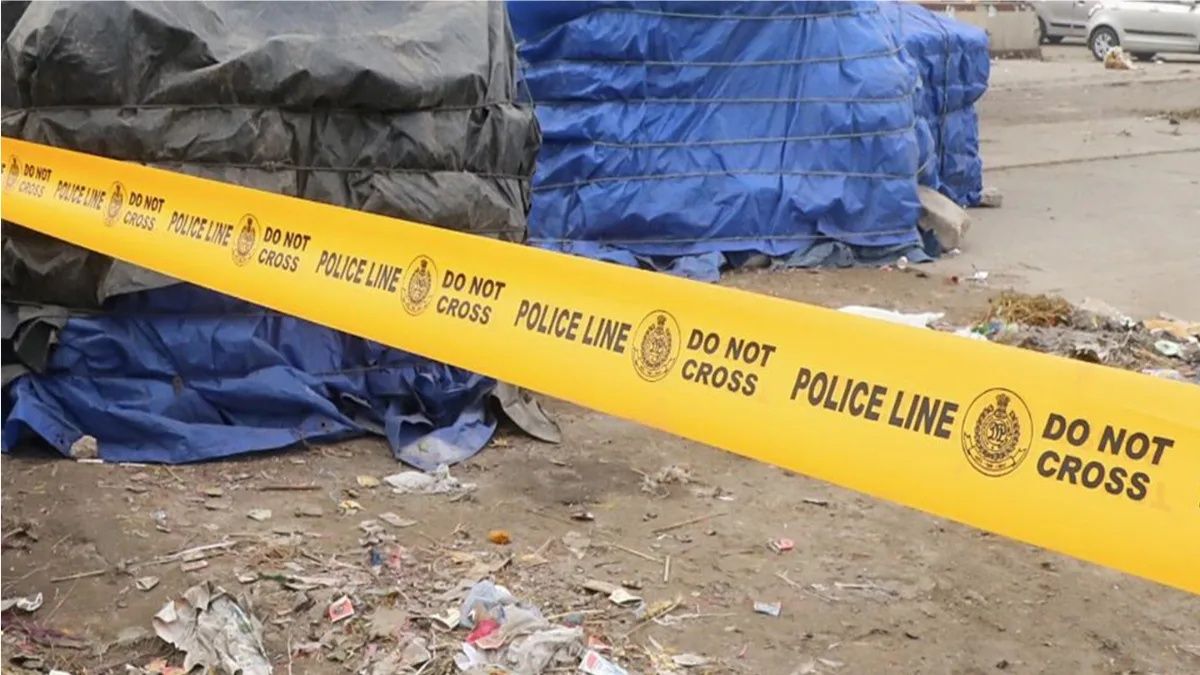
A child's tragic death and alleged sexual assault have unleashed a cycle of violence in Baruipur, a region in West Bengal's South 24 Parganas district, exposing both community rage at serious crime and the breakdown of law and order when public anger boils over. The body of a 12-year-old girl was discovered Sunday morning in a pond near her home at Suryapur, wrapped in a sack, after she vanished the previous evening while attempting to purchase food from a local shop. According to her family's account, four individuals forcibly removed her from the neighbourhood, an allegation that would soon ignite furious protests across the area.
The retrieval of the child's remains triggered an immediate and explosive response from residents who gathered by the hundreds at the discovery site. Rather than dispersing, the crowd refused to permit police officers to retrieve the body for several hours, insisting on their own investigation and accountability measures. This early manifestation of public distrust in institutional processes foreshadowed the deterioration that would follow. The gathering swiftly evolved into a mass protest movement, with villagers establishing multiple blockades along major roads and occupying railway tracks at Suryapur station on the Sealdah-Namkhana section. The disruptions lasted nearly five hours for road traffic and approximately one hour for rail services, causing substantial logistical disruption before police interventions restored normal operations.
The situation escalated dramatically when protesters allegedly turned on a local youth whom residents suspected of involvement in the crime. According to witness accounts, this individual had been seen in the company of some of the primary suspects, making him a target for mob justice. Despite police attempts to rescue him from the angry crowd, officers encountered determined resistance and were unable to prevent what police sources characterize as a lynching. The chaos intensified as demonstrators threw stones at law enforcement personnel, damaged vehicles, and clashed with authorities who were simultaneously attempting rescue operations and crowd control. Multiple police officers sustained injuries during these confrontations, with at least one officer requiring medical admission to a nursing home for treatment of injuries sustained in the violence.
The authorities' response involved deploying a substantial police contingent supplemented by central armed forces to restore order and prevent further escalation. Inspector General of Police for the Presidency Range, Kankar Prasad Barui, personally visited the troubled area to assess the situation and appeal directly to residents through public address systems. His statement sought to balance acknowledgement of community anger with reassurance about police capability and commitment, declaring that no individuals involved in what he termed "this heinous crime" would escape justice and that the strongest possible legal penalties would be pursued. Barui additionally pledged that post-mortem procedures would commence swiftly in accordance with proper legal protocols, signalling that authorities would conduct the investigation thoroughly and transparently.
West Bengal's Chief Minister Suvendu Adhikari engaged directly with the bereaved family by telephoning the victim's father on Sunday to express state-level concern and commitment. The chief minister went beyond verbal assurances by inviting the father to meet at Nabanna, the state secretariat in Kolkata, on Tuesday to discuss case details and coordinate assistance resources. This high-level political engagement represents an attempt to channel public grief and anger through formal institutional mechanisms rather than allowing unstructured community responses to continue unchecked. By Sunday afternoon, police had successfully persuaded protesters to withdraw their road and railway blockades, permitting the resumption of traffic and train operations that had been disrupted during the peak of the unrest.
The investigation has resulted in two arrests so far, though authorities have not yet publicly disclosed the identities of those detained or their suspected roles in the alleged crime. A third suspect was reportedly apprehended by local residents and subsequently handed over to police custody. The involvement of community members in apprehending suspects reflects both the intensity of public feeling and the reality that in many instances, informal networks move faster than formal law enforcement mechanisms. However, this dynamic also creates the conditions for misidentification and mob violence against innocent parties, a risk that apparently materialized in the alleged lynching of the youth whose precise connection to the crime remains unclear.
The case illuminates persistent tensions within Indian society regarding responses to serious crimes against children, particularly sexual violence. While public outrage over such incidents is understandable and reflects legitimate demands for accountability and swift justice, the descent into mob violence represents a failure of multiple institutions. Police forces failed to prevent the alleged lynching despite being present; community leaders appear not to have intervened to restrain the mob; and judicial systems are perceived as insufficiently swift or severe in processing such cases, driving citizens toward extrajudicial remedies. For Malaysian observers, the incident serves as a cautionary example of how societal trust in institutions can fracture when serious crimes go unpunished or when procedures are perceived as indifferent to community demands for immediate resolution.
The aftermath of Sunday's violence involves intensified security measures across Baruipur to prevent renewed outbreaks of mob activity while investigators pursue multiple parallel inquiries. Police are simultaneously investigating the circumstances surrounding the child's death, the identity and responsibility of those involved in the alleged sexual assault and murder, and the roles played by various individuals in the attack on police personnel during the protests. This expanded investigative scope reflects the reality that the initial crime has spawned secondary crimes, complicating the path toward justice and closure. The case will likely result in charges under India's stringent laws governing crimes against children, including the Protection of Children from Sexual Offences Act and potentially murder statutes carrying severe penalties.
The Baruipur incident carries implications extending beyond West Bengal's borders, as it demonstrates challenges faced across South Asia in addressing violent crimes against vulnerable populations while maintaining rule of law. The balance between meeting community demands for swift justice and protecting due process rights remains precarious. For neighbouring countries including Malaysia, which has its own instances of public outrage over serious crimes, the episode offers uncomfortable lessons about the fragility of institutional authority and the speed with which organized communities can overwhelm law enforcement. The incident also highlights the particular vulnerability of children in regions where poverty, weak governance, and social stratification create conditions enabling predatory individuals to operate with limited fear of consequences.

