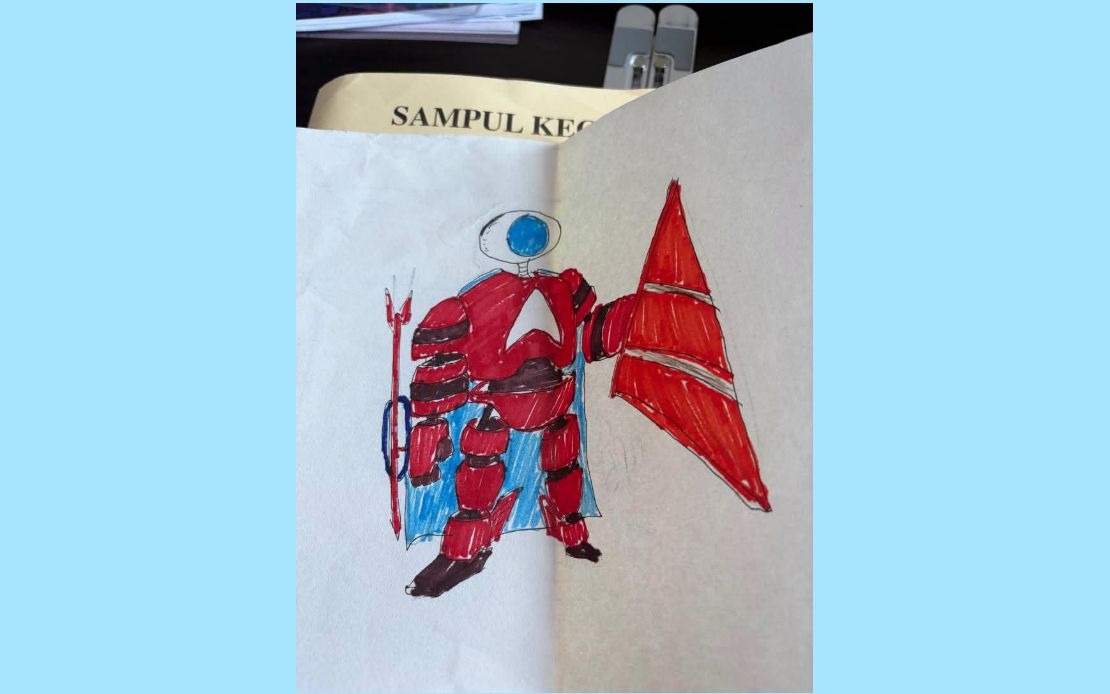
Prime Minister Datuk Seri Anwar Ibrahim has expressed deep gratitude for a drawing presented to him by a child with special needs during a recent public engagement, highlighting a touching human connection amid his official duties. The artwork, which depicts a robot character clad in red and blue armour wielding a staff-like object, now holds sentimental value for the nation's leader, who took to social media to acknowledge the meaningful gesture and thank the child's family for their kindness.
The exchange took place during a Temu Anwar session held recently in Negeri Sembilan, part of a broader initiative designed to foster direct and accessible dialogue between the Prime Minister and Malaysian citizens from diverse backgrounds and age groups. Through this platform, Anwar has consistently sought to bridge the gap between government leadership and the communities they serve, creating informal spaces where ordinary Malaysians can voice their concerns and share their stories face-to-face with the country's top administrator.
In his Facebook post, Anwar reflected on the precise moment the child, who was being held by his father, approached him with the artwork. The Prime Minister's recollection of this encounter suggests it left a lasting impression on him, something he deemed significant enough to share publicly with millions of Malaysians online. His decision to commemorate the occasion underscores the value he places on such personal interactions, even amid the demanding schedule of leading a nation of over 34 million people.
The gesture carries particular weight given the context of special needs inclusivity in Malaysia. Children with disabilities often navigate a world not always designed with their participation in mind, and their active engagement in national forums and public events remains limited. By accepting the gift graciously and publicly acknowledging it, Anwar sends a signal about the importance of inclusive governance and the recognition of all citizens, regardless of their circumstances, as valued members of the national community.
Temu Anwar has evolved into one of the government's flagship engagement programmes, serving as a mechanism for bottom-up communication in Malaysia's political system. These dialogues provide citizens with rare opportunities to interact directly with the Prime Minister without the traditional filters of bureaucratic channels or formal petition processes. The accessibility of such forums is particularly important for marginalised groups, including families supporting individuals with special needs, who may find conventional avenues for government engagement challenging or intimidating.
The drawing itself, rendered in primary colours with recognisable imagery, represents the creative expression of a young mind. Regardless of its technical sophistication, its value lies in the authentic sentiment behind it and the effort involved in its creation and presentation. For a child with special needs, participating in a national dialogue event and successfully presenting a gift to the Prime Minister constitutes a meaningful achievement worthy of celebration, and one that contributes to their sense of belonging within the broader Malaysian society.
Publicly treasuring such a gift also reflects evolving attitudes toward disability representation in Malaysia's political culture. By displaying and discussing the artwork on social media, Anwar normalises the presence and contributions of people with special needs in civic spaces. This visibility matters, as it encourages other families and individuals with disabilities to participate more actively in public life and engenders greater societal awareness of their capabilities and value.
The incident underscores how leadership, particularly at the highest levels, can influence national attitudes through personal choices and public communications. Small gestures such as this Facebook post can reverberate through society, subtly shifting perceptions and encouraging greater inclusion. When citizens observe their Prime Minister treating a gift from a child with special needs as something worthy of public acknowledgment and gratitude, it sends a culturally significant message about the intrinsic worth and dignity of all Malaysians.
For the child and his family involved, this moment likely represents a memory they will cherish indefinitely. The validation that comes from having one's contribution recognised by the nation's leader provides immeasurable emotional and psychological benefit. Such experiences can boost confidence, reinforce a sense of civic participation, and strengthen familial bonds around positive national engagement. In a broader sense, these personal stories humanise government and remind both leaders and citizens of the fundamental purpose of public service: to improve the lived experiences of ordinary people.
Moving forward, instances such as this one highlight the continued potential of direct engagement programmes like Temu Anwar to create meaningful connections and foster a more inclusive political culture in Malaysia. As the nation continues to develop its approach to social welfare and disability support, ensuring that individuals with special needs have genuine avenues for participation in national life remains a vital objective. Anwar's public appreciation of the child's drawing serves as a symbolic affirmation of this commitment, even as the practical work of building truly inclusive institutions continues across government and society.

