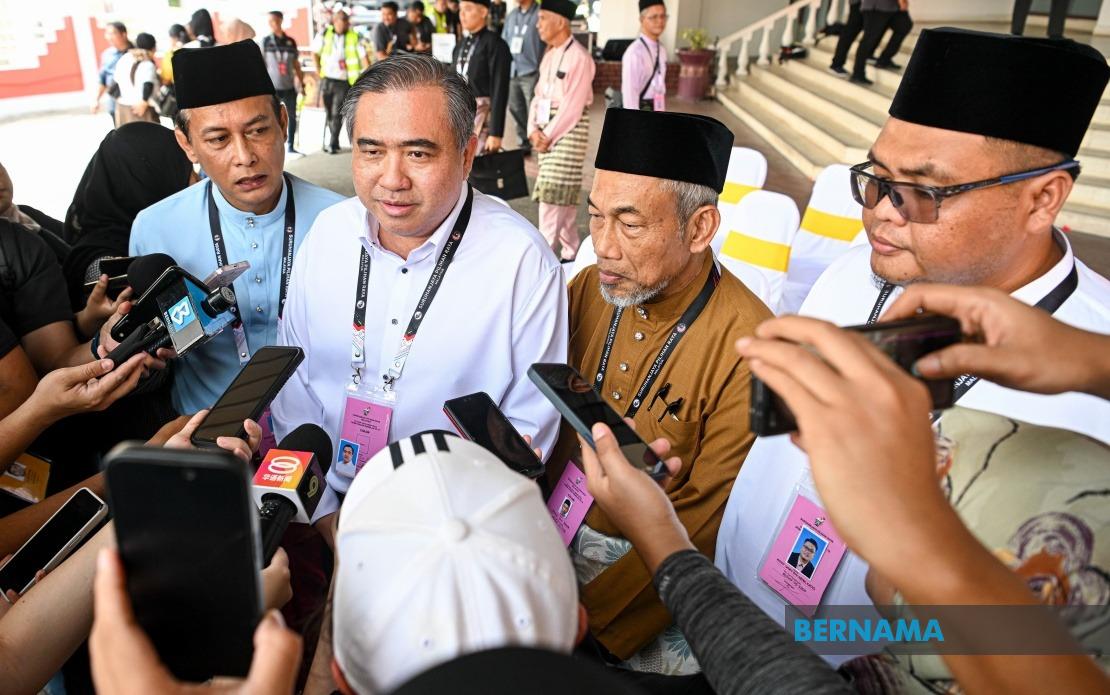
Anthony Loke, the incumbent Transport Minister and Jelebu parliamentary representative, has underscored the strategic importance of the Chennah state seat to Pakatan Harapan's broader objective of retaining control of the Negeri Sembilan state government in the impending state election. Speaking during the nomination process at Dewan Besar Kuala Klawang, Loke identified Chennah as one of four particularly significant constituencies within the Jelebu parliamentary constituency that will prove decisive in determining whether the coalition can secure another term in office.
The Chennah contest has been confirmed as a straight fight between Loke's Pakatan Harapan team and Barisan Nasional's candidate Siow Kong Choon, according to the Jelebu Parliamentary returning officer Abdul Rahim A Aziz. This two-way race represents a critical test of voter sentiment in what has been identified as a marginal area, with the outcome potentially influencing the broader state-level dynamics.
Loke's emphasis on Chennah's significance draws from recent electoral history in Negeri Sembilan. The minister highlighted that in the 2018 state election—the watershed moment that brought Pakatan Harapan to power—both the Chennah and Kelawang state seats proved instrumental in enabling the coalition to form a government. This historical precedent suggests that identical dynamics may play out in the forthcoming election, making these constituencies bellwethers for the coalition's overall performance across the state.
The confidence expressed by Loke regarding Pakatan Harapan's prospects in Negeri Sembilan is grounded in the coalition's governance record over two complete terms spanning the past six years. Loke argued that the administration's demonstrated capacity to deliver tangible progress, maintain political stability, and execute development projects provides a compelling platform upon which to seek continued voter support. This emphasis on performance-based legitimacy reflects a broader campaign narrative that the coalition is likely to pursue across multiple constituencies.
Since capturing the Negeri Sembilan state government in 2018, Pakatan Harapan has endeavoured to consolidate its position through targeted development initiatives and service improvements across state constituencies. The coalition's track record becomes particularly significant in constituencies such as Chennah, where electoral margins may be comparatively narrow and where demonstrable improvements in living standards, infrastructure, or public services could meaningfully influence voter behaviour.
For Barisan Nasional, the Chennah contest represents an opportunity to reclaim lost ground in Negeri Sembilan and potentially tip the balance of state assembly seats in its favour. The nomination of Siow Kong Choon as the BN candidate signals the coalition's determination to contest vigorously in what has been classified as a critical battleground. The straight fight nature of the contest eliminates the vote-splitting dynamics that might otherwise complicate the electoral mathematics.
The broader context of Negeri Sembilan politics has been shaped by shifting coalition alignments and voter sentiment fluctuations characteristic of Malaysian electoral politics in the post-2018 period. The state serves as a significant political laboratory, where national political currents intersect with local grievances, constituency-specific issues, and the performance records of incumbent and opposition representatives. The outcome in constituencies such as Chennah will provide important indicators about the trajectory of voter preferences in the state.
Loke's dual role as Transport Minister and Jelebu parliamentary member illustrates the convergence of national and state-level politics that characterises Malaysian political competition. His ministerial position potentially enhances his capacity to secure federal resources and support for his constituency, though it simultaneously exposes him to scrutiny regarding his performance in that portfolio. Voters in Jelebu and its constituent state seats must weigh both his local advocacy and his national responsibilities when casting their ballots.
The identification of Chennah and three other constituencies within Jelebu as strategically crucial underscores the reality that state elections in Malaysia are frequently decided by margins in relatively small numbers of seats. Rather than being determined by sweeping across every constituency, electoral outcomes often depend on coalition performance in identified marginal areas where voter sentiment remains contested and potentially moveable. This concentration of competitive intensity in particular seats reflects both the structural characteristics of Malaysian electoral politics and the specific dynamics operating within Negeri Sembilan.
As the state election campaign develops, Pakatan Harapan will likely channel substantial campaign resources into Chennah and its three identified companion constituencies within Jelebu. Conversely, Barisan Nasional will similarly prioritise these areas, recognising that successful performance here could be decisive for statewide outcomes. The voters in Chennah thus assume heightened importance, with both coalitions viewing the seat as potentially determinative of the coalition's overall capacity to retain or recapture state government.
The electoral contest in Negeri Sembilan also carries implications for Malaysian politics at the national level. The state has historically served as a barometer of political sentiment, with electoral outcomes in state elections often foreshadowing developments in subsequent federal elections or providing insights into the relative strength of competing national coalitions. A strong Pakatan Harapan performance would reinforce the coalition's legitimacy in peninsular Malaysia, while Barisan Nasional success could signal a resurgence in the coalition's electoral fortunes.
Moving toward polling day, campaigns in constituencies such as Chennah will likely emphasise local development priorities, the delivery records of competing candidates, and the broader policy platforms of the respective coalitions. Voters will weigh factors including economic performance, cost-of-living concerns, infrastructural development, and the trustworthiness of political representatives when determining their voting preferences. The cumulative effect of these individual constituency decisions will determine whether Negeri Sembilan remains under Pakatan Harapan stewardship or transitions back to Barisan Nasional administration.

