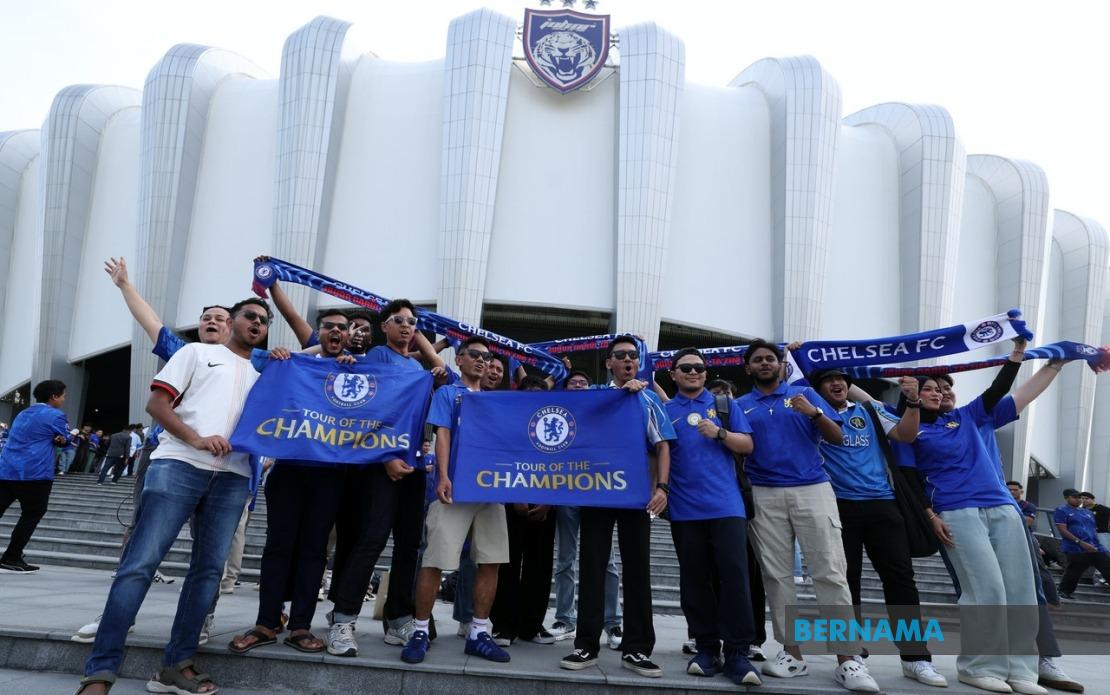
The Sultan Ibrahim Stadium in Iskandar Puteri transformed into a vibrant sporting spectacle on August 9 as football enthusiasts wearing the distinctive red and blue colours of their preferred teams converged on the venue ahead of the friendly clash between Chelsea FC and Johor Darul Ta'zim. Beginning from mid-afternoon, successive waves of supporters of all demographics—ranging from seasoned fans attending with family members to organised youth groups—filled the stadium grounds, creating an unmistakable carnival atmosphere characteristic of major international football encounters.
The convergence of supporters from geographically dispersed regions underscored the significant cultural resonance this match held for Malaysian football enthusiasts. Spectators seized the opportunity to capture moments against the stadium's architectural backdrop, while merchandise outlets experienced sustained demand as fans sought to acquire exclusive memorabilia commemorating the occasion. The event drew particular interest from neighbouring Singapore, with cross-border supporters viewing the weekend fixture as a compelling reason to visit Johor, demonstrating the match's pull as a regional sporting attraction.
Security arrangements remained comprehensive throughout the afternoon and evening, with the Royal Malaysia Police maintaining coordinated oversight of traffic management along primary arterial routes leading to the stadium. By 7 pm, while traffic volumes had increased noticeably, congestion remained manageable due to proactive police presence and established traffic protocols. This preparation reflected the significance authorities placed on ensuring a seamless experience for the anticipated 8 pm kick-off, balancing the influx of supporters with orderly ingress and egress procedures.
The personal testimonies of attendees revealed the profound impact international football clubs exercise within Malaysian sporting culture. Ahmad Danial Muhammad, a 28-year-old Chelsea devotee from Bangsar in Kuala Lumpur, articulated the compelling nature of witnessing elite English football without necessitating expensive international travel. Having followed Chelsea since the Didier Drogba era, he characterised the opportunity as fundamentally transformative—a singular occasion to observe Premier League-calibre athletes performing on Malaysian soil. This sentiment echoed among transnational supporters; Tan Wei Sheng, a 34-year-old Singaporean Chelsea enthusiast, had deliberately departed early from Singapore to circumvent congestion at the Johor Causeway, subsequently praising both SSI's infrastructure and the assembled atmosphere.
The perspective of JDT supporters introduced an alternative dimension to the match's significance, extending beyond mere sporting spectacle to encompass broader narratives regarding Malaysian football's international standing. Mohd Khairul Anuar Ismail, a 41-year-old JDT stalwart from Melaka, contextualised Chelsea's venue selection as validation of elevated respect accorded to domestic football institutions. This interpretation positioned the encounter not merely as entertainment but as tangible evidence of growing international recognition of Malaysian clubs' competitive credibility. The match consequently represented simultaneously a formidable technical examination for JDT's playing personnel and a symbolic affirmation of Malaysian football's maturation within global football hierarchies.
Female supporters articulated enthusiastic perspectives on the encounter's significance for Malaysian football more broadly. Safiyah Rosli, aged 32 from Batu Pahat, attributed Chelsea's presence in Malaysia to successful stewardship of football development, specifically recognising the Regent of Johor, Tunku Mahkota Ismail, as instrumental in cultivating an environment facilitating such prestigious international fixtures. Her commentary reflected how major football encounters become intertwined with perceptions of institutional efficacy and national sporting development, extending beyond the sporting contest itself to encompass leadership and strategic vision.
The merchandise economy surrounding the fixture illustrated commercial dimensions of international football. Dedicated vendor stalls experienced sustained customer queues as supporters competed to acquire limited-edition items, transforming the pre-match environment into a commercial marketplace. These transactions represented not merely economic activity but cultural expression, with supporters investing in tangible representations of their allegiances and commemoration of the occasion. The commercial vitality surrounding merchandise sales indicated the match's resonance extended to consumer behaviour and economic participation.
The gathering represented a convergence of multiple motivations and perspectives on football's social significance. For some supporters, the match satisfied aspirations to observe elite international talent without transcontinental travel. For others, particularly Malaysian supporters, the occasion symbolised national football's ascension within international contexts. The demographic diversity apparent among attendees—encompassing age ranges, geographic origins spanning multiple nations, and varying levels of football fandom—characterised the event as a multivalent cultural phenomenon transcending sport's conventional boundaries.
The geographic reach extending to Singaporean supporters demonstrated football's capacity to transcend political boundaries, positioning the region as an integrated sporting marketplace where prestigious fixtures attract transnational audiences. The deliberate early departure by Singaporean supporters to optimise border-crossing procedures illustrated the calculus supporters undertake when attending significant sporting events, with logistical considerations becoming inseparable from sporting enthusiasm. This transnational participation reflected broader Southeast Asian sporting culture, wherein major fixtures generate cross-border interest.
From a Malaysian perspective, Chelsea's visit represented convergence of multiple developmental narratives within national football. The accessibility of international football stars, the stadium's capacity to accommodate major fixtures, the evident enthusiasm among diverse supporter demographics, and the international dimensions of contemporary football culture all intersected within this single event. The match consequently transcended its immediate sporting parameters, becoming emblematic of Malaysian football's positioning within evolving regional and global football landscapes, demonstrating how sporting spectacles function simultaneously as entertainment, cultural expression, and affirmation of national sporting development.

