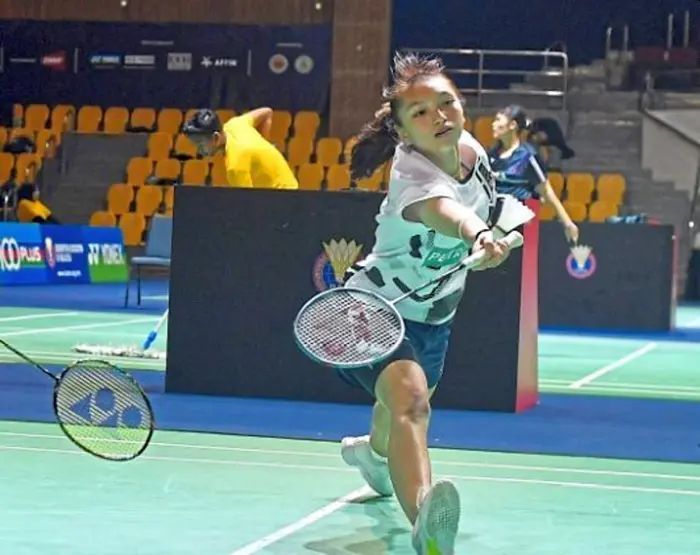
Rising Malaysian badminton talent Noraqilah Maisarah Ramdan has demonstrated remarkable versatility across multiple disciplines, but her mixed doubles coach Nova Widianto argues that converting short-term promise into sustained excellence requires careful attention to psychological development alongside technical refinement. At just nineteen years old, Noraqilah has already captured attention with her adaptability and skill level, yet Widianto cautions that the coaching establishment must be deliberate in how it manages the young player's trajectory to avoid the pitfalls that derail many gifted athletes.
Widianto's assessment reflects a deeper concern within Malaysian badminton about the relationship between raw talent and championship success. The coach, who has observed Noraqilah's development from her formative years, acknowledges her exceptional ability without qualification, yet emphasizes that technical prowess alone remains insufficient for reaching the sport's upper echelon. His focus on character building speaks to the mental fortitude required when competing at international level, where pressure, expectation, and the attention of media and supporters can fundamentally alter an athlete's performance.
The challenge of managing young talent extends beyond individual development. Malaysia has produced numerous shuttlers with considerable ability, creating a competitive environment within national teams where standing out depends not only on court performance but also on maintaining perspective and composure as recognition grows. Widianto's point about the dangers of premature praise reflects a common pattern in sports where sudden success can distort a player's self-perception and create psychological dependencies that ultimately limit growth. His emphasis on keeping Noraqilah grounded represents a conscious intervention strategy aimed at preventing the mental pitfalls that undermine talented players.
Noraqilah's recent achievements illustrate her current trajectory. Competing in women's doubles alongside Low Zi Yu, she and her partner reached the quarter-finals at the Australian Open, a result that elevated their world ranking to a career-high position of 70th. This performance, achieved at a major international tournament, demonstrates that her potential extends beyond domestic competition. Simultaneously, her mixed doubles partnership with Loo Bing Kun has progressed to the second round in Sydney, while their current world ranking of 115th suggests room for substantial improvement as the partnership matures.
Her adaptability became particularly evident when she won the women's doubles title at the second leg of the Under-21 National Championship in Kuantan with scratch partner Ong Xin Yee, a partnership arranged without extensive prior preparation. This result underscores her ability to adjust to different playing styles and contexts, a valuable quality in badminton where consistency across varying opponents and conditions determines tournament success. The willingness to perform effectively across both women's and mixed doubles shows the technical foundation necessary for playing at elite levels.
Nevertheless, Widianto introduces a sobering reality for players harbouring Olympic and world championship ambitions. While competing across multiple disciplines currently presents valuable learning opportunities and keeps Noraqilah's game sharp through diverse competitive experiences, the coach contends that players seeking the highest honours ultimately cannot sustain peak performance across more than one category. The physical and mental demands of reaching top-ten ranking in even a single discipline require concentration of effort that competing simultaneously in women's doubles, mixed doubles, and potentially other events inevitably undermines.
This perspective aligns with broader patterns in badminton, where most players ranked in the world's top echelon specialise in a single category. The specialisation reflects not merely coach preference but fundamental reality about training requirements, match rhythm, and mental preparation needed to consistently defeat the world's best competitors. For Noraqilah, the decision of which discipline to prioritise will become increasingly significant as she approaches her mid-twenties, the age range when most players establish their primary competitive identities.
Widianto's comments suggest the coaching staff are resisting pressure to force premature specialisation despite knowing it will eventually become necessary. This measured approach protects Noraqilah's development by allowing her to experience different competitive environments and discover where her strengths align most closely with the demands of particular disciplines. The strategy also prevents the psychological rigidity that sometimes results from prematurely narrowing focus, maintaining instead the adaptive capacity that currently defines her play.
Olympic qualification introduces particular urgency to the specialisation question. As competition for limited places on Malaysia's badminton contingent intensifies with each Olympic cycle, Noraqilah will face practical constraints on her ability to pursue multiple events simultaneously. National team selection policies typically require players to demonstrate sufficient ranking progress and competitive consistency in their chosen event, metrics difficult to achieve while dividing attention between disciplines.
The coach's emphasis on character building in this context becomes strategic rather than merely philosophical. A player who has developed genuine mental resilience, perspective about her place within global badminton, and ability to process setbacks constructively possesses inherent advantages when navigating the difficult choice of specialisation. Such psychological foundation becomes particularly valuable given that the discipline ultimately selected will demand years of intensive training and competition before producing the results that justify the opportunity cost of abandoning other categories.
Noraqilah's situation also reflects Malaysia's broader talent development challenge. The country possesses sufficient depth of talent to field competitive teams across multiple disciplines, yet identifying which promising young players warrant investment in intensive specialised programmes requires both accurate assessment of potential and sophisticated understanding of which athletes possess the psychological characteristics needed for sustained commitment. Widianto's approach suggests Malaysian badminton is attempting to develop such assessment capacity rather than simply channelling talented players toward established patterns.
For Malaysian badminton followers, Noraqilah's next few years will be instructive for what they reveal about the relative weight placed on physical talent versus psychological development within the national programme. Her ability to remain grounded while continuing to improve her ranking, her willingness to make strategic decisions about specialisation when the time arrives, and her capacity to bounce back from inevitable setbacks will substantially determine whether her current promise translates into the kind of consistent high performance that defines truly elite athletes.

