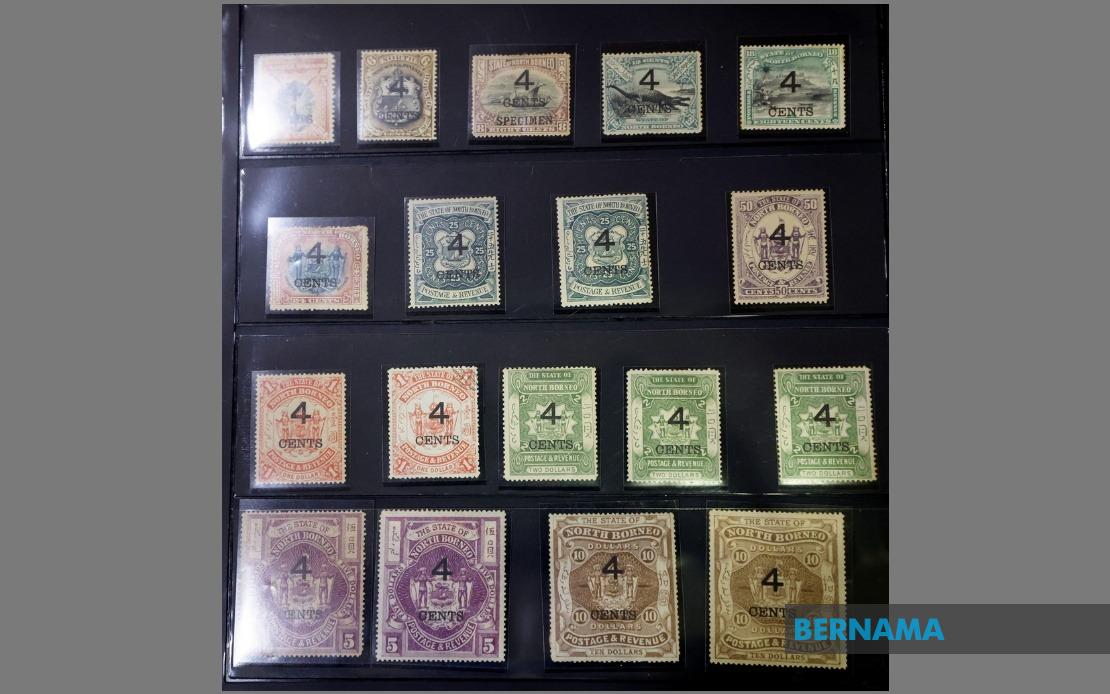
The race to safeguard North Borneo's philatelic heritage has taken on new urgency, with conservationists warning that stamps issued more than a century ago are disappearing from circulation just as interest in collecting them reaches generational lows. Found scattered across antique dealers in Kota Kinabalu and private collections, these postal artifacts—many dating back to 1883—represent far more than colourful scraps of paper: they are tangible records of Sabah's development, trade patterns, and colonial history that could vanish unless serious preservation efforts accelerate.
Dr Shari Jeffri, 56, president of the Borneo History Association, has become a leading voice in this conservation movement, describing the North Borneo stamp issues between 1883 and 1963 as a "living archive" that demands immediate attention and institutional protection. His perspective carries weight from decades of hands-on engagement with these materials. The fundamental challenge, he emphasizes, is generational disconnection. Where stamp collecting once captivated enthusiasts across Malaysia and beyond, today's youth face overwhelming competition from digital hobbies and alternative collecting pursuits. The shrinking pool of active philatelists means knowledge gaps are widening, and pieces of Sabah's story risk being discarded by people who simply do not recognize their historical value.
A survey conducted in Kota Kinabalu's antique district revealed the scarcity problem in concrete terms. Dealers reported increasingly difficult sourcing, and prices have climbed steeply depending on age, condition, and rarity. Among discoveries was an album containing a six-cent stamp from the 1954-1961 series portraying Queen Elizabeth II alongside a Dusun woman, alongside a ten-cent denomination illustrating logging operations. These images themselves function as historical documents, capturing economic activities and cultural moments that official archives may not preserve. Their disappearance would represent not merely the loss of collectibles, but the erasure of visual testimony to how Sabah functioned in its mid-twentieth-century period.
Dr Jeffri's personal journey into philately illustrates how this heritage perpetuates through family transmission. His grandfather, employed at the Recreation Club Jesselton during the 1920s, began gathering stamps and postal materials after observing British officers who practiced the hobby seriously. That inherited collection formed the foundation for what would become Shari's lifelong scholarly pursuit. He entered the hobby at age seven but became a dedicated collector during secondary school, eventually channeling his passion into historical research spanning nearly four decades. His most prized possessions include two two-cent stamps from the foundational 1883 issue, featuring a brown sailing boat design with clear postmarks—pieces that encapsulate the beginning of North Borneo's official postal system.
The historical timeline itself reveals why these stamps matter beyond nostalgia. The British North Borneo Chartered Company introduced the stamp series in 1883 and maintained usage for approximately 52 years, creating a visual record of changing governance, economic emphasis, and cultural representation across five decades. Early designs employed symbols including lions, boats, and tigers alongside mottos, reflecting colonial aesthetic priorities. The turning point arrived around 1894, when designers shifted toward depicting Borneo's native flora, fauna, and wildlife—a change that itself signals evolving attitudes toward the territory's identity and commercial value. A further significant redesign in 1935 amplified Sabah's distinctive character in the imagery, while denominations ranged from two sen through one dollar, documenting the territory's monetary and postal needs.
Authenticity and preservation methodology have become complex technical fields within North Borneo philately, demanding expertise that few Malaysian collectors currently possess. Dr Jeffri emphasizes that stamps with complete postal cancellations—showing mailing dates, post office names, times, and locations—rank among the rarest and most valuable pieces because they provide comprehensive documentation of postal operations. The composition of stamp paper, including glue-layer specifications, carries tremendous weight in determining authenticity and market value. To deepen his knowledge, Dr Jeffri has consulted with Singapore-based experts Voon Kyam Foh and Tan Chun Lim, alongside referencing specialized catalogues such as Commonwealth & British Empire Stamps. This international engagement underscores that North Borneo philately exists within broader Commonwealth collecting frameworks, giving Malaysian material significance beyond regional borders.
Storage and conservation present immediate practical challenges that threaten collections even among dedicated enthusiasts. Acid-free albums have become essential to prevent fading and deterioration, yet improper storage remains common among collectors lacking formal training. Environmental factors—humidity, light exposure, temperature fluctuation—can degrade stamps over months or years. Many private collections sit in vulnerable conditions, sometimes inherited by family members who do not understand their value or fragility. The transition from the grandfather's original gathering to the grandchild's stewardship illustrates both the strength and weakness of family transmission: passion may survive, but technical knowledge often does not.
The broader context of postal history adds another dimension to this preservation challenge. North Borneo's stamp series document a territory's evolution from chartered company governance toward eventual incorporation into Malaysia. The visual progression from early imperial symbols toward indigenous imagery reflects shifting relationships between rulers and ruled. The economic transitions visible in stamp designs—from early extractive activities toward mid-century logging prominence—mirror Sabah's actual development trajectory. Once these materials disappear, reconstructing this visual narrative becomes enormously difficult, even for historians with access to written records. Stamps possess an immediacy and authenticity that archival documents cannot replicate.
Dr Jeffri's four-decade involvement in collecting and research has positioned him to recognize what younger generations have largely abandoned. The transition from physical letters to digital communication, accelerating across Malaysia and globally, has removed the everyday context in which stamps functioned. They are no longer ubiquitous, handled by millions of ordinary people. Instead, they have become archaeological artifacts, visible only to those who deliberately seek them out. This shift changes not merely collecting patterns but also public consciousness about postal history and its significance. Without intervention, knowledge held by aging collectors will die with them, and the remaining scattered stamps will lose context and interpretative framework.
The responsibility for preservation falls across multiple shoulders. Individual collectors like Dr Jeffri maintain standards through personal practice and expertise-sharing. Museums and cultural institutions must recognize these materials' importance and acquire them for permanent protection. Educational initiatives could introduce younger Malaysians to philately's historical dimensions rather than treating it as an antiquated hobby. Digitization projects might catalogue major collections, creating reference archives even if physical pieces eventually deteriorate. International collaboration with Singapore and British institutions could facilitate expertise transfer and establish shared conservation standards. Without coordinated effort across these domains, North Borneo's century-old stamps will continue their inevitable drift toward oblivion, taking Sabah's visual history with them.

