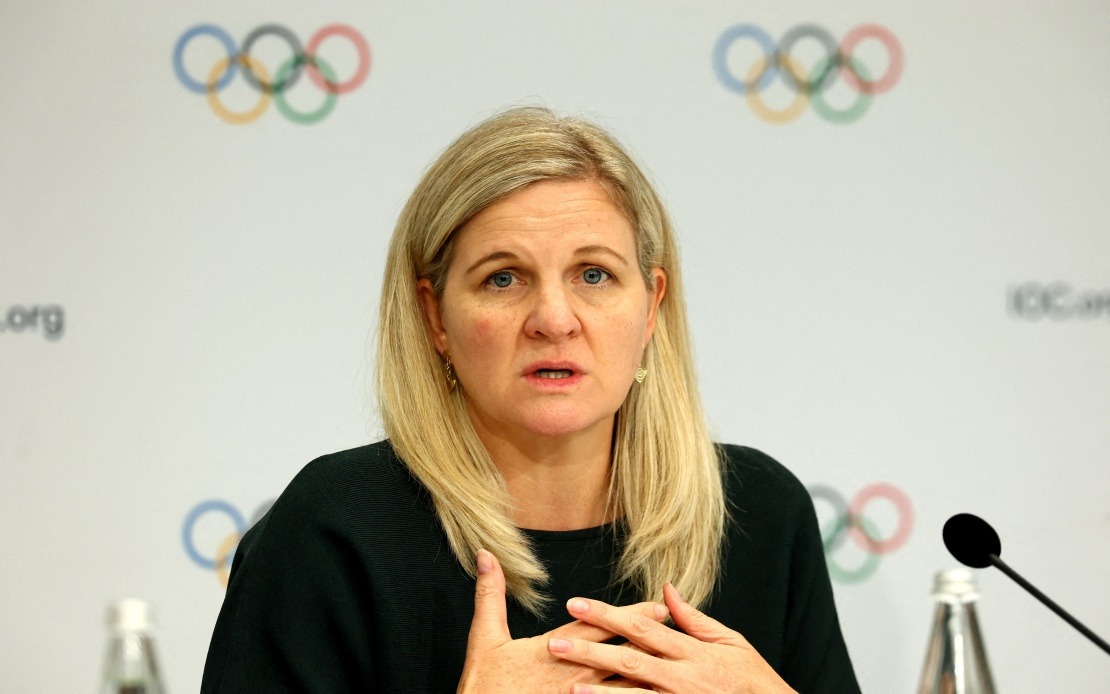
The International Olympic Committee has signalled its readiness to deploy legal machinery against potential political interference in the 2028 Los Angeles Olympic Games, with IOC President Kirsty Coventry indicating that the Court of Arbitration for Sport stands equipped to handle such disputes. Speaking at a press conference in Moscow on Tuesday, Coventry outlined the governance framework that would activate if concerns about external pressure on Olympic operations materialised during the Games.
The statement carries heightened significance given recent developments in international sports governance, where the boundaries between political leadership and sporting administration have become increasingly blurred. Coventry's remarks suggest the IOC recognises potential vulnerabilities in maintaining the Olympic Games' traditional independence from government interference, a principle that has anchored the global sports movement since its modern revival.
The IOC's confidence in institutional safeguards reflects the architecture that CAS has developed specifically for major sporting events. The court operates temporary divisions known as ad hoc panels that convene during Games time, enabling rapid resolution of disputes without requiring athletes or organisations to navigate lengthy international arbitration processes. This mechanism has proven valuable in previous Olympic cycles when scheduling conflicts, eligibility questions, and technical disputes demanded swift adjudication.
Coventry's focus on this capability appears prompted by a recent incident involving United States President Donald Trump and international football governance. On 5 July, FIFA's disciplinary committee reversed a red card suspension affecting Folarin Balogun of the US national team, clearing the footballer to participate in a Round of 16 knockout match against Belgium. Trump subsequently stated that he had contacted FIFA following Balogun's initial dismissal and commended the federation for what he characterised as correcting a grave error.
The timing and nature of Trump's intervention raised eyebrows within the sports governance community, signalling a willingness to engage directly with sporting bodies on competition outcomes. Although Belgium proceeded to defeat the United States decisively by a score of 4-1 despite Balogun's participation, the precedent established by presidential engagement in disciplinary matters carries implications extending far beyond that single match.
For Malaysian and Southeast Asian observers, the evolving tension between political actors and Olympic governance warrants careful attention. The region has hosted or aspires to host major sporting events, and the precedent of political leaders successfully lobbying international sports bodies could reshape how future games operate. National governments might feel emboldened to intervene in matters traditionally considered the preserve of athletes, coaches, and independent arbiters.
The CAS's ad hoc division, while robust in its legal authority, ultimately depends on the willingness of parties to respect its rulings. If political pressure from a sitting president of a major sports-participating nation proves sufficiently acute, the court's remedies—though legally sound—might face practical enforcement challenges. The IOC's public declaration of readiness may therefore function partly as deterrence, signalling that institutional mechanisms exist to check such interference.
Coventry's statements also reflect broader IOC strategy to insulate Olympic operations from national political calculations that could undermine fair competition. The Los Angeles Olympics of 2028 will unfold within the American political system while hosting an international event nominally transcending national boundaries. Establishing advance consensus that independent arbitration will govern disputes preserves the fiction, and perhaps the reality, of Olympic neutrality.
The incident involving Balogun and Trump demonstrates how modern communications technology and direct access to decision-makers have collapsed traditional barriers between political spheres and sporting governance. In earlier Olympic eras, such interventions would have been unthinkable or conducted through diplomatic channels; today, they occur through immediate public statement and direct contact. This acceleration challenges institutional frameworks designed for more deliberate processes.
For participants in future Olympic Games, particularly athletes from nations with powerful political leadership, the question of whether independent arbitration will genuinely remain independent may create psychological and competitive uncertainty. Confidence in fair adjudication forms a cornerstone of athletic integrity, and any perception that politics influences outcomes could delegitimise the competition itself.
The IOC's positioning of CAS as the bulwark against political interference represents an attempt to maintain institutional autonomy in an increasingly politicised global environment. Whether the court's legal authority will prove sufficient to withstand pressure from major powers remains an unanswered question that the 2028 Games may well illuminate. Coventry's measured confidence in existing frameworks suggests the IOC believes it has equipped itself adequately, though the coming years will test whether institutions can preserve their independence when confronted by determined political actors.

