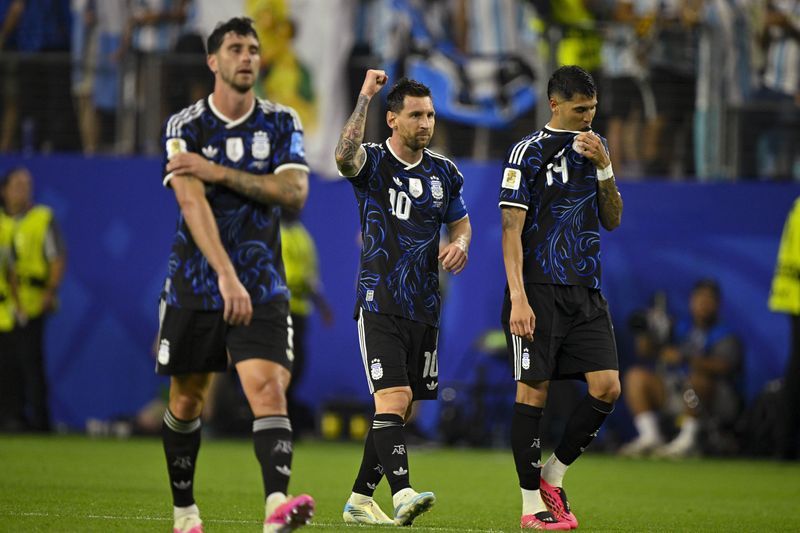
African minnows Cape Verde are approaching their encounter with Argentina in the World Cup's knockout stage with the same bold mindset that has characterised their historic tournament run, refusing to adopt a defensive posture despite facing the reigning world champions. Coach Bubista made clear at Miami Stadium that his squad's primary ambition remains unchanged: securing a place in the last 16 and proving that their presence at the competition is no mere accident of qualification.
The former centre-back has maintained consistent messaging throughout the tournament, and the results have provided compelling evidence that his philosophy carries merit. Cape Verde's group-stage campaign yielded three draws against Spain, Uruguay and Saudi Arabia—outcomes that would have seemed improbable before the tournament began. These results have validated Bubista's belief that his team possesses the tactical discipline and attacking ambition to compete with established football powers.
Speaking to reporters on Thursday, Bubista emphasised that Cape Verde's objectives remain straightforward: deliver a strong performance and advance to the next round. The language he used reflected both confidence and pragmatism, acknowledging that the knockout format allows no room for error whilst maintaining that his team belongs on this stage through earned qualification credentials. He framed the fixture not as an exercise in damage limitation but as a genuine opportunity to progress deeper into the tournament.
The coach's assertion that Cape Verde have "shown in our three matches here that we can compete at this level" carries particular weight given the calibre of opposition encountered. The islands nation ranked 67th in FIFA's global standings entering the tournament, yet has extracted results against higher-ranked adversaries. This trajectory has emboldened the entire squad to believe that another upset remains within reach against Argentina.
Bubista demonstrated diplomatic respect for his counterpart Lionel Scaloni, the Argentina manager, and for the legendary Lionel Messi, yet simultaneously insisted that his own team merits equivalent recognition. He pointedly noted that Cape Verde earned their tournament place through the qualifying process and subsequently secured second position in their group—achievements that distinguish them from qualifying nations that scraped through on inferior records. This positioning reflects a broader narrative: Cape Verde are not grateful participants but legitimate competitors who have overcome genuine hurdles.
When asked about potential tactical adjustments to contain Messi, Bubista deflected by emphasising the collective strength of Argentina's squad rather than focusing on individual brilliance. His reasoning suggests a team philosophy centred on maintaining structural integrity and defensive shape rather than gambling resources on tracking one player. This approach acknowledges that Argentina possess multiple scoring threats and that over-commitment to man-marking could expose vulnerabilities elsewhere.
The coach articulated his team's core principle: adapting to different opponents whilst preserving their fundamental identity. This balance between tactical flexibility and ideological consistency has apparently served Cape Verde well throughout their campaign. Rather than completely reinventing their approach against Argentina, Bubista intends to apply the same formula that generated draws against Spain and Uruguay—disciplined organisation combined with counter-attacking ambition.
For Malaysian and Southeast Asian observers, Cape Verde's trajectory offers instructive parallels regarding underdog capability in major tournaments. Like smaller footballing nations in this region, Cape Verde have demonstrated that competitive organisation and collective commitment can temporarily neutralise superior individual talent. Their willingness to play with ambition rather than retreat into defensive shells challenges conventional wisdom about how footballing minnows should approach elite opponents.
The stakes of this encounter extend beyond Cape Verde's immediate World Cup aspirations. A successful result would represent a seismic upset in global football, validating Bubista's coaching philosophy and proving that geographical isolation and limited domestic competition need not preclude international success. For Argentina, the fixture carries less obvious pressure—they enter as reigning champions and pre-tournament favourites—yet an underperformance against Cape Verde would constitute a significant embarrassment.
Bubista's insistence that his team "trust in our own way of working" reflects psychological resilience that lesser squads might lack when confronting such formidable opposition. By repeatedly emphasising the legitimacy of their presence and their qualification achievements, he has established a mental framework resistant to intimidation. Cape Verde approach this fixture not as supplicants hoping for respectable defeat but as participants pursuing genuine advancement.
The upcoming match will test whether Cape Verde's philosophical approach and tactical execution can produce results against opponents of Argentina's calibre. The group stage demonstrated that their methodology generates competitive performances; the knockout stage will reveal whether competitive parity can translate into victory against the tournament's most accomplished team. Regardless of outcome, Cape Verde have already altered perceptions of what constitutes realistic World Cup aspiration for football's peripheral nations.

