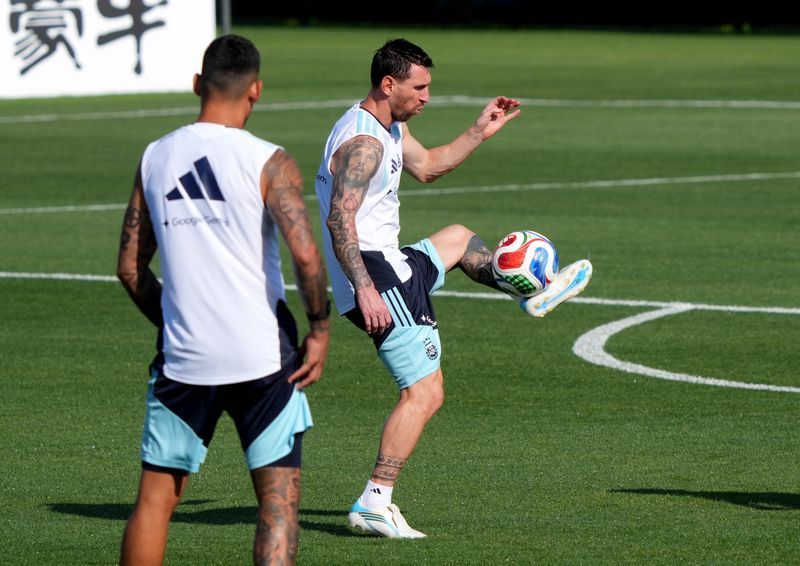
Cape Verde's unlikely journey through the group stage has captured imaginations across the football world, but the African island nation faces its sternest test yet in the knockout round when they confront Argentina and superstar Lionel Messi on Friday. By virtually any conventional measure, the underdogs should have little chance of progressing past the reigning World Cup champions, yet their resolve remains unshaken and their confidence appears genuine as they prepare for what many observers regard as a mismatch on paper.
The extraordinary circumstances of Cape Verde's qualification speak volumes about a team that refuses to accept the limitations imposed by history and mathematics. The squad drew with two former World Cup winners—Spain and Uruguay—to reach the round of 32, a remarkable achievement that defied pre-tournament predictions and low seeding expectations. Rather than viewing the draw with Argentina as cruel misfortune, assistant coach Humberto Bettencourt framed the matchup as an opportunity, telling reporters at their Tampa training base that facing the Albiceleste would be "a pleasure." This mindset reflects an emerging pattern within the Cape Verde delegation: a determination to view their participation in the tournament not as a chance to celebrate mere attendance, but as a genuine competitive endeavour.
Bettencourt's comments during the pre-match buildup offered rare insight into Cape Verde's tactical philosophy and psychological approach to the encounter. He emphasised that statistical probabilities—initially giving Cape Verde just one percent chance before the tournament, with forecasters now adjusting that figure to four percent—held little relevance to their preparation and ambitions. This distinction between external predictions and internal expectations represents a critical psychological framework; it allows the team to concentrate on controllable variables rather than becoming distracted by overwhelming disparities in perceived quality.
The coaching staff has deliberately eschewed the conventional underdog template of defensive-minded, cautious football designed purely to contain opponents. Bettencourt confirmed that Cape Verde would not substantially alter their playing style or adopt a man-marking strategy specifically targeting Messi, a decision that reveals confidence in their squad's fundamental approach. Instead of assigning multiple defenders to shadow the Argentine maestro, Cape Verde's system prioritises collective organisation and spatial awareness, attempting to control the broader pattern of play rather than focusing on individual neutralisation. This approach acknowledges Messi's exceptional ability while placing emphasis on team cohesion and proactive football.
Geographically and demographically, Cape Verde represents a striking case study in global migration and the transnational nature of modern football. As the least populous nation ever to reach the World Cup knockout stages, the island nation's football culture draws heavily from diaspora communities spread across multiple continents. The squad roster includes players born and developed in the Netherlands, Portugal, France, the United States, and Ireland—a geographic dispersal that reflects centuries of historical migration patterns and economic necessity. A significant portion of the Cape Verde diaspora has settled in Argentina itself, creating complex emotional crosscurrents within the community as the national team prepares to face their adopted homeland's champions.
Team composition issues will test Cape Verde's squad depth as they approach the Argentina encounter. Midfield playmaker Telmo Arcanjo remains questionable with a leg injury sustained during group-stage action, having failed to participate fully in training sessions earlier in the week. His availability represents a crucial variable given the midfield calibre required to construct attacking opportunities against elite opposition. Conversely, left back Sidny Lopes Cabral will return from a one-match suspension served during the Saudi Arabia fixture, having accumulated yellow cards during earlier matches against Spain and Uruguay. His combative style and defensive contributions will strengthen the squad's backline stability.
Argentina approaches the match with the advantage of having completed the group stage with a perfect record of three consecutive victories, including a commanding 3-1 triumph against Jordan that confirmed their progression as group winners. Coach Lionel Scaloni strategically rested Messi during that final group fixture, conserving the 36-year-old superstar's energy ahead of the knockout stages. The decision paid dividends when Messi entered as a second-half substitute and immediately made an impact, scoring his sixth tournament goal within minutes of his introduction. Scaloni faces selection decisions regarding which of Argentina's deep roster of elite attacking talents offers the optimal combination for dismantling Cape Verde's defensive organisation.
Messi's return to Argentina's starting lineup appears virtually certain following his bench role in the Jordan match, and his participation elevates Argentina's attacking potency considerably. The seven-time Ballon d'Or winner has demonstrated throughout the tournament that he remains a decisive force despite his age, capable of unlocking defences through both direct intervention and intelligent movement. His presence guarantees Argentina a significant advantage in individual technical excellence, yet history contains numerous examples of extraordinary teams faltering against determined opponents who execute fundamental principles with precision and conviction.
The narrative potential of this matchup extends beyond sporting competition into broader themes about presumption and possibility in football. Cape Verde's participation itself represented a fairytale element—an island nation with limited footballing infrastructure competing at the highest level. Advancing from a group containing World Cup veterans has transformed them from ceremonial participants into legitimate competitors, and Bettencourt's repeated emphasis on ambition and collective value suggests psychological maturity within the squad. While Argentina's talent advantage remains undeniable, Cape Verde's refusal to accept underdog resignation creates conditions for genuine competitive tension.
For Malaysian and Southeast Asian viewers, the Cape Verde story offers instructive parallels with smaller football nations navigating tournaments dominated by traditional powerhouses. The island nation's emphasis on collective organisation, tactical discipline, and mental resilience rather than matching opponents' individual quality provides a template that regional teams observe closely. The fixture will ultimately determine whether exceptional preparation and tactical acumen can overcome a significant talent disparity—a question that resonates throughout world football wherever ambitious nations challenge established hierarchies.

