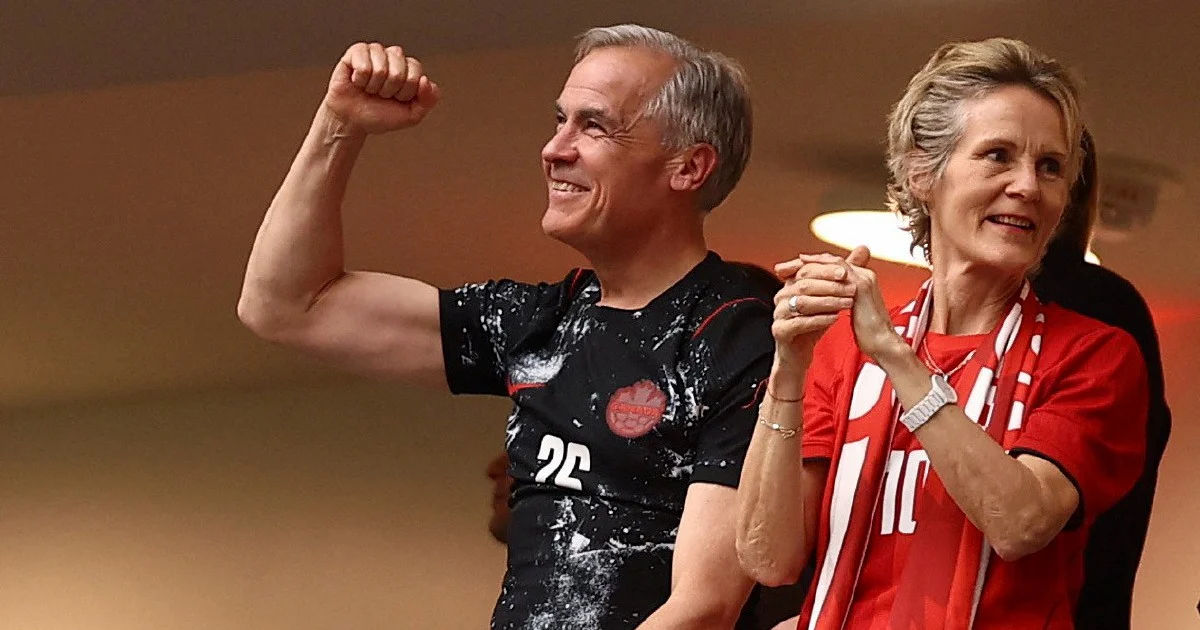
Canada has achieved a milestone in its sporting history by recording its first victory at the FIFA World Cup finals, a breakthrough that prompted Prime Minister Mark Carney to make an impromptu visit to the team's locker room in Vancouver to personally acknowledge their accomplishment. The significance of this victory extends beyond the immediate result, representing decades of investment and development in Canadian football as the country seeks to establish itself among the world's football powers.
Carney's decision to visit the team underscores how deeply this result resonates within Canadian society and politics. The Prime Minister's presence in the locker room sent a powerful message about national pride in sporting achievement, a gesture that connects political leadership with athletic success in a way that resonates across the country. His visit reflects broader recognition that international football success carries cultural weight and helps elevate Canada's standing on the global stage.
While securing a World Cup finals win represents an important achievement for the Canadian programme, the victory came at a cost. One of the squad's players suffered a broken leg during the match, a significant injury that threatens to sideline a key contributor at a critical juncture in the tournament. Such injuries are never welcome, but they provide context for understanding the character Carney commended in his remarks to the players.
The Prime Minister's specific praise for the team's character proves revealing about what officials and observers valued in the performance. Rather than focusing solely on tactical execution or final scoreline, Carney emphasised the mental fortitude and resilience the players demonstrated in difficult circumstances. This acknowledgment of intangible qualities—the ability to maintain focus and intensity despite seeing a teammate carried off with a serious injury—speaks to the maturity of the squad and their collective commitment to the cause.
For Malaysian and Southeast Asian observers, Canada's breakthrough carries particular relevance. Regional nations have similarly struggled to establish credibility at World Cup finals tournaments, with winning matches at that level remaining rare achievements. Canada's success illustrates that sustained investment in player development, coaching infrastructure, and strategic planning can yield results even for nations without traditional football powerhouse status. The pathway Canada has taken offers potential lessons for regional football associations working to improve their own competitive standing.
The injury sustained by the Canadian player also highlights a challenge all teams face at major tournaments: managing both immediate results and longer-term squad integrity. How Canada navigates the loss of this player while maintaining momentum from their opening victory will significantly influence their prospects in the competition. The resilience Carney identified may be tested further as the team attempts to build on this foundation with a potentially weakened roster.
Canadian football's historical relationship with World Cup tournaments adds another dimension to understanding this result. The nation has qualified for the finals on limited occasions, and actual victories have proven elusive until now. Breaking through that barrier establishes a new baseline for the programme and shifts expectations going forward. No longer can Canadian football be dismissed at the world stage; the team has demonstrated they belong in the conversation.
From a regional perspective, this Canadian success also reflects the broader geographic democratisation of football at the highest level. Historically concentrated in Europe and South America, World Cup competition increasingly includes competitive teams from North America, Asia, and Africa. Canada's entry into the winner's circle represents another shift in this continually evolving landscape.
The locker room atmosphere that Carney encountered would have been markedly different from what typically follows a defeat or disappointing draw. Victory at World Cup level generates an emotional release and confidence boost that extends far beyond the immediate squad. Players gain belief that they can compete at this level, sponsors and investors gain confidence in supporting the programme, and the nation gains sporting heroes to celebrate.
Moving forward, Canada faces the challenge of building on this success. In World Cup tournaments, initial victories often establish psychological momentum that carries through subsequent matches. The team must harness the confidence derived from this breakthrough while maintaining the character and resilience their Prime Minister highlighted. The broken leg that marred the victory serves as a reminder that tournaments can unfold unpredictably, and adaptability will prove as important as the quality already demonstrated.
Carney's visit and public acknowledgment of the team's achievement signal that Canada intends to take its football programme seriously at the highest levels. Such political engagement typically precedes sustained investment and support structures. For Canadian football, this moment represents not merely a single victory but potentially a turning point in how the nation's football is perceived both domestically and internationally.
%22%2F%3E%3C%2Fpattern%3E%3C%2Fdefs%3E%3Crect%20width%3D%22100%25%22%20height%3D%22100%25%22%20fill%3D%22url(%23ph454chg)%22%2F%3E%3Crect%20width%3D%22100%25%22%20height%3D%22100%25%22%20fill%3D%22url(%23ph454chp)%22%2F%3E%3Ctext%20x%3D%2250%25%22%20y%3D%2250%25%22%20text-anchor%3D%22middle%22%20dominant-baseline%3D%22central%22%20fill%3D%22rgba(255%2C255%2C255%2C0.95)%22%20font-family%3D%22Georgia%2C%20'Times%20New%20Roman'%2C%20serif%22%20font-weight%3D%22700%22%20font-size%3D%22170%22%20letter-spacing%3D%22-0.02em%22%3EMalaysia%3C%2Ftext%3E%3C%2Fsvg%3E)

%22%2F%3E%3C%2Fpattern%3E%3C%2Fdefs%3E%3Crect%20width%3D%22100%25%22%20height%3D%22100%25%22%20fill%3D%22url(%23ph2a9atg)%22%2F%3E%3Crect%20width%3D%22100%25%22%20height%3D%22100%25%22%20fill%3D%22url(%23ph2a9atp)%22%2F%3E%3Ctext%20x%3D%2250%25%22%20y%3D%2250%25%22%20text-anchor%3D%22middle%22%20dominant-baseline%3D%22central%22%20fill%3D%22rgba(255%2C255%2C255%2C0.95)%22%20font-family%3D%22Georgia%2C%20'Times%20New%20Roman'%2C%20serif%22%20font-weight%3D%22700%22%20font-size%3D%22320%22%20letter-spacing%3D%22-0.02em%22%3EPKR%3C%2Ftext%3E%3C%2Fsvg%3E)