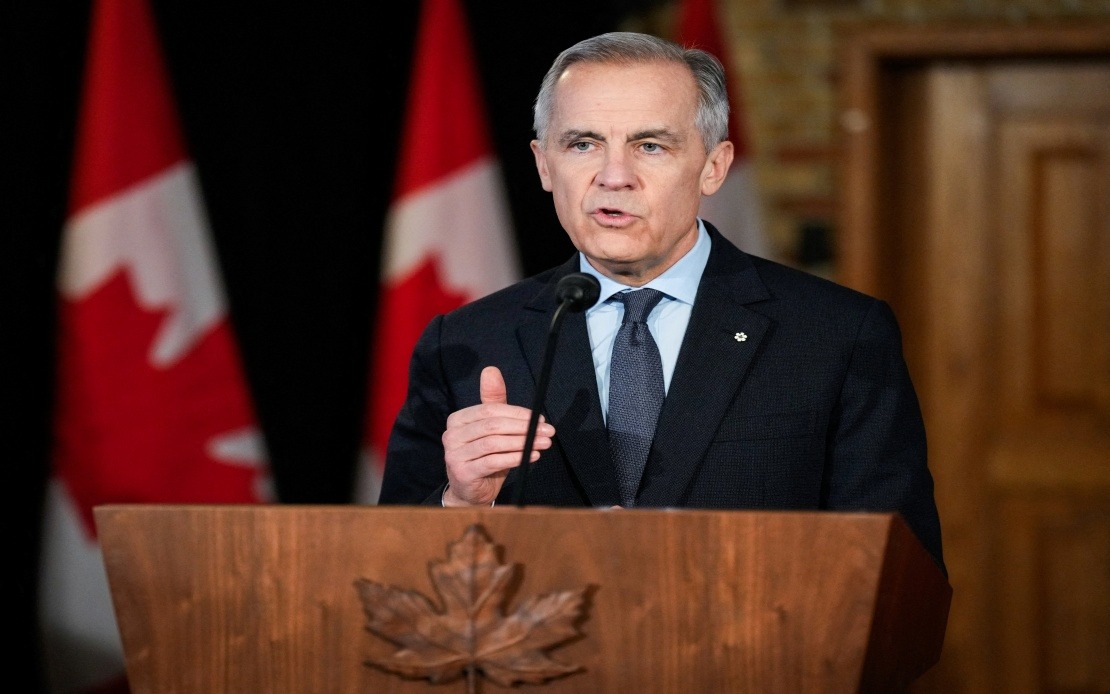
Canada's negotiations with the United States over punitive trade measures have reached a critical juncture, with Prime Minister Mark Carney announcing that a suspension of American tariffs will hold through the end of the week. The reprieve comes after US President Donald Trump paused implementation of a 50 per cent tariff on a broad range of Canadian goods, providing both nations a narrow window to hammer out the details of a comprehensive trade agreement. However, the precarious nature of this arrangement underscores the fragility of cross-border relations and the mounting pressure on Canadian negotiators to deliver results before the deadline.
Carney's statement reflects cautious optimism about the trajectory of discussions between Washington and Ottawa. He acknowledged that while meaningful strides have been taken toward resolving the trade dispute, substantial work remains on outstanding issues that continue to divide the two countries. The language employed—describing progress as "substantial" while simultaneously emphasising the importance of work yet to be done—suggests that negotiators are grappling with complex and potentially divisive questions that do not lend themselves to quick resolution. This balancing act is typical of high-stakes trade negotiations, where acknowledging progress maintains political credibility while tempering public expectations about imminent breakthroughs.
The August 21 deadline represents an artificial but consequential pressure point in the negotiating process. By establishing this specific date, the Trump administration has effectively created a hard stop that concentrates the minds of Canadian officials and raises the stakes of each negotiating session. Trade talks often benefit from the discipline imposed by firm timelines, as negotiators recognise that failure to reach agreement by a set date carries concrete economic consequences. For Canada, the alternative to a deal by August 21 is the imposition of substantial tariffs on major export categories, a prospect that threatens to disrupt supply chains and impose significant costs on Canadian businesses and consumers.
The 50 per cent tariff level itself warrants careful consideration. Such a high rate would effectively price many Canadian goods out of the American market, fundamentally altering the commercial relationship between the two nations. Unlike modest tariffs that might be absorbed through margin compression or modest price increases, a 50 per cent duty represents a structural shift that would force Canadian exporters to seek alternative markets or fundamentally restructure their operations. This stark reality provides motivation for both sides to find common ground, though it also reflects the severity of the underlying disagreements.
For Malaysian and Southeast Asian observers, the Canada-US trade conflict carries important implications. The region's own trade relationships with North America depend in part on the stability of North American trade dynamics. A significant rupture between the United States and Canada could alter supply chains that extend throughout Asia, as companies recalibrate their sourcing and manufacturing strategies in response to changing tariff environments. Additionally, the precedent set by how these negotiations are resolved may influence how future trade disputes are handled within the region and globally.
Carney's emphasis on Canada's commitment to strengthening its economic independence and competitiveness suggests that Ottawa is not approaching these negotiations purely from a defensive posture. Rather, Canadian officials appear intent on using this period to emphasise their country's value as an economic partner and to stress the mutual benefits of maintaining open trade relations. This framing is important because it shifts the narrative away from mere tariff avoidance toward a more positive vision of Canadian economic contributions and potential.
The broader context of US-Canada relations cannot be overlooked. These two nations share deeply integrated supply chains across automotive, agriculture, energy, and manufacturing sectors. A prolonged trade war would carry costs for both sides, though the specific incidence of those costs would vary across industries and regions. American manufacturers who depend on Canadian inputs, American consumers who benefit from Canadian agricultural products, and Canadian workers employed in export-oriented industries all have stakes in the outcome of these negotiations.
The pace of negotiations appears to have accelerated in recent days, with the Trump administration's decision to pause tariffs suggesting movement in discussions. Typically, such pauses are granted only when negotiators on both sides signal that they are making genuine progress and that continued engagement might produce results. The fact that Trump felt comfortable pausing his threat mechanism implies at least some confidence that meaningful negotiations are occurring, though this could also represent a tactical gambit designed to maintain pressure while appearing reasonable.
For Canadian policymakers, the challenge now involves synthesising the various competing interests within their own political system while maintaining negotiating flexibility with Washington. Labour unions, agricultural representatives, manufacturing interests, and consumer advocates all have views on what constitutes an acceptable trade agreement. Balancing these domestic pressures while negotiating with a counterpart as unpredictable as the Trump administration represents a formidable political and diplomatic challenge.
As the August 21 deadline approaches, both nations face a binary choice: reach an agreement that addresses the underlying trade disputes and allows for the permanent elimination of threatened tariffs, or watch the tariffs take effect and trigger a new round of retaliatory measures. Historical experience with trade wars suggests that once tariffs are imposed, the ensuing cycle of retaliation and counter-retaliation becomes increasingly difficult to unwind. This reality should focus minds on both sides of the border toward finding a negotiated resolution that, while perhaps imperfect, avoids the costs and uncertainties of an escalating trade conflict.
The coming days will prove decisive. Canada's negotiating team must balance the genuine constraints of the political process—including consultation with affected stakeholders, consideration of parliamentary opinion, and alignment with broader strategic objectives—against the time pressure imposed by the artificial deadline. How skillfully Canadian officials navigate this balance may determine not only the immediate tariff outcome but also the trajectory of US-Canada relations in a period of growing trade tensions and economic nationalism globally.

