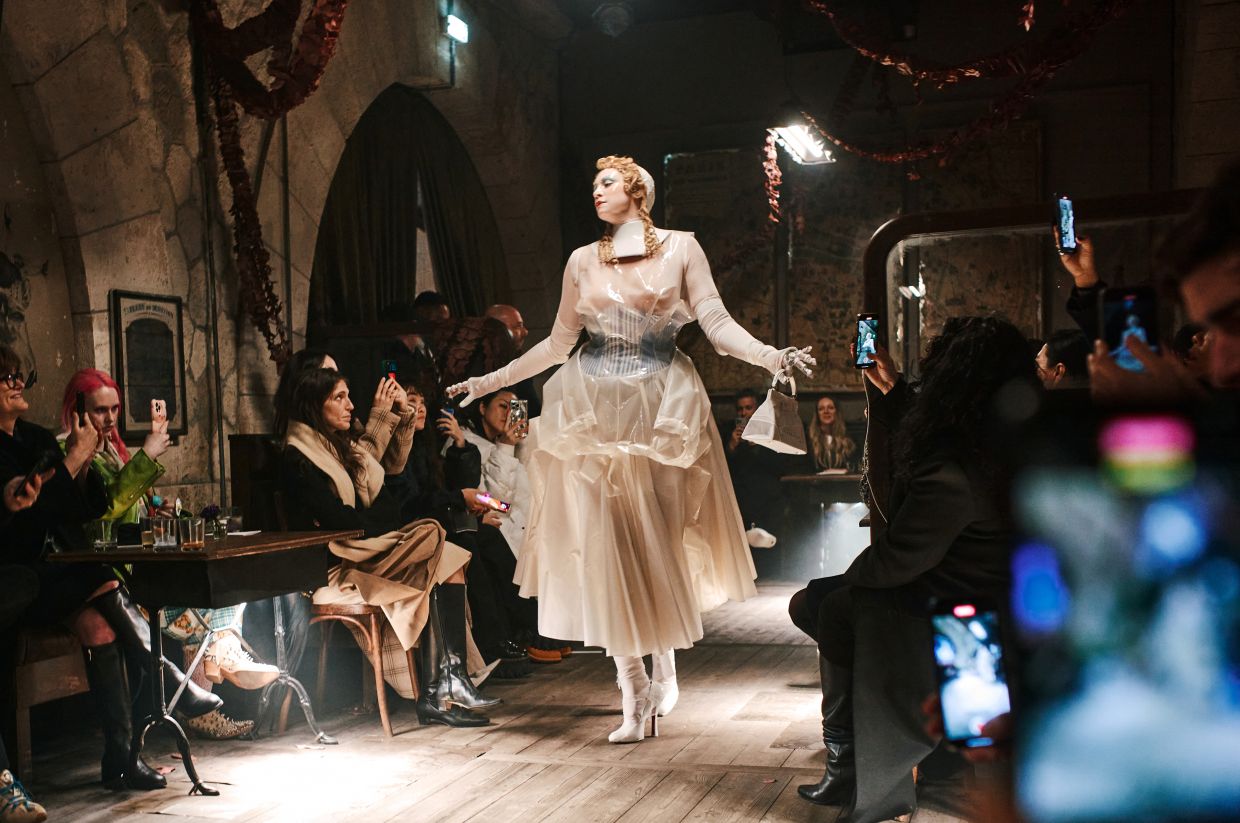
The Metropolitan Museum of Art convened an extraordinary gathering in May: museum director Andrew Bolton sat down with prominent Jewish leaders including Anna Wintour to discuss a controversial proposition. A major retrospective celebrating the work of John Galliano, one of fashion's most celebrated contemporary designers, was in the pipeline for 2025. The question dominating the room was whether this honour could be ethically justified, and more fundamentally, whether the fashion world and New York's Jewish community could move forward together on such a fraught undertaking.
Galliano's standing in the fashion industry remains complicated by contradictions that define his career. As creative director of Christian Dior from 1996 to 2011, he fundamentally reimagined one of Europe's most storied fashion houses, transforming it from a stately French institution into a globe-spanning powerhouse of imaginative design and commercial success. His mastery of the bias-cut dress and his gift for constructing elaborate, theatrical worlds made him an architect of contemporary fashion. Few designers have wielded such influence over how the industry conceives of beauty, fantasy, and the relationship between clothing and storytelling. Yet this trajectory was irreversibly fractured by events that January 2011, when video footage emerged of Galliano making deeply offensive antisemitic remarks in a Paris bar, including expressions of admiration for Adolf Hitler.
The fallout was swift and severe. Dior terminated his employment, and he faced prosecution for hate speech in French courts, ultimately securing a conviction. The incident seemed to mark an ending rather than a chapter break. However, what followed was a sustained, if carefully managed, rehabilitation effort. Galliano entered treatment programmes, engaged in dialogue with Jewish leaders and educators, and worked intensively with rabbinical figures in London and representatives of the Anti-Defamation League in New York to develop understanding of Judaism, antisemitism, and the historical weight of the Holocaust. In 2014, he emerged to assume the role of creative director at Maison Margiela, a Belgian luxury house with its own experimental aesthetic sensibility.
Over the past decade, Galliano has methodically rebuilt his professional standing, operating largely outside the glare of maximum public scrutiny. Celebrities from Zendaya to Amal Clooney have worn his vintage designs to high-profile events, and his pieces have set auction records, signalling that fashion's machinery had already absorbed his return. Yet institutional recognition at the level of a solo Metropolitan Museum exhibition represents something qualitatively different from commercial reintegration. The institution was preparing to offer only the third solo show dedicated to a living designer in its history, joining legendary figures like Yves Saint Laurent and Rei Kawakubo. Such an honour carries weight beyond the fashion calendar.
The timing of this decision coincides with a moment of acute tension surrounding antisemitism in the United States. New York City has experienced alarming incidents of antisemitic violence, including a stabbing attack last week that left two men injured, one outside a Jewish community centre in Manhattan. These attacks carry particular weight in a city whose Jewish population has been subject to escalating harassment and intimidation. The proposed Galliano exhibition thus became not merely a curatorial question but a political and communal one, forcing uncomfortable conversations about whether celebrating a designer's artistic legacy requires whitewashing or compartmentalising his documented history of hate speech.
Jewish community leaders brought to their May meeting with Bolton a framework rooted in the Jewish principle of teshuvah—repentance and the possibility of genuine transformation. Rabbi Rick Jacobs, president of the Union for Reform Judaism in North America, characterised Galliano as thoughtful and direct during their conversation, speaking without scripted talking points. Jonathan Greenblatt of the Anti-Defamation League stated that Galliano's efforts to repair the damage and educate himself about antisemitism and the Holocaust merit acknowledgment. Yet this measured support came with conditions and caveats. The Jewish leaders were not simply endorsing the show; they were negotiating its terms and pressing for substantive engagement with his past rather than convenient erasure.
Rabbi Joshua Davidson of Temple Emanu-El, situated just blocks from the Metropolitan Museum, articulated the Jewish community's core concern: the exhibition should leverage this moment not to celebrate Galliano in splendid isolation but to engage directly with contemporary antisemitism and the imperative to resist it. From this perspective, the show becomes an educational opportunity only if it refuses to treat Galliano's earlier remarks as a closed historical incident. Instead, they advocated for the exhibition to position his work within an honest reckoning with the consequences of hateful speech and the ongoing struggle against prejudice.
Bolton responded to these conversations by committing to a fundamentally reimagined exhibition structure. He has designed what he calls an "orientation gallery" intended to delineate what he terms "the rupture" in Galliano's career—the shattering moment that divided his trajectory into before and after. This gallery is meant to acknowledge directly the contradiction at the heart of the retrospective: how can an institution celebrate undeniably significant artistic contributions while refusing to avert its gaze from documented moral failure? Bolton emphasised the importance of using Galliano's own words rather than euphemisms, a commitment that emerged directly from his conversations with Jewish community leaders who stressed that clarity and specificity could not be compromised for comfort.
The curatorial strategy Bolton is developing operates on the principle that artistic legacy and personal accountability are not mutually exclusive concerns. He has suggested creating an online forum where broader public discussion of these questions can unfold, transforming the exhibition from a closed aesthetic conversation into a platform for grappling with questions of redemption, responsibility, and the terms under which institutions can honour complicated figures. This represents a significant departure from traditional retrospective practice, which typically situates an artist's body of work in rarefied aesthetic space removed from moral or political complications.
For Malaysian and Southeast Asian readers, this moment illuminates how global institutions in the West are reckoning with questions about rehabilitation, institutional responsibility, and community voice. The fashion industry has long operated as an insular world where commercial success and critical acclaim could be sealed off from broader ethical scrutiny. The Metropolitan Museum's engagement with Jewish community concerns signals a shift toward more permeable institutional boundaries, where dominant institutions must negotiate rather than dictate the terms of how they celebrate public figures. This precedent carries implications for how museums and cultural institutions across Asia might address complicated legacies and contested histories in their own contexts.
Galliano's case also raises questions about whether redemption can be genuine if it occurs within the confines of a carefully managed return to prestige. His decade at Maison Margiela, while professionally successful, kept him somewhat removed from the maximum spotlight of his Dior years. Now, the Met Gala—perhaps the most globally visible fashion event on the calendar—is being positioned as the launching platform for a major retrospective. This escalation forces a reckoning: does the fashion industry's apparent readiness to embrace Galliano represent authentic forgiveness rooted in demonstrated change, or merely the restoration of a talented figure to prominence once sufficient time has passed and alternative narratives have become difficult to sustain? The exhibition's success may ultimately depend on Bolton's willingness to resist the pressure toward redemptive storytelling and instead maintain the tension that makes difficult questions visible and unavoidable.

