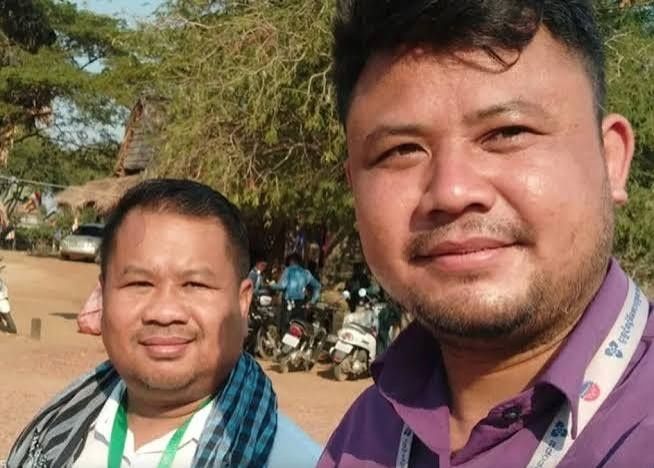
Cambodia's Supreme Court was set to decide on Thursday whether to overturn the convictions of two journalists sentenced to 14 years in prison for publishing photographs taken during border clashes with Thailand. The case of Phorn Sopheap from Battambang Post TV Online and Pheap Pheara from TSP 68 TV Online has become emblematic of mounting concerns about the independence of Cambodia's highest court and the government's willingness to weaponise national security laws against journalists and critical voices.
The two men were arrested in July while returning from reporting assignments near the Thai border and subsequently charged with treason for uploading images they had captured in a restricted military zone to Facebook. Both have maintained their innocence, insisting they possessed authorisation to access the area where they conducted their photography work. Their legal team has appealed to the Supreme Court to vacate the guilty verdict and the accompanying prison sentences handed down by Siem Reap Provincial Court in December.
One particular photograph depicting land mines became the focal point of international diplomatic tension. The image circulated widely across Thai media outlets and lent credence to Thailand's assertion that Cambodia had recently deployed mines along the shared border, resulting in injuries to Thai military personnel. Cambodia's government formally refuted these allegations, maintaining strict adherence to international conventions prohibiting landmine use. Instead, officials attributed the discovered mines to remnants of the prolonged conflict that concluded in the late 1990s, a position that underscores the long shadow cast by decades of civil war across Southeast Asia.
The 2024 border conflict between the two nations proved catastrophic for civilians and soldiers alike. Fighting erupted in July and again in December, displacing hundreds of thousands of residents on both the Cambodian and Thai sides of the frontier. Casualty figures reached approximately 100 military personnel and civilians combined before a December ceasefire halted active combat operations. However, the underlying tension persists, and the border region remains volatile despite the formal cessation of hostilities.
The Supreme Court's decision arrives at a particularly sensitive juncture for Cambodia's political landscape. Just days earlier, the same court upheld the incitement conviction of Rong Chhun, a 56-year-old opposition politician who was found guilty of fomenting social unrest following meetings with villagers displaced by government infrastructure projects. This decision has reinvigorated concerns about whether the court operates as an independent institution or functions as an instrument of state control. International observers have characterised Rong Chhun's prosecution as one of numerous legal actions deployed by Prime Minister Hun Manet's government to neutralise dissent and discourage political opposition.
The pattern of prosecutions has drawn sharp criticism from human rights and press freedom organisations globally. Human Rights Watch contended that recent rulings reveal "the lack of independence from the ruling party" within Cambodia's judiciary, a characterisation the government has firmly rejected by asserting the Supreme Court's complete autonomy. The New York-based Committee to Protect Journalists has specifically accused the Cambodian authorities of "using vague national security laws to criminalise legitimate reporting" in connection with the cases involving Pheap Pheara and Phorn Sopheap, highlighting how broad security legislation can become a mechanism for suppressing journalistic inquiry.
Cambodia's standing in global press freedom rankings reflects these systemic challenges. The Paris-based Reporters Without Borders organisation ranked Cambodia 161st among 180 countries and territories in the 2025 World Press Freedom Index, placing it firmly within the category of nations experiencing "very serious" restrictions on press freedoms. This ranking positions Cambodia alongside countries facing acute crises in journalistic independence, suggesting that freedom of expression remains substantially constrained despite being technically guaranteed under Cambodian law.
The trajectory of Cambodia's political system offers limited grounds for optimism regarding judicial reform. For nearly four decades, former Prime Minister Hun Sen's autocratic governance was synonymous with systematic human rights violations, including the systematic suppression of speech and association rights. Hun Manet, Hun Sen's American-educated son who assumed office in August 2023, was initially regarded by some observers as a potential agent of change. Yet more than a year into his tenure, there remain few tangible indications of meaningful political liberalisation or a genuine expansion of democratic space.
The journalists' appeal hearing exemplifies the broader dilemma facing Cambodia's independent media sector. News organisations operating within the country navigate an increasingly treacherous environment where ordinary reporting on sensitive topics can attract criminal charges. The classification of the border area as a restricted military zone, combined with treason statutes, creates a legal framework susceptible to abuse. When journalists face decades-long prison sentences for documenting newsworthy events, self-censorship becomes a rational survival strategy, fundamentally undermining the press's investigative capacity and its role as a check on government power.
For Malaysia and other Southeast Asian nations, the Cambodia case carries instructive implications. The region's trajectory regarding democratic governance and civil liberties remains contested, with different countries balancing national security imperatives against fundamental freedoms in varied ways. Cambodia's approach—utilising national security legislation to criminalise journalism—represents an extreme position that other governments would be wise to avoid, as it ultimately erodes institutional legitimacy and breeds domestic instability.
The Supreme Court's decision will likely determine whether Cambodia continues down this restrictive path or whether institutional pressure and international scrutiny might provoke some adjustment. Regardless of the immediate outcome, the case has already achieved symbolic significance: it demonstrates the vulnerability of journalists in a system where courts function less as neutral arbiters of law and more as extensions of executive authority. For regional observers, particularly those concerned with press freedom and democratic resilience, the ruling represents yet another data point in Cambodia's troubling trajectory.

