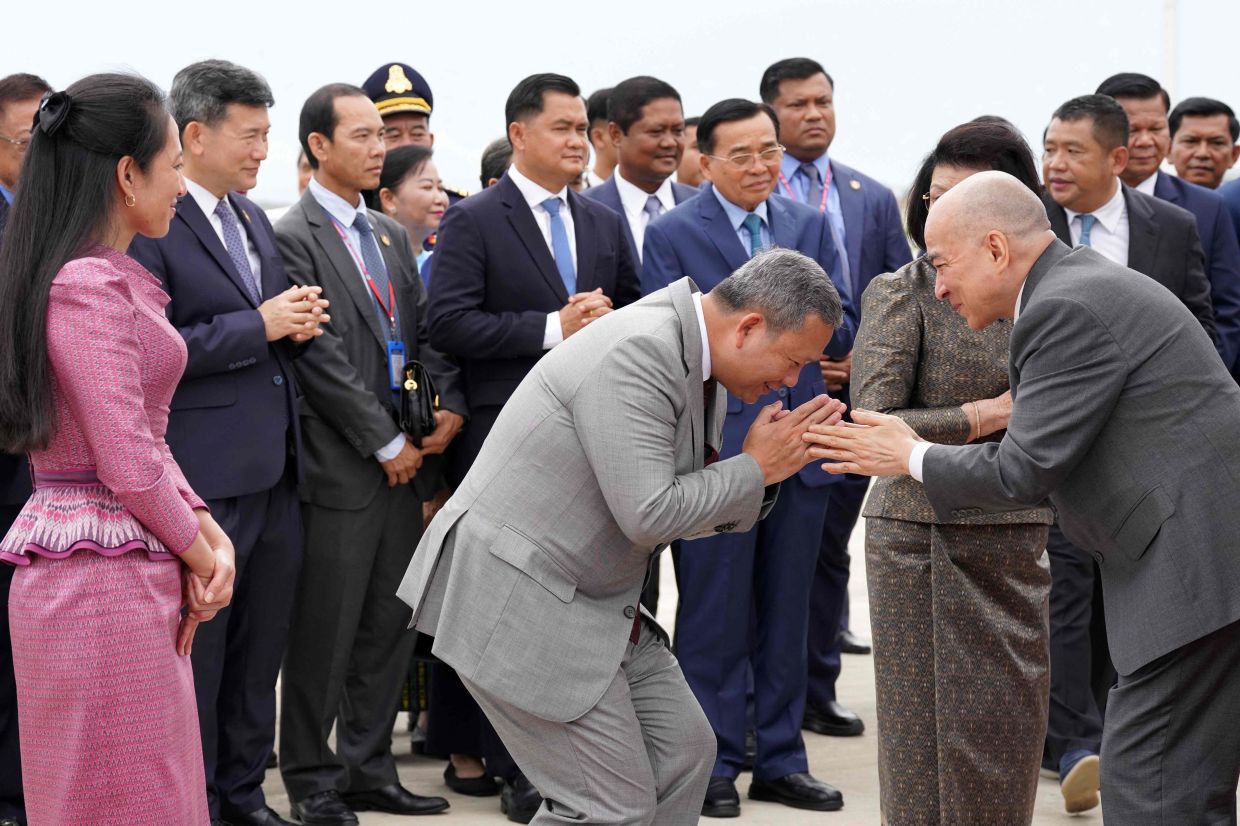
Cambodia's King Norodom Sihamoni arrived back in Phnom Penh on Friday afternoon following an extended medical sojourn in Beijing, where he underwent treatment for prostate cancer under the care of Chinese physicians. The 73-year-old monarch's homecoming, witnessed by state media and senior officials including Prime Minister Hun Manet, marks the conclusion of a therapeutic chapter that began when he travelled to the Chinese capital earlier in the year for health evaluations. The Royal Palace confirmed that his condition has stabilised considerably, with palace statements issued earlier in the week indicating substantial improvement after more than three months of medical intervention.
The king's health journey became public in April when the palace disclosed his cancer diagnosis, providing Cambodians and international observers with transparency regarding the health of their sovereign. His decision to seek treatment in Beijing reflects both the established medical relationships between Cambodia and China and the confidence placed in Chinese healthcare institutions for managing complex cases. Prior to his departure for the capital, Sihamoni had undergone what authorities characterised as a successful surgical procedure, followed by an extended recovery and treatment protocol administered by Beijing-based medical specialists.
The monarch's return to Cambodia carries symbolic significance for the nation, particularly given the continuity of leadership it represents. His arrival was marked by the presence of Hun Manet, the current prime minister who has consolidated power in recent years, alongside former leader Hun Sen, whose influence remains substantial within Cambodian political circles. This institutional reception underscored the importance placed on the king's wellbeing within Cambodia's power structure, with Hun Sen himself announcing the safe arrival through social media platforms, demonstrating the public relations dimension of the royal health episode.
For Malaysian and broader Southeast Asian observers, the Cambodian king's medical episode illustrates a wider regional pattern wherein leaders increasingly access healthcare services across borders, particularly within Asia. China's medical infrastructure and expertise have become increasingly significant for regional political figures, a trend that reflects both technological advancement and deepening bilateral relationships. The transparency with which Cambodia's palace handled the health situation also contrasts with historical patterns in some Southeast Asian nations, where royal health matters remained shrouded in discretion.
Sihamoni's biography offers context for understanding his current reign and its challenges. Having spent most of his adult life outside Cambodia pursuing artistic endeavours and cultural work, he ascended to the throne in 2004 following his father King Norodom Sihanouk's abdication. His father, who had dominated Cambodian politics for decades through various incarnations of leadership, himself underwent cancer treatment in Beijing before stepping down, establishing a precedent for seeking medical care in China. The elder Sihanouk's death in 2012 marked the end of an era, leaving Sihamoni to navigate Cambodia's complex political landscape as a largely ceremonial head of state within a system dominated by Hun Sen and subsequently his protégé Hun Manet.
The current king's multilingual capabilities—fluency in Khmer, French, Czech, and English—reflect his cosmopolitan background and international exposure. These linguistic skills have occasionally positioned him as a cultural ambassador for Cambodia, though his role remains constitutionally circumscribed compared to the political influence wielded by executive power holders. His illness and recovery thus carry implications for Cambodia's institutional stability, particularly given the absence of robust mechanisms for managing extended royal incapacity within the Cambodian constitutional framework.
The medical episode also highlights Cambodia's reliance on external healthcare resources for managing complex conditions affecting national leaders. While Cambodia has developed its domestic medical infrastructure in recent decades, the decision by the royal household to seek treatment abroad reflects confidence in international providers and, more specifically, the established relationship with Chinese medical institutions. This pattern, observable across Southeast Asia, shapes regional geopolitics as healthcare decisions become entangled with diplomatic relationships and bilateral ties.
For Cambodia's broader population, the king's return represents reassurance regarding institutional continuity and political stability. Despite his largely ceremonial constitutional role, the monarchy retains symbolic importance within Cambodian society, particularly among populations with historical ties to the Sihanouk era. The succession of health challenges affecting Cambodian royals—including Sihamoni's own illness and his father's earlier cancer—underscores the vulnerability of even the most protected individuals to age-related conditions, a reality applicable across Southeast Asia's aging leadership cohort.
The timing and handling of Sihamoni's recovery also reflects modern communication norms, with immediate announcements through official channels and digital platforms ensuring domestic and international awareness. This contrasts sharply with historical instances where royal health crises remained concealed from public knowledge until substantial deterioration forced disclosure. The proactive transparency adopted by Cambodia's palace demonstrates how regional monarchies are adapting to contemporary information environments where rumour and speculation can proliferate absent official communication.
Looking forward, Sihamoni's recovery and return to Cambodia suggest the maintenance of current institutional arrangements without immediate succession concerns. However, his extended absence and the necessity for prolonged external medical care underscore questions about succession planning and institutional resilience that permeate Southeast Asia's political establishments. For regional watchers, the Cambodian king's medical journey illustrates both the interconnectedness of healthcare systems across Asia and the ways in which personal health events of national leaders reverberate through institutional and diplomatic channels.

