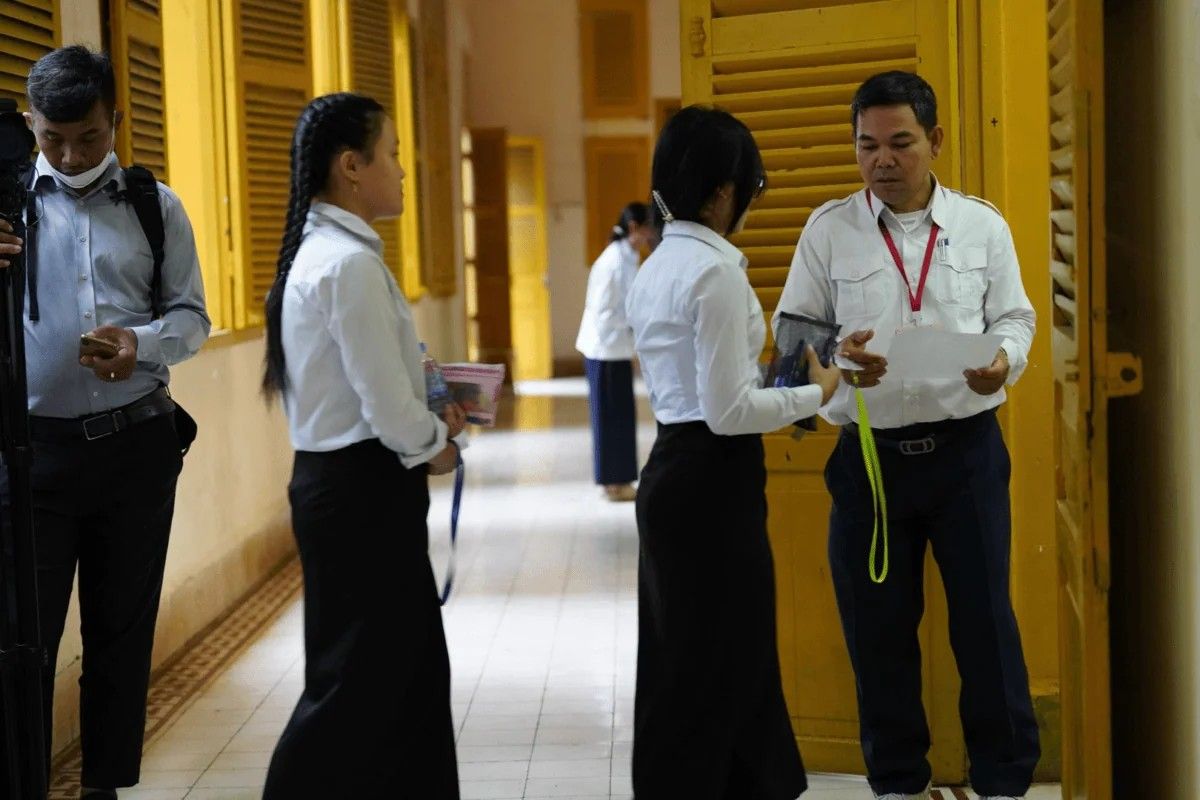
Cambodia's Grade 12 graduation examinations began on August 10, welcoming over 150,000 candidates nationwide to take their final high school assessments. The milestone moment represented a return to more normalcy compared with the previous year's testing cycle, which unfolded amid fresh armed conflict along the Thai border. Education Minister Hang Chuon Naron presided over the opening ceremony in Phnom Penh, offering encouragement to students while acknowledging the continuing plight of thousands displaced by regional instability.
The examination infrastructure spans the entire kingdom, with test-takers distributed across multiple centres. Of the total candidate pool, more than 37,000 students are enrolled in the science track, whilst over 130,000 have chosen the social science pathway. This division reflects broader educational trends in Southeast Asia, where humanities and social studies programmes continue to attract significantly larger cohorts than pure scientific disciplines. The scale of participation underscores the importance of secondary education completion across Cambodia's student population, particularly given ongoing economic development pressures.
The contrast between this year's examination environment and the preceding year proved stark. Last August, testing occurred precisely one month after the initial armed engagements erupted on the Cambodia-Thailand frontier, creating extraordinary stress and disruption for young people preparing for critical assessments. Minister Hang Chuon Naron referenced the harrowing circumstances, recounting how students in affected border communities were forced to pursue their studies under makeshift conditions. In Oddar Meanchey province, some pupils reportedly studied aboard tractors as their families evacuated ahead of military operations. Despite these adversities, the Minister highlighted an inspiring case of one student who achieved an 'A' grade and subsequently gained admission to a prestigious tertiary institution, demonstrating resilience amid chaos.
The territorial incursions initiated by Thai forces last year have created a prolonged humanitarian and educational crisis that continues reverberating throughout Cambodia's border provinces. Twenty-five educational institutions remain entirely inaccessible to their regular student populations, with Thai military forces maintaining presence on Cambodian soil. This occupation has prevented normal classroom instruction and examination preparation for thousands of pupils, effectively displacing their learning activities. The Royal Government has repeatedly demanded restoration of full sovereignty and the unconditional withdrawal of foreign military personnel from these occupied zones, framing educational access as a fundamental right being systematically denied.
Currently, only one displaced school has established alternative learning arrangements. Students from Banteay Mean Rith Lower Secondary School in Oddar Meanchey province are attending classes in temporary camps established away from their occupied campus. This solution, whilst enabling some continuation of education, remains far from adequate and falls dramatically short of comprehensive provisions needed across all 25 affected institutions. The temporary camps lack standard facilities, resources, and environmental conditions necessary for optimal learning outcomes. Minister Hang Chuon Naron emphasised that his government continues pressing for immediate authorisation permitting all displaced students to recommence regular classroom attendance in their established schools, viewing this as an urgent diplomatic and humanitarian priority.
Examination integrity emerged as a secondary but significant concern heading into this year's assessments. Previous testing cycles had been marred by irregularities, most notably the leak of mathematics examination papers during last year's Grade 12 exams. Such breaches undermine assessment credibility and create unfair advantages for some candidates whilst compromising the reliability of educational qualifications. In response, the Ministry deployed substantially reinforced security protocols and increased oversight mechanisms designed to prevent similar lapses. Minister Hang Chuon Naron publicly committed to stringent anti-corruption measures, emphasising thorough organisational preparation and rigorous enforcement of examination protocols throughout the testing period.
Oversight responsibilities have been distributed among multiple stakeholder agencies to enhance transparency and accountability. The Anti-Corruption Unit deployed more than 4,000 observers strategically positioned across examination centres nationwide, matching the observer deployment levels of the previous year. These officials maintain vigilance for any suspicious activities, irregularities, or attempts to compromise examination security. Their presence serves both as practical prevention against cheating and dishonest conduct, and as a visible deterrent against potential violations. By involving external monitors from various government and institutional bodies, the examination process gains credibility with international observers and demonstrates commitment to maintaining academic standards despite broader institutional challenges.
The resumption of relatively standard examination conditions reflects Cambodia's attempt to restore normalcy in critical sectors despite unresolved border tensions. Educational continuity represents a fundamental measure of national stability and governmental capacity to serve citizen populations. For Malaysia and other Southeast Asian nations monitoring regional developments, Cambodia's educational persistence amid security challenges illustrates both resilience and vulnerability. Border disputes between regional powers can rapidly escalate and create cascading disruptions across civilian sectors, particularly affecting youth populations dependent on uninterrupted educational access for future social mobility and economic participation.
The situation also raises broader questions about international responsibility regarding civilian infrastructure and educational rights in contested territories. Thailand's continued military occupation of Cambodian border areas, however strategically justified from Bangkok's security perspective, directly interferes with basic educational provision and violates young people's fundamental development opportunities. This creates enduring social costs potentially visible for decades as affected cohorts experience educational disruption during formative learning years. Regional diplomatic mechanisms and ASEAN frameworks remain critical for achieving sustainable border stabilisation that permits resumption of normal educational and economic activities across affected communities.

