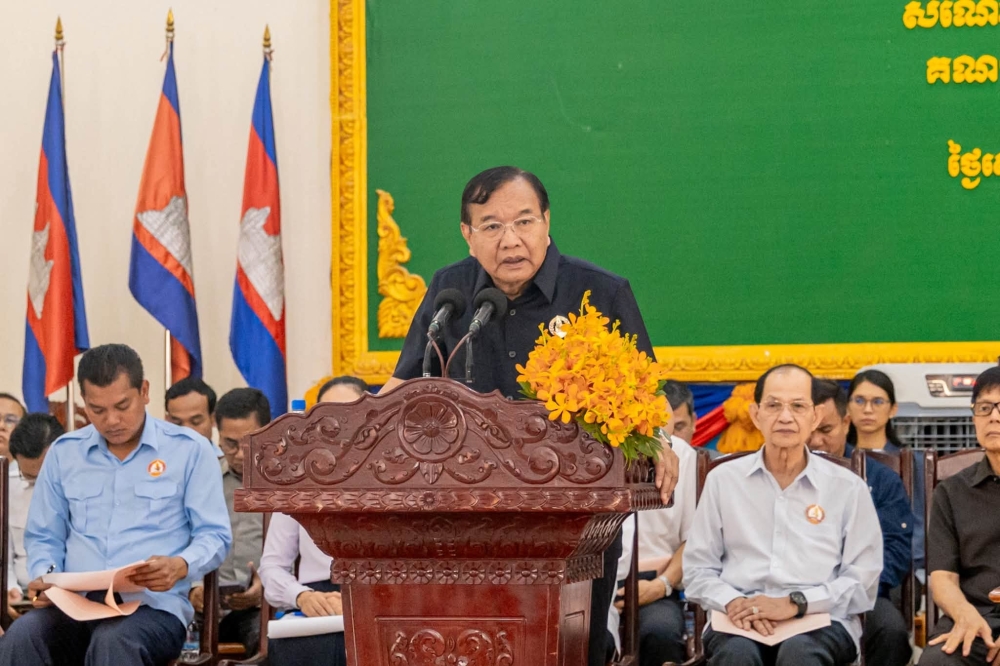
Cambodia's Deputy Prime Minister and Minister of Foreign Affairs and International Cooperation Prak Sokhonn touched down in Malaysia on August 3 for a carefully scheduled two-day official visit, underscoring the continued importance both nations place on their diplomatic relationship and broader Southeast Asian integration efforts. The high-level delegation's arrival at Sepang marks a significant moment in Malaysia-Cambodia ties, particularly as both countries navigate complex regional dynamics and seek to strengthen economic and political partnerships across the ASEAN framework.
Such ministerial-level visits carry substantial weight in ASEAN diplomacy, where personal relationships between senior officials often translate into concrete policy outcomes and institutional cooperation. Prak Sokhonn's position as Cambodia's top diplomat and second-highest-ranking government official indicates Phnom Penh's commitment to treating this engagement as a matter of considerable importance. The timing of the visit reflects ongoing efforts by ASEAN member states to deepen intra-regional dialogue at a moment when the grouping faces external pressures and internal coordination challenges.
Malaysia has long sought to maintain robust relationships across all ASEAN capitals, viewing such bilateral connections as essential to its role as a stabilising force within the region. The visit provides an opportunity for Malaysian officials to reinforce shared commitments to regional peace, security, and prosperity. For Cambodia, engaging with Malaysia at this level signals a desire to strengthen ties with one of Southeast Asia's larger and more economically influential nations, potentially opening doors for enhanced trade, investment, and tourism partnerships.
The bilateral agenda during Prak Sokhonn's stay likely encompasses multiple dimensions of Malaysia-Cambodia cooperation. Trade relations, historically important but with room for expansion, may feature prominently in discussions. Investment frameworks, particularly in sectors where Cambodia seeks capital and expertise, could be explored. Regional security matters, including maritime cooperation and terrorism prevention, typically form part of such high-level visits. Both nations also share interests in managing transboundary water resources, particularly concerning the Mekong River's significance to Cambodia's development.
Within the broader ASEAN context, the visit occurs at a time when the bloc is working to maintain unity amid geopolitical tensions. Malaysia and Cambodia can leverage their respective positions to advocate for ASEAN-centric solutions to regional challenges. Both nations benefit from a rules-based international order and have expressed commitment to upholding ASEAN's founding principles of non-interference and consensus-building. Such visits reinforce these shared values and provide platforms for coordinating positions on issues ranging from the South China Sea to humanitarian concerns.
Prak Sokhonn's dual portfolio as foreign minister and deputy prime minister gives him significant influence over Cambodia's international strategy. His presence in Malaysia signals that whatever agreements or understandings emerge from these discussions carry weight at the highest levels of Cambodia's government. This is not merely a routine diplomatic courtesy but rather an engagement reflecting strategic calculations about Cambodia's regional relationships and its positioning within ASEAN's evolving architecture.
From Malaysia's perspective, receiving such a senior Cambodian visitor demonstrates its continued relevance as a key ASEAN player. Malaysia has invested considerable diplomatic capital in maintaining balanced relationships across the region, avoiding alignment with competing power blocs while advancing its own interests. Cambodia, similarly navigating complex regional and international pressures, values partnerships with nations that respect its sovereignty and support its development aspirations without imposing political conditions.
The two-day format suggests a packed itinerary likely including formal bilateral meetings with Malaysian government counterparts, potentially cultural or economic showcases, and possibly roundtable discussions involving business communities or academic experts. Such visits often include courtesy calls on senior Malaysian officials beyond the foreign ministry, reflecting the comprehensive nature of state-to-state engagement at this level. The structured timeframe indicates both delegations are treating this as a substantive encounter rather than a ceremonial formality.
Economically, deeper Malaysia-Cambodia ties carry mutual benefits. Malaysia's advanced financial sector, technological capabilities, and manufacturing expertise could support Cambodia's development ambitions. Conversely, Cambodia offers Malaysian investors opportunities in agriculture, tourism, and infrastructure development as it pursues modernisation. Enhanced people-to-people exchanges, including student scholarships and professional networks, often flow from successful high-level visits, creating lasting connections between the two societies.
Looking beyond the immediate bilateral dimension, Prak Sokhonn's visit contributes to the broader architecture of ASEAN cohesion. Regular high-level exchanges among member states reinforce institutional relationships and create channels for conflict prevention. In a regional environment where misunderstandings can escalate quickly, the routine nature of such visits—when executed with genuine engagement—helps maintain the diplomatic fabric that holds ASEAN together. Malaysia and Cambodia, as neighbouring nations with historical ties and shared regional interests, exemplify the kind of bilateral relationships that form ASEAN's foundation.

