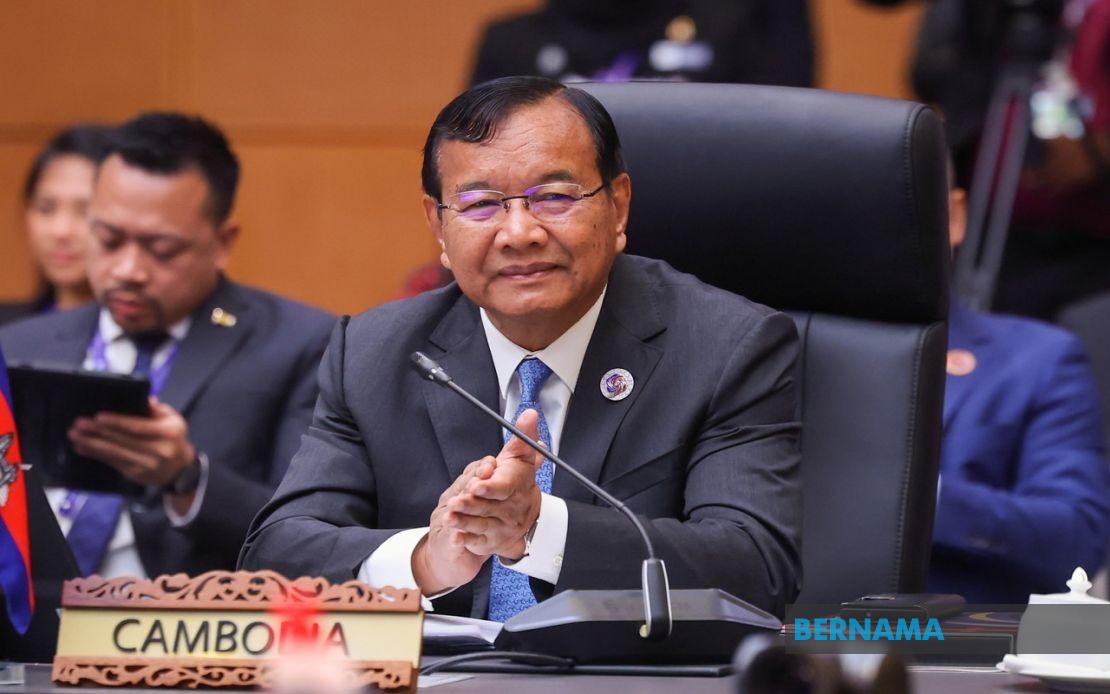
Cambodian Deputy Prime Minister and Minister of Foreign Affairs and International Cooperation Prak Sokhonn touched down in Malaysia on August 3rd, embarking on a two-day official visit aimed at reinvigorating the longstanding partnership between Kuala Lumpur and Phnom Penh. The senior diplomat and his entourage landed at Kuala Lumpur International Airport Terminal 1 at 1.48 pm, with Cambodian Ambassador to Malaysia Ouk Chandara and Malaysian Government chief ceremony officer Datuk Rozainor Ramli greeting him upon arrival. The visit comes at a moment when economic ties between the nations are accelerating, underscoring the strategic importance both governments place on deepening institutional and commercial engagement.
Sokhonn's agenda centres on a formal courtesy meeting with Prime Minister Datuk Seri Anwar Ibrahim, followed by a series of high-level diplomatic engagements that will establish the tone for the coming months of bilateral cooperation. These preliminary discussions serve to set the stage for the substantive work ahead, particularly the pivotal Joint Commission meeting scheduled for the following day. Such ceremonial exchanges, while often overlooked by observers focused purely on outcomes, carry symbolic weight in diplomatic protocol and signal commitment from the highest political levels.
The centrepiece of this visit is the 3rd Meeting of the Cambodia-Malaysia Joint Commission for Bilateral Cooperation, to be held in Kuala Lumpur. This institutional mechanism provides the formal framework through which both nations coordinate policy, review implementation of earlier agreements, and chart direction for future collaboration across multiple sectors. The meeting will comprehensively assess progress in executing the joint minutes from the second JCBC gathering, offering an opportunity to identify bottlenecks, celebrate successes, and recalibrate priorities if warranted.
Previously concluded bilateral agreements will also feature prominently in discussions, as officials evaluate whether existing arrangements continue to serve national interests or require amendment or supplementation. This backward-looking assessment is essential for demonstrating accountability to domestic stakeholders and ensuring that high-level political commitments translate into tangible benefits at ground level. The process also identifies gaps in existing frameworks that may need addressing through new agreements or enhanced coordination mechanisms.
Sokhonn is scheduled to conduct bilateral talks with Foreign Minister Datuk Seri Mohamad Hasan, creating space for candid discussion of issues beyond the formal JCBC agenda. These one-on-one conversations often prove more productive than large multilateral meetings, allowing officials to explore nuances, address concerns privately, and build personal rapport that facilitates future negotiations. The foreign ministers' engagement provides an opportunity to discuss sensitive matters requiring diplomatic delicacy and to establish shared understanding on regional and global issues affecting both nations.
The economic dimension of Malaysia-Cambodia relations has become increasingly significant and warrants close attention from policymakers across Southeast Asia. Bilateral trade between the countries surged 27.4 per cent year-on-year in 2025, reaching RM5 billion (USD1.17 billion), reflecting expanding commercial activity across multiple industries. This robust growth trajectory suggests that beneath the headlines of official visits lies genuine economic momentum, driven by private sector investment, trade facilitation agreements, and complementary production capabilities that both nations are exploiting.
Malaysia's investment position in Cambodia demonstrates the depth of commercial confidence Malaysian businesses place in the kingdom's economic prospects. As of 2024, Malaysia's accumulated foreign direct investment in Cambodia totalled USD3.20 billion (RM13.07 billion) spread across 162 registered projects, establishing Malaysia as Cambodia's third-largest foreign investor. This substantial capital commitment spans manufacturing, agribusiness, telecommunications, and financial services, creating employment and technology transfer that benefits Cambodia's development trajectory while generating returns for Malaysian enterprises.
The position of Malaysia as Cambodia's third-largest foreign investor reflects both the historical relationship between the nations and their complementary economic structures. Malaysian companies bring capital, technical expertise, and access to regional supply chains that enable Cambodian partners to expand operations and enhance competitiveness. Simultaneously, Cambodia offers Malaysian investors access to younger demographic cohorts, lower labour costs, and expanding consumer markets, creating mutually beneficial dynamics that sustain business flows across borders.
For Malaysia's foreign policy establishment, deepening relations with Cambodia serves broader strategic interests in Southeast Asia. As chair or active participant in regional mechanisms such as the Association of Southeast Asian Nations, Malaysia benefits from cultivating strong relationships with fellow members, particularly those positioned as bridge nations between major powers. Cambodia's geographic centrality in mainland Southeast Asia and its historical ties to multiple regional actors make it an important player in Malaysia's diplomatic calculations.
The timing of this official visit and the JCBC meeting reflects both routine diplomatic scheduling and responsiveness to contemporary opportunities. The recent economic growth acceleration in bilateral trade suggests that institutional structures are functioning effectively and generating measurable outcomes. Policymakers recognise the importance of maintaining momentum through high-level engagement, demonstrating that the partnership merits continued political attention and resource allocation from both governments.
Regional observers should monitor outcomes of the JCBC meeting closely, as decisions reached will likely influence Malaysia-Cambodia cooperation patterns across the coming years. New agreements, expanded cooperation frameworks, and enhanced coordination mechanisms emanating from this gathering could establish templates for engagement in sectors ranging from trade and investment to education, defence, and environmental protection. For Malaysian companies operating in Cambodia or considering expansion, clarity regarding bilateral policy direction offers important strategic signalling.
The visit also carries significance for wider ASEAN dynamics, as Malaysia-Cambodia relations represent one of multiple bilateral partnerships shaping the regional architecture. Successful institutional cooperation between the two nations demonstrates that ASEAN members can translate common membership into concrete cooperative outcomes despite varying political systems, economic development levels, and geopolitical orientations. This functional demonstration of partnership effectiveness strengthens the broader ASEAN project and may influence how other member states approach bilateral engagement.
Looking forward, sustained attention to Malaysia-Cambodia relations through mechanisms such as the JCBC remains vital for ensuring that political commitment translates into policy implementation and tangible benefits for citizens of both nations. The visit of Deputy Prime Minister Sokhonn and the accompanying institutional meetings represent important moments in an ongoing relationship that continues evolving in response to regional developments, global economic conditions, and shifting priorities within both governments. Success in deepening this partnership creates positive precedent for engagement across ASEAN and reinforces confidence in multilateral mechanisms as vehicles for advancing shared prosperity.

