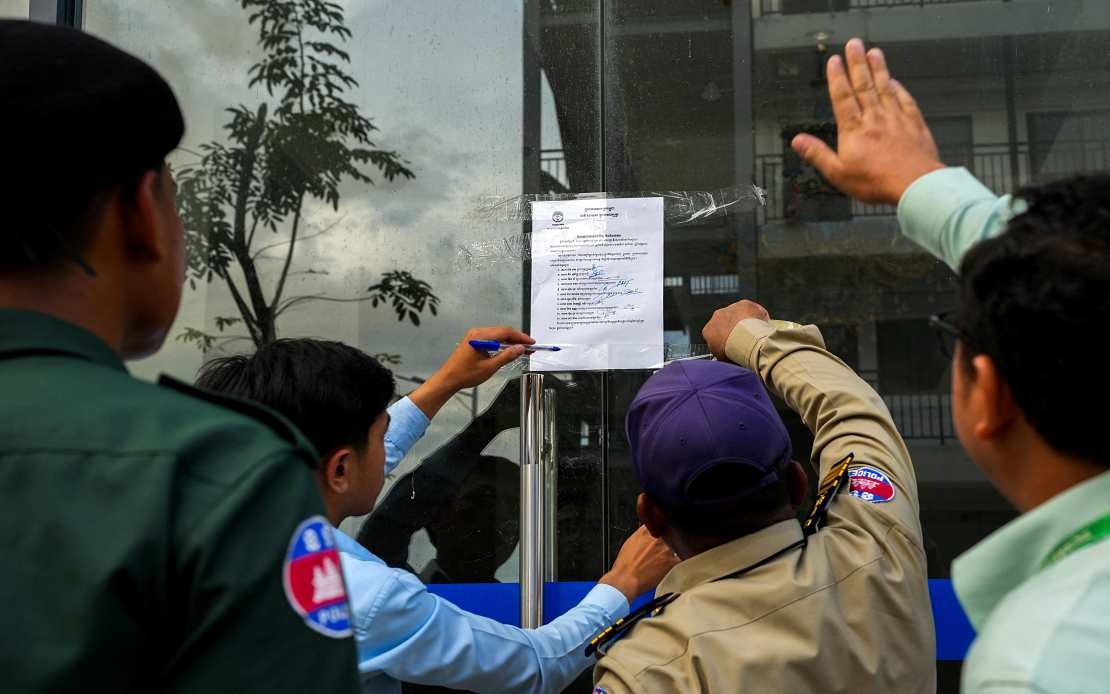
Cambodia has intensified its battle against organized cybercrime by expelling over 16,000 foreign nationals suspected of operating online scam networks during the first six months of 2026. Police Lieutenant General Sok Veasna, who heads the General Department of Immigration, disclosed the figures during a mid-year review meeting on Tuesday, confirming that the deportations form part of a sustained enforcement campaign that gained momentum following the start of the year. The scale of the operation underscores the growing severity of Cambodia's cyber-scam crisis and the government's determination to dismantle transnational criminal enterprises that have tarnished the kingdom's international standing.
The deportation figures represent a fraction of Cambodia's broader immigration enforcement activities. During the same six-month period, the country expelled a total of more than 45,000 foreign nationals on various grounds, suggesting that cybercrime suspects constitute roughly one-third of all deportees. Notably, Sok Veasna stipulated that all individuals deported for online fraud-related offences face permanent entry bans, a measure designed to prevent recidivism and protect Cambodia's borders from repeat offenders. This policy reflects the gravity with which authorities are treating the issue and signals that the government views such crimes as posing fundamental threats to national security and social stability.
Cambodia's crackdown has been formalized through legislative measures that represent a significant hardening of the state's response to cybercrime. In April, lawmakers enacted the Law on Combating Online Scams, which introduces stringent penalties targeting high-ranking members of criminal syndicates, including online bosses and ringleaders. The legislation goes beyond simple deportation; it establishes a legal framework for prosecuting foreign and domestic perpetrators who orchestrate fraud networks operating from Cambodian soil. This legal arsenal represents an acknowledgment that reactive enforcement—simply removing suspected criminals—must be complemented by lasting legal consequences for those who direct these operations.
However, policy analysts and academic experts caution that mass deportations, while visibly impressive, address only the symptoms of Cambodia's cyber-scam epidemic rather than its underlying causes. Thong Mengdavid, deputy director at the China-ASEAN Studies Centre of the Cambodia University of Technology and Science, characterized the deportation campaign as a necessary but ultimately insufficient step toward restoring Cambodia's reputation abroad. While acknowledging that removing thousands of suspected scammers disrupts operations and generates positive headlines, he emphasized that this approach fails to target the criminal masterminds who orchestrate these networks from positions of relative safety. The most consequential offenders—wealthy syndicate leaders with sophisticated operational knowledge—may evade deportation by maintaining low profiles or leveraging protective networks within Cambodia itself.
The structural vulnerabilities that allow cyber-scam networks to flourish in Cambodia extend beyond the presence of foreign criminal elements. Thong Mengdavid pointed to systemic corruption and human trafficking as root causes that sustain the viability of online fraud operations. Corrupt officials at various levels of Cambodia's bureaucracy may facilitate the entry, protection, and operational freedom of scam networks in exchange for financial incentives. Simultaneously, human trafficking mechanisms that supply workers to these criminal enterprises—often individuals coerced or deceived into participating—represent a distinct but deeply interconnected crisis. Until these foundational problems are addressed through comprehensive anti-corruption initiatives and strengthened human trafficking enforcement, the conditions enabling cyber-scam networks will persist despite high-profile deportations.
The regional implications of Cambodia's cyber-scam crisis extend beyond the kingdom's borders. Southeast Asian citizens have emerged as primary victims of fraud schemes allegedly coordinated from Cambodian locations, creating diplomatic tension and damaging the region's reputation for financial security. Malaysian, Thai, Filipino, and Vietnamese authorities have repeatedly expressed concern about organized fraud networks using Cambodia as an operational base. The cross-border nature of these crimes complicates enforcement, as victims in one nation pursue criminal cases in another, while perpetrators exploit jurisdictional gaps. Cambodia's aggressive deportation campaign therefore serves not only domestic purposes but also regional stability by demonstrating commitment to eliminating transnational criminal infrastructure affecting neighboring countries.
The timing and scale of Cambodia's response reflects broader trends in Southeast Asian governance. Countries throughout the region have faced mounting pressure from international partners and their own citizens to address cybercrime more forcefully. Thailand, Malaysia, and the Philippines have each conducted similar operations targeting foreign scam networks. Cambodia's decision to establish dedicated legislation specifically addressing online fraud mirrors initiatives undertaken elsewhere in ASEAN, suggesting a regional consensus that cybercrime warrants specialized legal instruments beyond general criminal codes. This coordination, though largely unilateral, creates overlapping enforcement mechanisms that potentially squeeze criminal networks from multiple directions.
The sustainability of Cambodia's crackdown remains an open question. Deportation campaigns depend on consistent enforcement capacity, intelligence capabilities, and international cooperation to identify suspects and secure their removal. As criminal networks adjust tactics and relocate operations, the efficacy of enforcement may diminish over time. Additionally, the permanent entry bans issued to deported scammers assume an effective border management system capable of identifying and intercepting repeat offenders—a tall order given the scale and sophistication of human smuggling in Southeast Asia. Cambodia's success will ultimately depend on whether the current momentum translates into lasting institutional change or represents a temporary surge in enforcement that eventually subsides.
Looking forward, experts argue that Cambodia must balance high-visibility enforcement operations with structural reforms addressing governance and corruption. International assistance in strengthening investigative capabilities and financial forensics could enhance the government's ability to trace money flows generated by scam networks and identify kingpins operating behind the scenes. Cooperation with regional partners and countries where victims reside could improve intelligence sharing and coordination. Furthermore, addressing the vulnerable populations targeted for recruitment into these networks—through economic development initiatives and educational programs—would reduce the supply of workers available to criminal syndicates. Only through such multifaceted approaches can Cambodia move beyond the temporary relief offered by mass deportations toward genuine elimination of cyber-scam networks that have become deeply embedded in the kingdom's economy and society.

