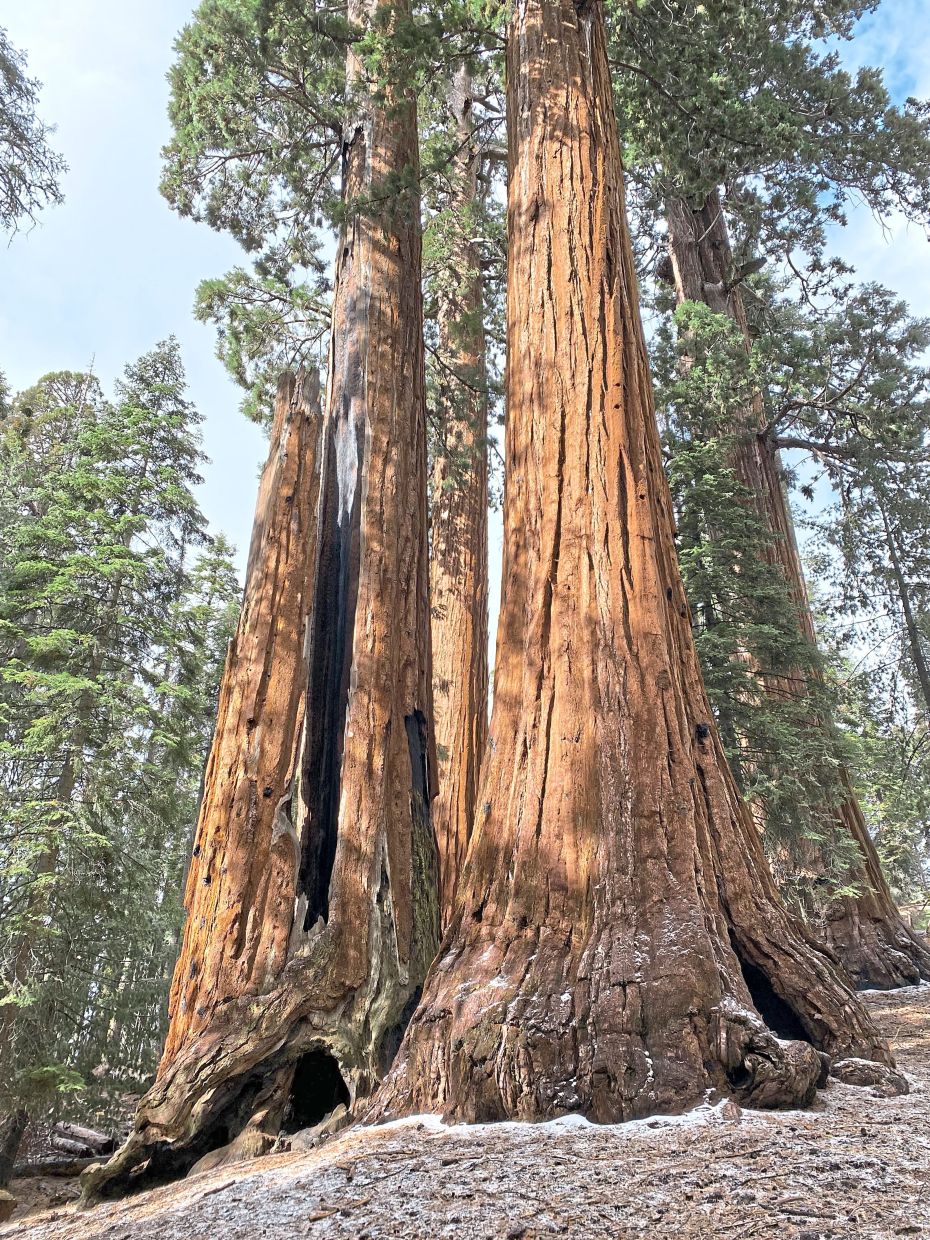
A massive restoration initiative is underway across California's Sierra Nevada mountains to save the world's largest trees by volume from increasingly destructive wildfires, following catastrophic blazes that wiped out nearly a fifth of all remaining giant sequoias just five years ago. The fires of 2020 and 2021 burned across Sequoia National Park, Sequoia National Forest and surrounding areas with unprecedented ferocity, killing thousands of these towering giants that can reach 91.5 metres high and survive for three millennia, prompting an urgent reckoning among scientists, park managers and conservationists about the species' future in an era of intensifying climate impacts.
The scale of that loss still haunts those tasked with stewardship of these irreplaceable forests. Kevin Conway, state forests programme manager for Cal Fire, California's primary firefighting agency, recalls the emotional toll of witnessing the devastation. The realisation that human management decisions over the past century had inadvertently created conditions for these catastrophic fires prompted soul-searching among the officials responsible for forest protection. That introspection has now crystallised into action, with Conway and his counterparts determined to reverse the damage and prevent future losses of similar magnitude.
The partnership formed to tackle this challenge, called the Giant Sequoia Lands Coalition, brings together eight primary institutional stakeholders whose combined authority encompasses the landscapes where all 94 groves of giant sequoias exist. Cal Fire, California State Parks, the National Park Service, Tulare County, the Tule River Indian Tribe of California, UC Berkeley, the United States Forest Service, and the federal Bureau of Land Management have committed resources and expertise to a coordinated restoration agenda. Nine additional organisations contribute scientific research, funding and logistical support, reflecting the consensus that saving these ancient trees requires unprecedented institutional cooperation.
Since launching formal restoration operations in 2022, the coalition has made quantifiable progress that offers grounds for cautious optimism. Field crews have thinned dense undergrowth and small trees in 44 of the 94 giant sequoia groves, work that reduces the accumulation of flammable material that would otherwise turn a manageable fire into an inferno. The partnership has also conducted carefully planned controlled burns using techniques indigenous tribes employed for centuries, and has planted more than 682,000 sequoia seedlings in severely burned areas to promote forest regeneration. According to a report released in May, these efforts have mitigated fire risk across 9,409 hectares over four years—a significant footprint, though one that must expand considerably to address the full scope of vulnerable habitat.
The fundamental problem facing these forests stems from a century of well-intentioned but ultimately counterproductive fire suppression policy. Prior to the Gold Rush of the 1850s, lightning strikes and controlled burns set by Native American tribes naturally cleared dense undergrowth from giant sequoia groves roughly every ten to twenty years. This regular, low-intensity fire regime allowed the forests to maintain an open structure where trees could compete for resources without accumulating excess fuel. When fire suppression began around a hundred years ago, however, it created a catastrophic imbalance. Without periodic burning, small trees, shrubs and dead wood accumulated to unnaturally dense levels, creating a tinderbox conditions that transformation any wildfire into a potential apocalypse for the grove.
Kristen Shive, a fuels and forest specialist with the University of California Cooperative Extension Program at UC Berkeley, explains the botanical reality that makes this situation particularly tragic. Giant sequoias have evolved over millennia to thrive alongside fire—their cones contain resin that requires heat to melt and release seeds for regeneration. The trees' spongy, reddish bark grows to approximately 60 centimetres thick, functioning as insulation to protect the living tissue beneath from extreme heat. Yet this evolutionary adaptation only works within the historical fire regime. Modern wildfires burning through overstocked groves reach temperatures and intensities that exceed what even these remarkable defences can withstand, causing mortality rates unprecedented in the species' three-thousand-year lifespan.
Climate change has dramatically worsened the underlying vulnerability. Extended droughts between 2012 and 2016, and again from 2020 to 2022, killed millions of trees across the Sierra Nevada range, leaving vast quantities of dead wood that serve as additional fuel. Rising temperatures have dried soils and vegetation throughout the region, making fires burn hotter and spread more rapidly when they do ignite. Shive witnessed firsthand the psychological impact when surveying groves after 2020 and 2021 burned: discovering ancient trees that had survived thousands of years suddenly killed by what amounted to human mismanagement and climatic shifts proved almost unbearable for those devoted to forest preservation.
The restoration strategy focuses on removing the overgrown smaller tree species that have proliferated in the absence of fire, particularly white fir, red fir and incense cedar. Dead sugar pines and ponderosa pines killed by recent droughts are extracted using chainsaws, with much of the resulting debris piled and burned during off-season windows when controlled ignition poses minimal risk. On private land and in Cal Fire demonstration forests, larger logs can be sold to lumber companies, generating revenue that helps offset the substantial costs of mechanical thinning operations. This approach transforms restoration from a financial burden into an economically sustainable undertaking, creating incentives for broader adoption of best practices.
The ecological benefits extend beyond merely reducing fire intensity. When dense thickets of competing trees are removed, sunlight penetrates to the forest floor, allowing giant sequoia seedlings—including the 682,000 planted specimens—to establish and grow. The resulting forest structure becomes thinner and more open, resembling the natural condition that prevailed before a century of suppression policy disrupted the ecosystem's evolutionary trajectory. Conway emphasises that the goal is not pristine wilderness untouched by human hands, but rather forests restored to ecological conditions that allow them to resist drought, fire and disease through their own adaptive mechanisms.
Steve Mietz, former superintendent of Redwood National Park and newly appointed president of Save the Redwoods League, frames the ongoing effort as a race against time that is ultimately winnable if stakeholders maintain commitment and resources. His assessment that another major fire season is inevitable—not a matter of if but when—underscores the urgency, yet his confidence that solutions exist and are being implemented reflects the consensus emerging from the coalition's work. The knowledge exists; the institutional machinery is in place; what remains is sustaining the effort across the multiple years and potentially decades required for full forest recovery.
Challenges persist, including legal obstacles from environmental groups concerned about insufficient environmental review of fuel reduction projects. The Earth Island Institute sued the National Park Service in 2022 to halt work in Merced Grove at Yosemite, arguing that fuel reduction lacked adequate environmental study. Federal courts rejected this challenge, with a district court dismissal upheld by the Ninth Circuit in 2023, clearing the way for restoration work to proceed. Merced Grove has been threatened by six wildfires in the past fifteen years, making it a priority for thinning and controlled burn operations that commenced last year.
For Malaysian and Southeast Asian observers, California's giant sequoia crisis carries relevant lessons about the long-term consequences of suppressing natural disturbance regimes in forest ecosystems. Tropical and subtropical forests across the region similarly depend on natural processes—whether fire, flooding or wind—to maintain structural and compositional diversity. As climate change intensifies and introduces novel stresses, ecosystems that have been heavily modified by human management may face unexpected vulnerabilities. The California experience suggests that restoring ecological function often requires accepting and working with natural processes rather than attempting to eliminate them entirely, a principle with profound implications for forest management policies across Asia.
The broader significance of the Giant Sequoia Lands Coalition's work lies not merely in saving individual trees, however magnificent. It demonstrates that protecting irreplaceable natural heritage in the face of climate change demands unprecedented collaboration across institutional boundaries, willingness to reverse previous management approaches, and commitment to long-term restoration that may require decades to show full results. As other regions confront climate-driven threats to iconic ecosystems, the coalition's experience in achieving institutional coordination, securing sustained funding, and translating scientific understanding into on-the-ground action provides a template worth studying. The race to save California's ancient giants is ultimately a race to develop and refine the approaches that all societies will need to preserve their natural treasures in an increasingly volatile climate.

