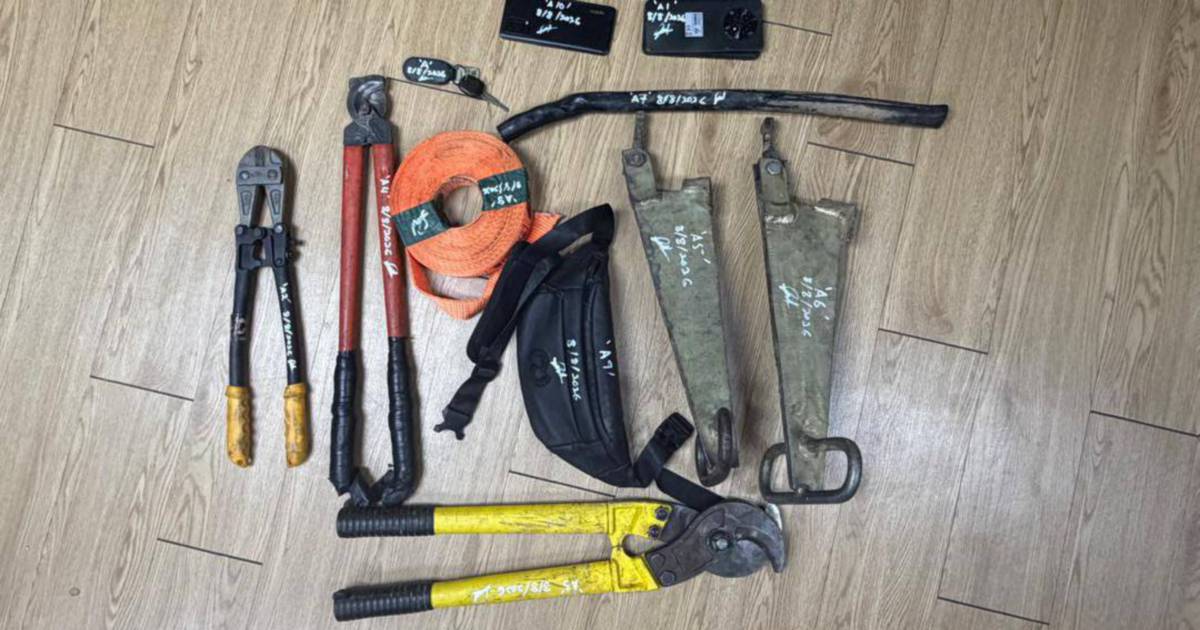
A man believed to be involved in cable theft was arrested in Melaka following an intense pursuit that stretched nearly 50 kilometres before culminating in a crash in the Sungai Chohong area of Jasin. The incident unfolded in the early hours of the day when authorities attempted to apprehend the suspect, who fled in a vehicle instead of complying with police directives. The chase covered considerable ground across the state, highlighting the lengths some suspects will go to evade law enforcement and the determination of police in pursuing them.
The dramatic conclusion came when the suspect's vehicle struck a support cable structure in Sungai Chohong, forcing an abrupt halt to the extended chase. The collision appears to have incapacitated the vehicle, leaving the driver with no further means of escape. This detail carries particular significance given that the suspect was being pursued in connection with cable theft—a form of criminality that has become increasingly problematic across Malaysia and the broader Southeast Asian region.
Cable theft represents a genuine operational and safety concern for utility companies, telecommunications providers, and public infrastructure across Malaysia. These thefts disrupt service delivery to businesses and residents, often affecting critical communications networks during periods when downtime carries severe consequences. Beyond immediate disruption, the act of removing cables from infrastructure can create dangerous conditions for both the perpetrators and the public, as electrical or structural hazards may be exposed in the process.
The extended nature of this particular pursuit suggests that the suspect was determined to avoid capture, employing whatever driving tactics he could muster to distance himself from pursuing officers. Police operations of this scale require significant resources—including multiple vehicles, coordinated personnel across jurisdictions, and real-time communication systems—to maintain pursuit and ensure public safety throughout the chase route. The 50-kilometre distance demonstrates how such incidents can consume considerable operational capacity.
Jasin, the location where the chase ultimately concluded, sits within Melaka state's broader administrative geography and forms part of the region's critical infrastructure network. The reference to Sungai Chohong as a specific crash site indicates police were able to track the suspect through multiple zones before he lost control or deliberately crashed to prevent further pursuit. This level of geographic detail matters because it shows the methodical police response to mobile crime—officers knew where the suspect was heading and managed to predict and prepare interception points.
Suspected cable theft cases like this underscore an ongoing challenge facing Malaysian authorities and private sector stakeholders responsible for infrastructure maintenance. Cable theft rings often operate with some degree of organization, selling recovered materials to scrap metal dealers or recyclers who may not always verify the legitimacy of the source. This creates a secondary market incentive structure that encourages the primary theft activity. Without addressing both the supply side (preventing theft) and demand side (monitoring scrap operations), authorities may find such incidents recurring.
The arrest represents a tangible outcome of proactive policing efforts, though the true scale of cable theft in the region remains difficult to quantify. Not all thefts result in police pursuits, and some incidents may go unreported if victims opt for insurance claims rather than criminal complaints. Understanding the full scope of such criminality is essential for developing preventive strategies that involve both technological solutions—such as improved surveillance at vulnerable points—and community awareness initiatives.
For ordinary Malaysians, incidents involving infrastructure theft and police pursuits carry practical implications. Disruptions caused by cable theft can affect broadband connectivity, electricity supply, and emergency services in affected areas. When these thefts occur in densely populated zones or near critical facilities, the consequences ripple across businesses and households. The police response, while necessary and justified, also demonstrates the reactive nature of enforcement—authorities respond to criminal acts rather than preventing them through infrastructure hardening or intelligence gathering targeting organized theft groups.
The intersection of this case with broader Southeast Asian trends is noteworthy. Countries throughout the region report rising metal theft from utilities, often linked to poverty, organized crime, or both. Thailand, Indonesia, and the Philippines have all documented significant cable theft incidents affecting telecommunications and power networks. This regional pattern suggests that Malaysian authorities are contending with pressures and criminal methodologies that extend beyond domestic borders, potentially requiring cross-border information sharing and coordination.
The suspect's apparent willingness to engage in a 50-kilometre chase raises questions about what motivated such high-risk behavior. Whether this reflects desperation, prior criminal history making return to custody particularly unappealing, or simply panic-driven decision-making remains unknown pending formal statements and charges. Legal proceedings will determine the formal charges and whether the suspect faces additional counts related to the pursuit itself or the traffic violations committed during the chase.
Moving forward, this arrest offers law enforcement an opportunity to gather intelligence about cable theft operations in Melaka and potentially beyond. Police interviews with the suspect may reveal supply chains, buyer networks, and coordination methods used by organized theft groups. If the individual was part of a larger operation rather than acting independently, intelligence gathered could lead to dismantling wider criminal networks. Such outcomes would represent success beyond the immediate apprehension, contributing to longer-term infrastructure security across the state.

