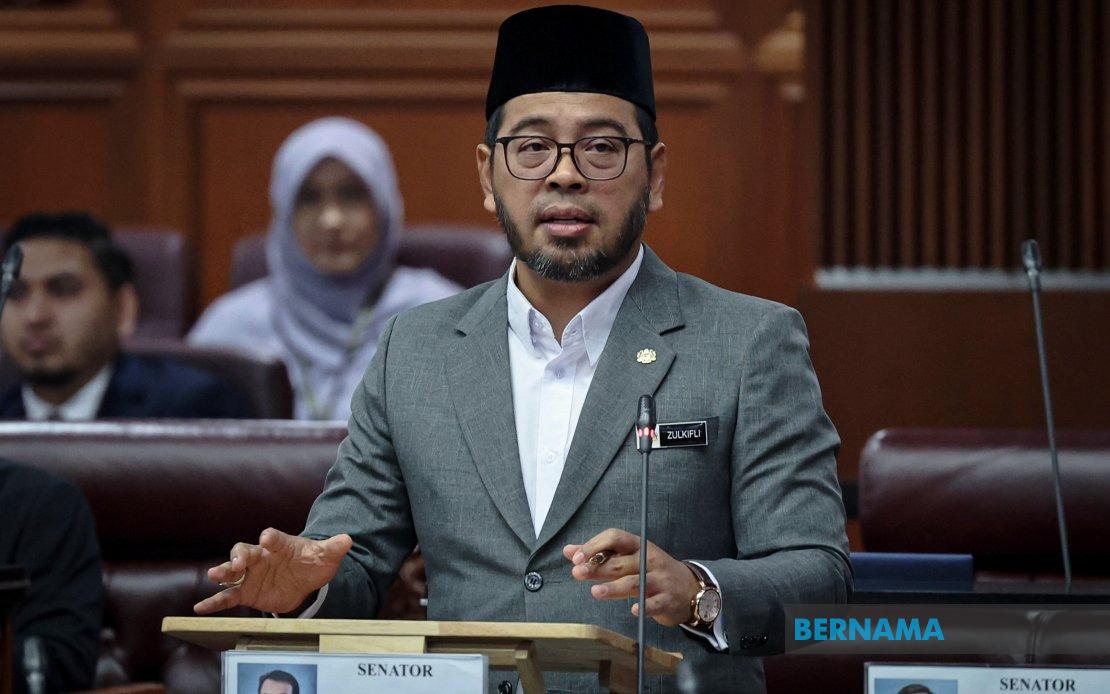
The Malaysian Cabinet is set to examine a proposal that would make the Royal Commission of Inquiry report on Tabung Haji publicly available, according to Minister in the Prime Minister's Department (Religious Affairs) Dr Zulkifli Hasan. The move comes as confusion and unsubstantiated claims continue to swirl around the institution's handling of strategic assets, with critics alleging improper conduct by the former Treasury secretary-general during the financial crisis that nearly toppled the Muslim pilgrimage fund.
Zulkifli moved to dispel what he characterised as widespread misunderstandings about the circumstances surrounding Tabung Haji's asset disposals. He firmly rejected claims that the former Treasury official had liquidated TH's strategic holdings, asserting instead that the transactions constituted a rescue operation designed to prevent the collapse of a critical financial institution serving Malaysia's Muslim population. The minister's clarification underscores the sensitive nature of the Tabung Haji situation, which remains a matter of significant public concern given the institution's role in facilitating the pilgrimage obligations of hundreds of thousands of Malaysian depositors.
The disposal of underperforming and problematic Tabung Haji assets to the government-owned special purpose vehicle Urusharta Jamaah Sdn Bhd represented a deliberate Cabinet decision taken in 2018, Zulkifli explained. This decision did not emerge in isolation but rather followed detailed assessments by two of Malaysia's most credible financial institutions. The Auditor-General and Bank Negara Malaysia both independently identified severe structural weaknesses in Tabung Haji's balance sheet, revealing that the institution's asset-liability deficit had reached a staggering RM10.9 billion by that juncture.
The financial distress facing Tabung Haji extended beyond balance sheet deterioration. Depositors, alarmed by the institution's mounting problems and the loss of public confidence, initiated a significant withdrawal cascade that saw approximately RM6 billion leave the system over a compressed timeframe. Simultaneously, efforts to secure emergency liquidity through a standby loan arrangement proved unsuccessful, leaving Tabung Haji without a conventional rescue pathway. These concurrent pressures created an acute solvency crisis that threatened to undermine the entire operation within months rather than years.
The potential fiscal consequences of Tabung Haji's failure would have reverberated throughout Malaysia's public finances. The government faced an estimated contingent liability exposure of approximately RM74.5 billion, stemming from the explicit guarantee that covered all customer deposits held at the institution. For policymakers, permitting Tabung Haji to collapse was not a viable option given that such a scenario would have required the federal government to mobilise extraordinary resources to honour its deposit protection commitment—resources that would have been diverted from other development priorities and social programmes.
The intervention strategy pursued by the government has since produced tangible improvements across multiple performance dimensions. Tabung Haji's deposit base, which had contracted to concerning levels, has rebounded substantially. Customer balances grew from approximately RM69.4 billion in 2019—itself still below pre-crisis levels—to more than RM95.1 billion as of mid-2024. This recovery trajectory suggests that depositors have regained sufficient confidence in the institution's stability and governance to resume net accumulation of their hajj savings.
Distribution returns to depositors have also improved markedly under the restructured operating model. The profit distribution rate, which had contracted to a minimal 1.25 per cent annually in 2018 during the crisis, has climbed to 3.5 per cent for the 2025 financial year. This represents the strongest return offered to depositors in the preceding eight-year period, providing tangible economic benefits to individuals who maintained their trust in the institution through its darkest period.
A particularly significant aspect of the post-rescue performance has been the stability achieved in hajj pilgrimage costs for Malaysian citizens. Despite persistent inflation pressures that have driven up costs for transportation, accommodation, and services throughout the global economy, Tabung Haji has maintained unchanged hajj fees for three consecutive years spanning 2024 through 2026. This achievement reflects both the improved operational efficiency gained through restructuring and a deliberate policy choice to shield pilgrims from price escalation during a period of broader economic challenges.
The proposal to publicly release the RCI report addresses fundamental questions about institutional transparency and public accountability in crisis management. For Malaysian citizens who depend on Tabung Haji or hold a stake in its ongoing viability, access to the full findings would provide comprehensive understanding of what transpired during the critical period and what remedial measures were implemented. The Cabinet's willingness to consider such disclosure suggests recognition that sustained public confidence in Tabung Haji's governance ultimately depends on transparent communication about the institution's troubled history and recovery strategy. Whether the government ultimately authorises publication will likely signal its confidence in both the RCI's conclusions and the substantive reforms undertaken since 2018.

