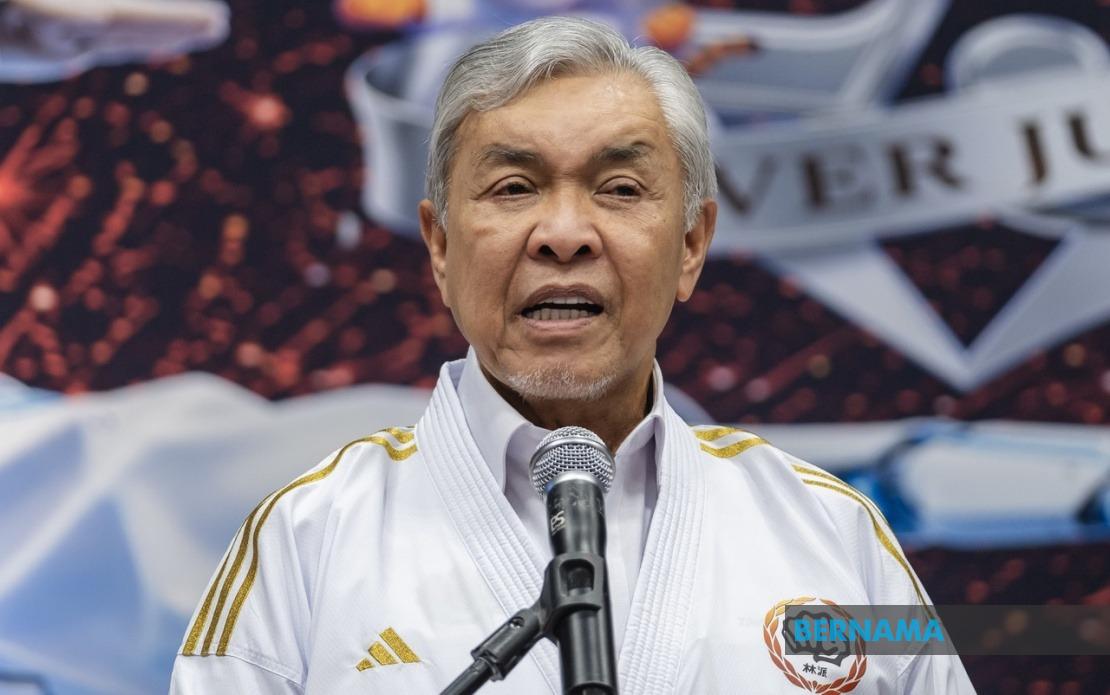
The Malaysian government is moving closer to formalising karate's status within the school sports ecosystem. Deputy Prime Minister Datuk Seri Dr Ahmad Zahid Hamidi revealed on June 26 that a Cabinet meeting scheduled for the following week would feature discussion of a proposal to elevate karate to official MSSM championship status. In his capacity as chairman of the Cabinet Committee on Sports Development, Ahmad Zahid pledged to coordinate with Education Minister Fadhlina Sidek to ensure the sport receives the policy consideration it deserves in the national competitive calendar.
The timing of this announcement comes amid growing momentum within Malaysia's karate community. The International Open Karate Championship 2026, held at Titiwangsa Stadium in Kuala Lumpur, served as the backdrop for Ahmad Zahid's statement. Now in its 25th year of operation, the tournament has evolved into a significant regional event, drawing participation from over 1,850 athletes representing 17 countries. The scale and international reach of this championship underscores karate's trajectory from niche martial art to mainstream competitive pursuit in Southeast Asia.
Behind this policy push lies a strategic vision from sport administrators committed to deepening karate's institutional roots within Malaysia's secondary education system. Datuk P. Thiagu, president of the Putrajaya Karate Association and organiser of the international tournament, articulated the core rationale for seeking MSSM inclusion. His argument hinges on a straightforward but compelling premise: formal recognition at the schools level would catalyse grassroots development, creating a structured pathway through which schoolchildren can identify talent, receive coaching, and progress toward elite competition. Without such institutional frameworks, many promising young athletes remain invisible to talent scouts and coaches.
Currently, karate enjoys considerable informal popularity within Malaysian schools, indicating strong student interest and existing school-based participation networks. However, this grassroots enthusiasm lacks formal government endorsement or integration into the official MSSM calendar, meaning competitions occur outside the primary competitive structure that shapes school sports culture. Thiagu's appeal for inclusion recognises that official MSSM status would legitimise karate alongside established sports such as badminton, football, and athletics, while simultaneously creating the administrative infrastructure necessary to identify and nurture emerging talent systematically across the country.
The proposal reflects broader regional trends in martial arts recognition. Across Southeast Asia, countries have progressively formalised taekwondo, karate, and other combat sports within national school sporting bodies, recognising both their pedagogical value in discipline and respect and their potential as pathways to Olympic and international competition. Malaysia's consideration of karate inclusion positions the nation in line with neighbouring countries that have already institutionalised the sport within secondary education frameworks, ensuring local athletes remain competitive at regional events.
Ahmad Zahid's commitment to raise the matter with Cabinet signals serious executive-level consideration rather than mere departmental discussion. The involvement of the Cabinet Committee on Sports Development, coupled with planned coordination with the Education Ministry, suggests the initiative has achieved a level of formal governmental backing. Such high-level attention typically precedes policy change, particularly when accompanied by timelines for Cabinet review. The decision, however, will ultimately depend on multiple factors including budgetary implications, infrastructure availability in schools nationwide, and alignment with broader education policy priorities.
Thiagu's optimism about near-term implementation reflects confidence in momentum but also realistic acknowledgement that bureaucratic processes require time. The pathway from Cabinet discussion to actual inclusion in the MSSM calendar involves multiple steps: formal Cabinet approval, coordination between multiple government agencies, development of competition formats and standards, recruitment or training of officials and judges, and logistical arrangements for district, state, and national championships. These processes, while necessary to ensure quality and consistency, typically unfold across several months or even years.
For Malaysian karate practitioners and instructors, formal MSSM inclusion would deliver tangible benefits extending beyond symbolic recognition. School-level championships would create regular competitive opportunities for students, establish standard age-group categories and rule sets, facilitate inter-school and inter-state competitions, and provide platforms for talent identification at the school level before progression to club and national structures. Currently, serious young karate athletes must depend primarily on club affiliations and private tournaments, a system that may inadvertently exclude capable athletes from less-resourced backgrounds or regions.
The Cabinet's forthcoming review also carries implications for sports development funding and resource allocation. Official MSSM status typically triggers government support for tournament organisation, travel allowances for participating schools, and potential allocation of coaching resources through the education system itself. These financial and logistical supports can dramatically expand participation rates among schoolchildren and broaden the demographic base from which elite athletes emerge. Countries with fully integrated martial arts in school systems consistently report higher participation numbers and more competitive national teams than those where these sports remain club-based.
Education Minister Fadhlina Sidek will play a crucial role in determining whether Cabinet discussion translates into policy adoption. Her ministry controls the MSSM framework, school sports budgets, and ultimately the decision on which sports are contested under its official umbrella. Her willingness to accommodate karate, balanced against competing demands from other sports seeking similar recognition and the constraints of school calendars and budgets, will prove decisive. Prior signals from the Education Ministry regarding martial arts and karate development will inform her response to Ahmad Zahid's proposal.
The international dimension of karate provides additional context for Malaysia's policy deliberation. With karate appearing in Olympic competitions and receiving recognition from international bodies such as the World Karate Federation, Malaysia's formalisation of the sport within schools would strengthen the nation's international standing in the martial art. Current participants in international tournaments like the one at Titiwangsa Stadium represent primarily club athletes rather than school representatives, suggesting that school-level participation could substantially expand Malaysia's competitive depth and international presence.
Looking forward, the success of this initiative depends not only on Cabinet approval but on coordinated implementation across multiple stakeholders. Sports associations, school administrators, karate practitioners, and education officials must align around common standards and objectives. The 25-year-old International Open Karate Championship provides a model of how the sport can thrive at scale within Malaysia, while formal MSSM inclusion would extend those opportunities far more broadly across the student population.

