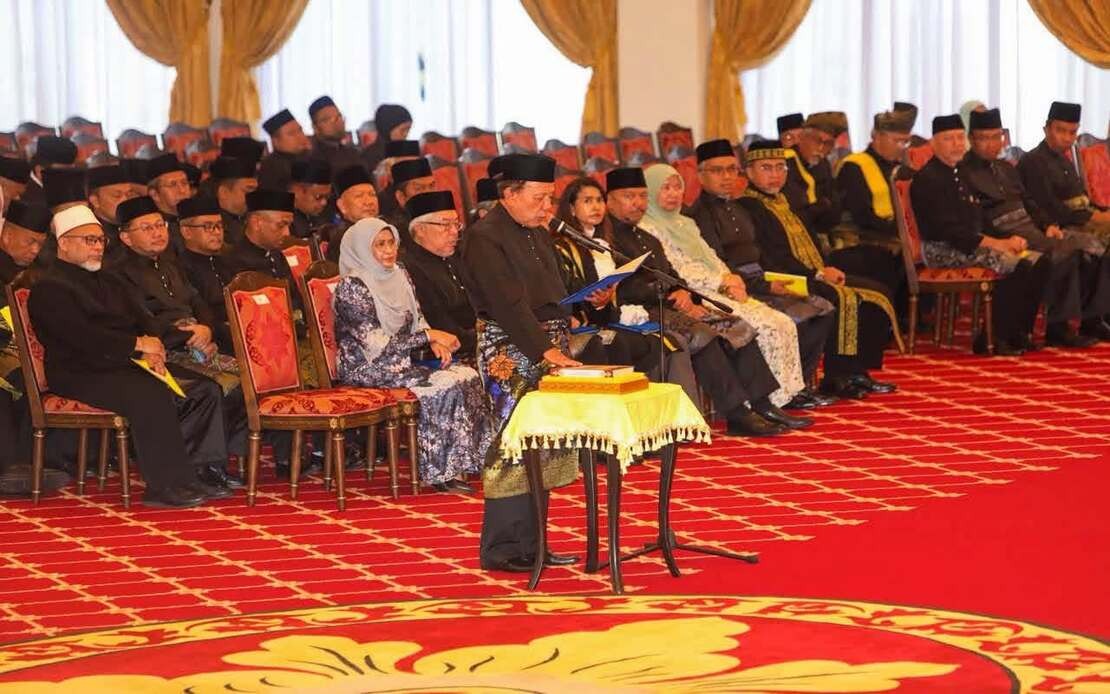
Datuk Ismail Lasim has been formally sworn in as the new Menteri Besar of Negeri Sembilan, an appointment that has drawn widespread congratulations from the federal cabinet. The Juasseh state assemblyman, aged 67, took his oath before the Yang Dipertuan Besar of Negeri Sembilan, Tuanku Muhriz Tuanku Munawir, at the Balairong Seri of Istana Besar Seri Menanti on August 2. The ceremonial investiture marks a significant transition in the state's political leadership and has been warmly received by senior government figures at the national level.
Deputy Prime Minister Datuk Seri Dr Ahmad Zahid Hamidi, who also serves as Minister of Rural and Regional Development, expressed his confidence in Lasim's ability to steer the state forward. In a Facebook post, Ahmad Zahid emphasised that the responsibility now placed upon the new Menteri Besar represents both a trust and a challenge that requires steadfast commitment to the people's welfare and the state's development trajectory. The DPM's remarks suggested that Lasim's appointment aligns with the broader agenda of strengthening regional governance across Malaysia's constituent states.
Defence Minister Datuk Seri Mohamed Khaled Nordin similarly conveyed his support, framing the appointment as an opportunity to consolidate Negeri Sembilan's ongoing progress. Mohamed Khaled highlighted the importance of maintaining stability and continued economic development under new leadership, particularly given the state's role within the broader Malaysian economy. His statement underscored the federal government's expectation that the transition would preserve the momentum established by previous administrations while introducing fresh perspectives on regional governance.
Plantation and Commodities Minister Datuk Seri Dr Noraini Ahmad characterised Lasim's assumption of office as a pivotal moment for the state, marking the beginning of a new chapter in Negeri Sembilan's political history. She emphasised that the incoming leadership carries the responsibility of translating public confidence into tangible improvements in service delivery and infrastructure development. Her comments reflected the cabinet's broader confidence that institutional knowledge and political experience would enable a smooth transition in state administration.
Lasim brings substantial political credentials to the role, having spent nearly three decades in Negeri Sembilan's political arena. He first entered electoral politics in 1999 when he was chosen as a state assemblyman, establishing himself as a figure with deep roots in the state's governance structures. This longevity in politics suggests familiarity with local constituencies, administrative machinery, and the nuanced relationships that characterise state-level governance in Malaysia's federal system.
The new Menteri Besar previously served as a member of the state executive council, beginning in 2004, and maintained this position across three consecutive terms until 2018. During his tenure in the state cabinet, Lasim held the education portfolio, a responsibility that allowed him to shape policy direction in human capital development and educational infrastructure throughout Negeri Sembilan. His involvement in these areas reflects a focus on long-term state development rather than short-term political gains, potentially positioning him as a custodian of continuity in strategic sectors.
Lasim's extensive background in education policy is particularly significant for Negeri Sembilan's future trajectory. The state's human capital development depends substantially on the quality and accessibility of educational institutions, and his previous experience in formulating and implementing education-related policies suggests he has grappled with the practical challenges of delivering services in a mid-sized Malaysian state. This expertise may inform his approach to broader development challenges facing Negeri Sembilan in an increasingly competitive regional economy.
The cabinet's collective response to Lasim's appointment reflects an institutional commitment to supporting state-level administrations that align with the federal government's political composition. The emphasis on stability, development continuity, and public service excellence in the congratulatory messages suggests that federal leadership views this transition not as a moment of political disruption but as an opportunity to reinforce governance standards across Malaysia's constituent states. Such coordination between federal and state leadership remains crucial for implementing national development agendas and addressing cross-jurisdictional challenges.
For Negeri Sembilan specifically, Lasim's appointment carries implications for how the state positions itself within Malaysia's broader economic and political landscape. As one of Malaysia's smaller states by population, Negeri Sembilan's development agenda typically focuses on leveraging its strategic location, industrial capabilities, and agricultural resources. The new Menteri Besar's background in education and state administration suggests he may prioritise human capital accumulation and institutional strengthening alongside traditional economic development priorities.
The formal congratulations from multiple cabinet ministers underscore an important principle in Malaysian federalism: the federal government's interest in ensuring effective state governance, regardless of which political parties control state administrations. While Malaysia's constitutional framework establishes significant autonomy for state governments in specific policy domains, coordination and goodwill between federal and state leadership often determine the practical effectiveness of governance delivery. The warmth of the cabinet's response to Lasim's appointment signals an intention to maintain such cooperative relationships.
Looking forward, Lasim's tenure will be scrutinised across several dimensions. His capacity to manage the state's finances, attract investment, and address constituency demands will shape public perception of his leadership. Additionally, his ability to work effectively with the federal government on matters requiring intergovernmental coordination—including infrastructure development, regulatory frameworks, and resource allocation—will influence Negeri Sembilan's competitive position within the Malaysian federation. The cabinet's expressed confidence suggests the federal government expects these collaborative relationships to flourish under his stewardship.

