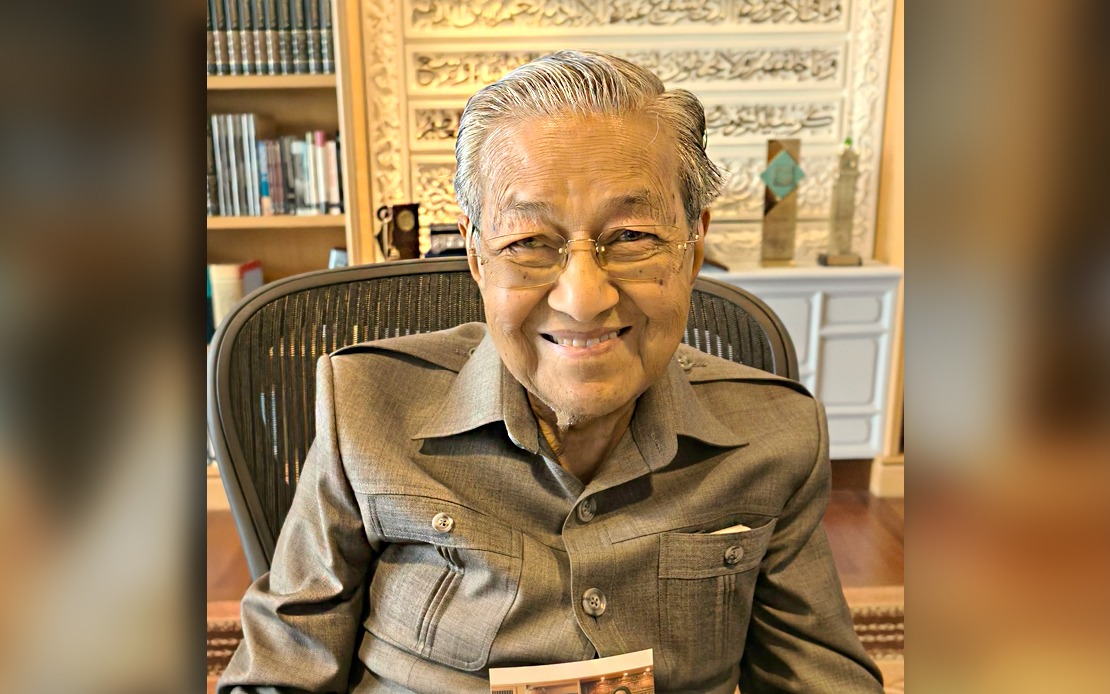
Several members of Malaysia's current Cabinet have publicly extended birthday greetings to Tun Dr Mahathir Mohamad as the nation's longest-serving former Prime Minister celebrates his 101st birthday on July 10. The gestures underscore the enduring respect accorded to the 101-year-old statesman across Malaysia's political establishment, even as his tenure in recent years has proven contentious.
Communications Minister Datuk Fahmi Fadzil was among the first to acknowledge the milestone, posting on social media that Dr Mahathir should be blessed with sustained health, happiness and divine favour. The minister described reaching 101 years as an "incredible milestone," reflecting public sentiment about the longevity of a figure who has dominated Malaysian politics across multiple decades and shaped the nation's trajectory during the latter half of the 20th century.
Minister in the Prime Minister's Department (Law and Institutional Reform) Datuk Seri Azalina Othman Said and Higher Education Minister Datuk Seri Dr Zambry Abd Kadir similarly conveyed well-wishes through official channels. Both invoked religious blessings, praying that the former leader would continue to receive Allah SWT's mercy and divine protection—a common expression of respect within Malaysia's Muslim-majority society when honouring significant public figures.
Dr Mahathir's political career spans more than four decades of direct governance and influence. Born on July 10, 1925, in Alor Setar, Kedah, he first ascended to the Prime Minister's office in 1981 and served until 2003, accumulating 22 years in that position across two non-consecutive tenures. During this extended period, he oversaw Malaysia's transformation from a commodity-dependent economy into a newly industrialised nation, championing ambitious infrastructure projects including the Petronas Twin Towers and the Multimedia Super Corridor.
His political narrative took an unexpected turn in 2018 when, at the age of 92, he returned to the Prime Minister's position following the historic federal election that saw the Barisan Nasional government ousted after six decades of continuous rule. This comeback made him the world's oldest prime minister at that time, a distinction that generated international media attention and sparked discussions about leadership, succession planning, and political renewal in Malaysia.
The second stint in office, however, proved considerably more turbulent than his initial 22-year tenure. Dr Mahathir's premiership from 2018 to 2020 was marked by internal coalition tensions, disagreements over cabinet appointments, and ultimately his resignation in February 2020—an exit that destabilised the government and contributed to the subsequent formation of a new administration under Muhyiddin Yassin. The brief return highlighted generational shifts within Malaysian politics and raised enduring questions about institutional stability and the concentration of authority.
Despite the complexities of his later political chapters, Dr Mahathir's role in constructing modern Malaysia remains a defining element of his legacy. His Vision 2020 framework set ambitious targets for national development and positioned Malaysia as a model for other developing nations. The infrastructure boom of the 1990s, while occasionally controversial regarding cost overruns and project selection, fundamentally altered the nation's urban landscape and demonstrated the viability of large-scale public investment in capability-building.
The cabinet ministers' public birthday acknowledgements reflect a Malaysian political culture that, despite fierce partisan divisions, maintains respect for elder statesmen who have substantially influenced national affairs. Such gestures are customary in Malaysia's political ecosystem, where deference to experienced figures often transcends contemporary policy disagreements. The birthday tributes thus serve both as personal recognition and as affirmation of institutional continuity within the broader political establishment.
At 101 years old, Dr Mahathir remains an occasional commentator on contemporary political developments, maintaining a public presence through social media and periodic statements on matters of national interest. His longevity has made him a living link to Malaysia's pre-independence era and the formative decades of the nation-state, providing historical perspective that younger political leaders often reference when navigating complex governance challenges.
The milestone also underscores broader demographic trends in Malaysia, where improved healthcare and living standards have extended life expectancy and enabled more Malaysians to reach advanced ages in relatively good health. Dr Mahathir's own continued vitality at 101 serves as a notable example of active longevity, particularly in a regional context where gerontocracy remains a persistent feature of political systems across Southeast Asia.
Looking forward, the former Prime Minister's century mark represents both a personal achievement and a symbolic moment for Malaysia's political narrative. As the nation continues navigating questions of governance, economic competitiveness, and social cohesion in an increasingly complex regional environment, Dr Mahathir's historical experience—however contentiously evaluated—remains a reference point for understanding how Malaysia addressed comparable challenges during previous eras of rapid transformation and institutional adaptation.

