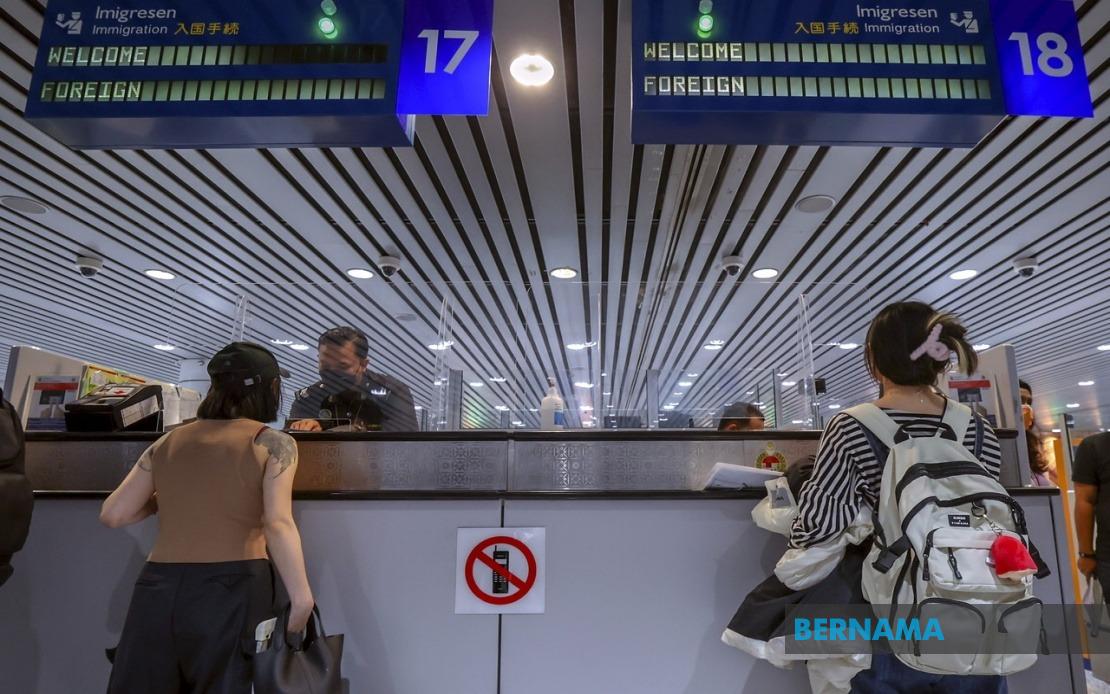
Malaysia's government has moved swiftly to address security vulnerabilities at its airports and border crossings, with the Cabinet approving a comprehensive 17-point remediation plan aimed at significantly tightening controls across the country's international gateways. The joint initiative, presented by the Home Ministry and Ministry of Transport, represents a major policy response to a string of concerning incidents that have exposed gaps in the nation's airport screening and personnel vetting procedures.
The approval comes in the wake of several high-profile cases that have drawn unwanted international attention to Malaysia's aviation security regime. Most notably, a Malaysian pilot was recently apprehended at Soekarno-Hatta International Airport in Indonesia carrying approximately 25 kilogrammes of MDMA, a Class A controlled substance. This incident, alongside other security breaches involving Malaysian nationals, prompted government agencies to conduct a thorough audit of existing protocols and recommend systemic improvements across the entire border security infrastructure.
Implementation of the 17 recommendations will unfold across three distinct phases, with immediate action items forming the foundation of the enhanced security architecture. Six priority measures have been designated as quick-win initiatives requiring implementation in the short term. These include establishment of risk-based targeted screening mechanisms that will focus inspection resources on flights, passengers, crew members and baggage identified as presenting elevated risk profiles. The approach represents a shift toward more intelligent, data-driven security operations rather than blanket screening protocols.
A second critical initiative involves overhauling e-vetting and access control procedures to tighten security screening for all personnel requiring entry to restricted airport areas. This encompasses not only flight crews and cabin staff but also ground operations personnel, airline employees, airport operators, vendors and contractors. The comprehensive approach recognises that security breaches can occur at multiple points within an airport's operational ecosystem, and that weak vetting of support staff can create vulnerabilities as serious as those involving pilots or crew members.
Drug screening programmes for aviation personnel constitute the third immediate action item. The new framework will mandate pre-employment screening, periodic testing and random drug testing for pilots, cabin crew and other related staff. This measure directly addresses the circumstances that enabled the recent MDMA smuggling case, where someone in a position of trust within the aviation system exploited their access to transport contraband.
The remaining three short-term priorities focus on bolstering the security infrastructure through increased physical presence of security personnel at key locations, establishing formal mechanisms for coordinating and sharing security intelligence between relevant agencies, and creating a dedicated Home Ministry-Transport Ministry Technical Committee to oversee implementation and maintain inter-agency coordination. These structural changes are intended to break down silos that may have previously hindered information flow between different parts of the security apparatus.
Beyond the immediate measures, the medium-term phase will emphasise investment in technology, physical assets and human capital development. This acknowledges that sustained security improvements require not merely procedural changes but also substantial capital expenditure in screening equipment, data systems and training programmes for security personnel. Building institutional capacity in this manner will create the foundation for the long-term transformation outlined in the government's vision.
The long-term dimension of the plan involves systemic transformation centred on enhanced information sharing protocols and strengthened governance frameworks. Rather than treating each airport as an isolated security domain, the government intends to establish integrated systems that share threat intelligence and passenger data across the entire network of international entry points. This networked approach reflects contemporary best practice in airport security and recognises that threats identified at one location can provide valuable intelligence for enhancing vigilance elsewhere.
Kuala Lumpur International Airport has been designated as the pilot location for this comprehensive initiative, allowing the government to test procedures and refine implementation strategies before expanding the programme to other international airports and land border checkpoints nationwide. The phased rollout approach provides flexibility to customise security measures according to the unique threat profile, operational characteristics and risk assessment of each specific location, rather than imposing a one-size-fits-all framework that may prove inefficient or inappropriate at lower-volume entry points.
The government has emphasised its commitment to implementing these recommendations within a framework that respects individual rights, protects personal data and acknowledges the operational requirements of the aviation industry. This balancing act is crucial in a sector where excessive friction in passenger processing can degrade the travel experience and potentially encourage diversion of traffic to competing regional hubs. Malaysia's position as a regional aviation hub means that any security measures that substantially slow processing or alienate passengers must be carefully calibrated.
The incident involving the Malaysian pilot has particularly stung because it demonstrates that security breaches can originate from within trusted positions within the aviation system itself. Unlike external threats that can be addressed through perimeter security and baggage screening, insider threats require sophisticated personnel vetting systems and a culture of accountability among aviation workers. The government's decision to prioritise drug screening and e-vetting suggests recognition that personnel integrity is as critical to border security as any technological system.
For Malaysian travellers and the local aviation industry, the enhanced security protocols will likely result in longer processing times at airports during the implementation period, particularly as new screening procedures become embedded in standard operating procedures. However, government officials argue that this represents a necessary investment in maintaining public confidence in Malaysia's security systems and preserving the nation's international reputation as a safe and secure travel destination. The measures signal to international partners, tourists and the global aviation community that Malaysia takes security seriously and responds decisively when vulnerabilities emerge.

