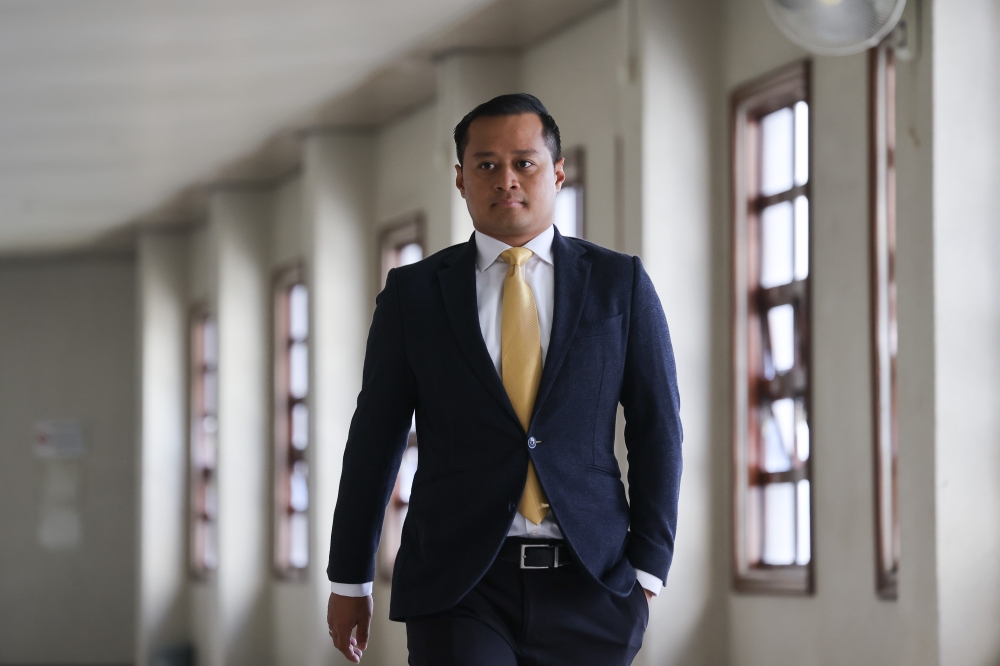
A Kuala Lumpur businessman has given testimony suggesting that substantial company funds were redirected to Bersatu without his awareness or consent, marking a significant moment in the ongoing trial of former Prime Minister Muhyiddin Yassin in the High Court. Shahrin Shamsuddin disclosed that he only realised his elder brother had channelled part of the RM13.7 million in question after the fact, indicating a breakdown in communication between the two regarding major financial decisions affecting their joint business interests.
The revelation came during examination of the witness, who provided crucial details about how the money had been handled and moved. The dynamics of corporate decision-making and the apparent unilateral action taken by Shahrin's brother underscore tensions that occasionally emerge when family members share control of substantial commercial entities. Such arrangements, while common in Malaysian business, can create vulnerable points when significant sums are transferred without full transparency among co-owners or shareholders.
The RM13.7 million sum has assumed considerable importance in this legal proceeding, as it relates directly to questions about how funds were sourced and deployed in relation to Bersatu, the political party that Muhyiddin led. Understanding the origin and movement of these funds remains central to establishing the factual foundation upon which the court must make its determination. The testimony helps trace the financial pathway that money took before arriving at the party.
For Malaysian readers following high-profile political trials, this case reflects broader concerns about financial transparency in both corporate and political spheres. The intersection of business operations and party financing has long been a sensitive area in Malaysian politics, with various safeguards and regulations designed to prevent improper flows of capital. When substantial amounts move between entities, clarity about authorisation and knowledge among stakeholders becomes legally and ethically significant.
Shahrin's account introduces questions about oversight mechanisms within family-controlled businesses, particularly those handling substantial capital. The apparent lack of communication regarding such a major financial commitment raises considerations about how companies with multiple decision-makers manage transparency and ensure that significant transactions receive appropriate visibility and approval. In this case, the absence of prior knowledge suggests either a serious lapse in governance or deliberate concealment.
The trial has attracted sustained attention because it involves Muhyiddin, who served as Prime Minister from 2020 to 2021 and remains a prominent figure in Malaysian politics. His legal proceedings consequently carry significance beyond the immediate parties involved, touching on questions of accountability for those who have held the highest offices. The case also affects public perception of how political financing operates at the elite level in Malaysia.
Bersatu itself has become increasingly significant within Malaysia's political landscape, particularly following its role in various coalition arrangements and its influence on recent government formations. The party's funding sources and financial management therefore warrant public scrutiny. When substantial donations come from business sources, understanding whether those transfers occurred with full knowledge and consent of all affected parties becomes an important indicator of propriety and transparency within the party's operations.
The witness testimony pattern emerging in this trial demonstrates how investigating political financing often requires meticulous examination of corporate records and banking transactions, combined with witness accounts of decision-making processes. Courts must piece together who knew what and when, requiring witnesses to recall specific communications—or their notable absence—regarding financial decisions. Shahrin's testimony about discovering the donation after the fact, rather than beforehand, constitutes precisely the kind of evidence that helps establish the sequence of events and motivations.
Regional observers of Malaysian politics recognise that this trial occurs amid broader Southeast Asian concerns about political finance transparency. Several countries in the region have grappled with similar questions about how business interests intersect with political parties and whether adequate safeguards exist. Malaysia's experience, particularly as articulated through high-profile legal proceedings, provides a template and cautionary tale for how such matters can unfold through the judicial system.
The broader implications for Malaysian corporate governance extend beyond this specific case. Businesses with multiple stakeholders—whether family partnerships or larger corporate structures—may reflect on their own internal controls and communication protocols following such prominent examples. The case illustrates how absence of clear documentation and transparent discussion regarding major transactions can create subsequent legal complications and raise questions about knowledge and consent among co-owners.
As this trial progresses, additional witnesses and evidence will likely provide further clarity on the circumstances surrounding the RM13.7 million transfer. The court's eventual findings will contribute to the legal record regarding how funds moved between corporate and political entities, and whether appropriate authorisation existed at each stage. For Muhyiddin, the outcome will carry significant consequences for his legal standing and public reputation, while for Malaysian politics more broadly, the case will inform ongoing discussions about financial accountability and transparency in political fundraising.

