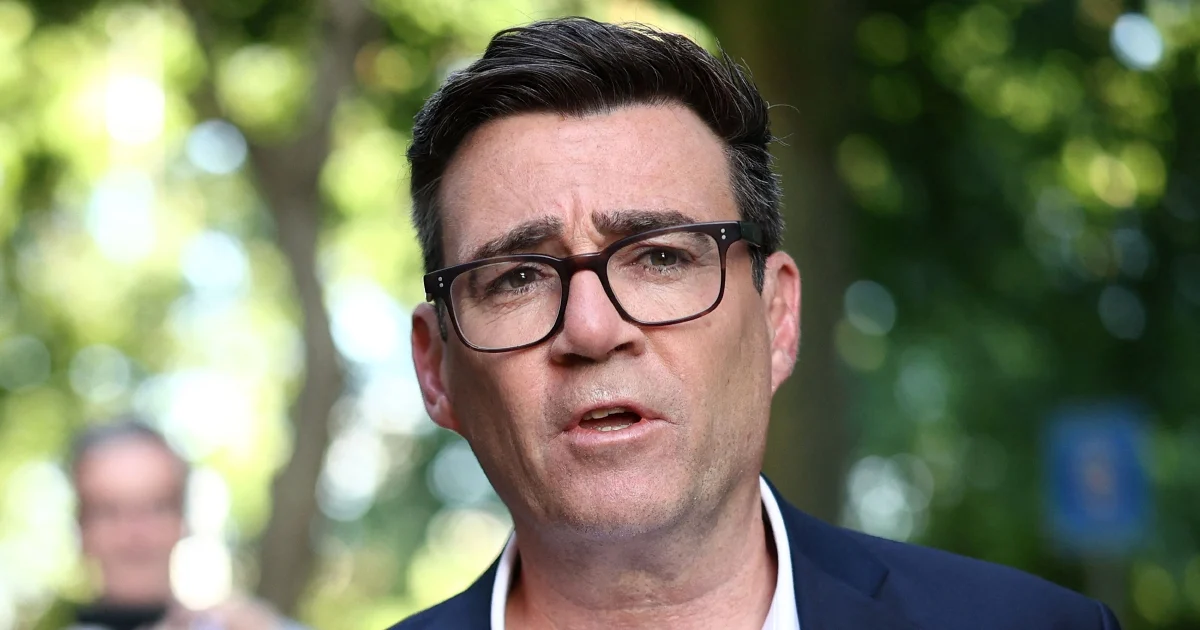
Andy Burnham, poised to assume the British premiership within days, has declared that the time has come for a thorough examination of the security protocols surrounding members of parliament. His statement follows the death of Ann Widdecombe, a former lawmaker who was fatally attacked last week, an incident that has reignited concerns about the vulnerability of elected representatives in the United Kingdom.
The killing of Widdecombe has served as a stark reminder of the physical dangers that elected officials face in their constituencies and public engagements. Her death has prompted serious questions about what protective measures should be in place for politicians who regularly interact with the public as part of their democratic duties. Burnham's call for a comprehensive review reflects growing pressure across the political spectrum to address gaps in existing security arrangements for MPs.
For Malaysian readers, this situation underscores challenges that democracies worldwide struggle to balance: how to maintain the accessibility that defines representative government whilst safeguarding those entrusted with public office. The issue resonates particularly in Southeast Asia, where several nations have grappled with attacks on political figures and the complex relationship between security and public engagement. Malaysia's own experience with political tensions and occasional violence demonstrates that no democracy can take the safety of its legislators for granted.
The circumstances surrounding Widdecombe's death have yet to be fully clarified, but the incident has catalysed debate about whether current protective measures are adequate. MPs frequently hold surgeries where constituents can meet them directly, attend community events, and maintain a visible presence in their constituencies. These obligations, fundamental to democratic representation, inevitably create situations where security cannot be absolute without severely restricting public access.
Burnham's position as Labour Party leader and his imminent elevation to Prime Minister carries significant weight in this discussion. His willingness to prioritize a security review during the transition to government suggests the incoming administration intends to treat the matter with urgency rather than allow it to become a bureaucratic exercise undertaken months hence. This approach indicates recognition that parliamentary security is not merely a technical or administrative matter but a fundamental aspect of governance.
The review that Burnham has advocated would likely examine multiple dimensions of MP protection. These could range from enhanced physical security at constituency offices and event venues to improved threat assessment protocols, better coordination between law enforcement agencies, and potentially enhanced security training for MPs themselves. The review may also consider how technology, from CCTV systems to communication networks, might be leveraged to better protect elected representatives without creating fortress-like environments that distance politicians from those they serve.
Previous attacks on British lawmakers have highlighted systemic vulnerabilities. The murder of Jo Cox in 2016 similarly prompted discussions about security improvements, though implementation has been uneven. Burnham's call suggests dissatisfaction with the pace of reform following that tragedy and a determination to move beyond incremental adjustments to something more fundamental.
The political context matters here as well. The incoming Labour government will inherit responsibility for public safety, and demonstrating decisive action on this front serves both practical and symbolic purposes. It signals that the new administration takes the welfare of parliamentarians seriously and is prepared to act boldly on security matters, even if such actions involve difficult trade-offs between accessibility and protection.
For Westminster practitioners and constitutional scholars, the challenge lies in designing security measures that acknowledge genuine risks without transforming parliament and its members into isolated institutions. MPs derive their legitimacy from connection to constituents; security arrangements that sever or severely complicate that relationship, even in the name of protection, undermine the democratic principle that should motivate such reforms.
The international dimension cannot be overlooked either. Britain is not alone in facing these challenges. Countries across Europe, North America, and Asia have struggled with similar issues. Some have implemented controversial measures such as strict vetting of people seeking to meet MPs or the establishment of secure meeting facilities. Others have invested in threat assessment and prediction technologies with mixed results regarding both effectiveness and civil liberties concerns.
For Malaysia and other Southeast Asian democracies, observing how Britain addresses this challenge may offer lessons. The region's various political systems confront similar tensions between accessibility and security, though often under different circumstances and with different institutional frameworks. Understanding how a mature liberal democracy like Britain proposes to navigate these waters could inform regional discussions about how best to protect political figures whilst maintaining democratic principles.
Burnham's advocacy for a serious review represents more than reactive crisis management. It reflects a commitment to recalibrate the relationship between security and democratic practice, acknowledging that these need not be zero-sum values. A thoughtful review process, informed by stakeholders from law enforcement to parliamentary administration to MPs themselves, could produce recommendations that enhance safety without fundamentally compromising the accessibility that defines representative government in Britain and democracies worldwide.

