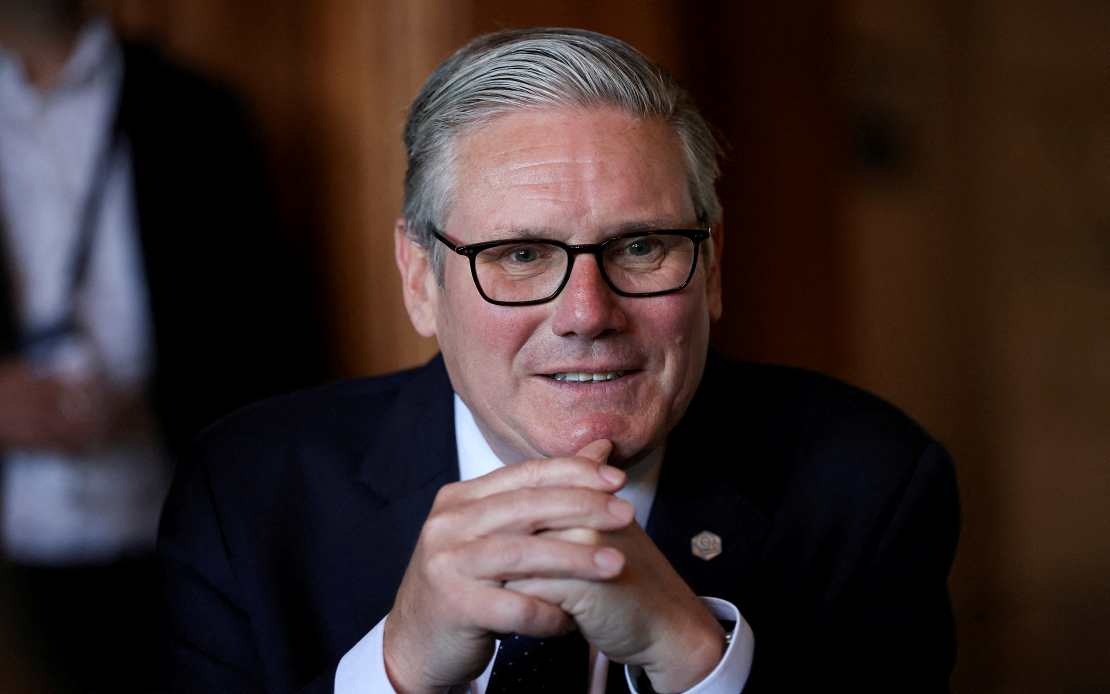
Andy Burnham, the frontrunner to become the next United Kingdom Prime Minister, has pledged a more assertive approach toward Israel, threatening the imposition of fresh sanctions if the country continues activities he characterised as breaching international law. Speaking on Thursday after formally announcing his candidacy to lead the Labour Party, the former Manchester Mayor outlined a hardened position on Palestinian rights that could reshape British foreign policy if he assumes office within days.
Burnham's ascension to the party leadership appears almost certain. He is currently the sole declared candidate for the role, and absent any last-minute challengers, he is expected to become Prime Minister by July 20. His public statements on Middle East policy made during this leadership race carry particular significance, as they may foreshadow the diplomatic positions his government would adopt on one of the world's most contentious geopolitical issues.
In a video statement posted to the social media platform X, Burnham articulated concerns spanning multiple dimensions of the Israeli-Palestinian conflict. He accused the Israeli Defence Forces of maintaining and expanding military operations within Gaza, contrary to ceasefire commitments. He further referenced what he described as escalating violence by Israeli settlers targeting Palestinians in the West Bank and East Jerusalem, accompanied by the ongoing construction of settlements that he characterised as illegal under international law and as actively displacing Palestinian communities from their homes.
The cumulative effect of these activities, Burnham argued, necessitates more robust international pressure through economic measures. His invocation of sanctions reflects a growing conviction among sections of the global left that diplomatic persuasion alone has failed to constrain Israeli government actions. The threat of sanctions represents a tangible escalation beyond mere rhetorical criticism, signalling readiness to impose economic costs on specific individuals and entities within the Israeli political and military establishment.
Burnham also directly challenged Benjamin Netanyahu's stewardship of Israeli policy, accusing the Prime Minister of undermining the viability of a two-state solution to the Israeli-Palestinian dispute. This criticism strikes at the heart of a vision that has long been regarded as the international consensus framework for resolving the conflict. By suggesting that current Israeli policies are incompatible with this framework, Burnham positioned himself as defending a principle that both previous Labour governments and the broader international community have endorsed, while implying that Netanyahu's administration has abandoned it.
The Manchester politician further called for accountability mechanisms targeting individuals responsible for what he described as war crimes during the Gaza conflict. This language invokes international humanitarian law and suggests that a Burnham-led government would be prepared to support mechanisms—whether international courts, judicial inquiries, or other forums—aimed at investigating and prosecuting alleged violations. Such a stance would represent a considerable departure from uncritical support for Israeli military actions.
Burnham's broader commitment, as he framed it, centres on a three-part agenda: working with international partners to alleviate Palestinian suffering, ensuring Israeli government compliance with international legal obligations, and preserving the possibility of establishing a Palestinian state alongside Israel. This formulation implies a more interventionist diplomatic posture than the current Keir Starmer government has adopted, suggesting Britain would be more willing to lead or coordinate pressure on the Israeli administration.
The United Kingdom has already taken some punitive measures against Israeli figures and entities. The government previously imposed sanctions on Itamar Ben-Gvir, who serves as National Security Minister, and Bezalel Smotrich, the Finance Minister. Additionally, Britain has targeted radical settlers and organisations associated with them. However, Burnham's comments indicate that these measures are viewed as insufficient, and that a more comprehensive sanctions regime may be contemplated under his leadership.
For Malaysia and other Southeast Asian nations, Burnham's statements carry broader implications. A shift toward stronger British criticism of Israeli policies would reinforce international pressure on the issue, aligning Britain more closely with the positions adopted by many non-aligned nations. Malaysia, which has consistently advocated for Palestinian statehood and opposed what it views as unlawful Israeli military actions, may find a more receptive audience in London. The prospect of a major Western democracy adopting a more critical stance toward Israeli government actions could influence the international discourse and strengthen coalitions advocating for Palestinian rights within multilateral forums.
The timing of Burnham's pronouncements is also notable given the ongoing humanitarian situation in Gaza. Months of conflict have produced a severe humanitarian crisis, with accusations from various quarters that Israel has not adhered to obligations under international humanitarian law. A Western government led by someone expressly committed to investigating such allegations and prepared to impose costs on those responsible could shape the trajectory of international responses to Middle East conflicts.
Burnham's emergence as the likely next British Prime Minister represents a potential inflection point in Western foreign policy toward the Israeli-Palestinian conflict. His explicit commitment to sanctions, accountability mechanisms, and renewed diplomatic efforts to preserve a two-state solution suggests that the United Kingdom may soon occupy a different position within the Western alliance regarding Middle East policy. Whether this represents a sustainable reorientation of British foreign policy or a campaign-season positioning that moderates once in office remains to be seen.

