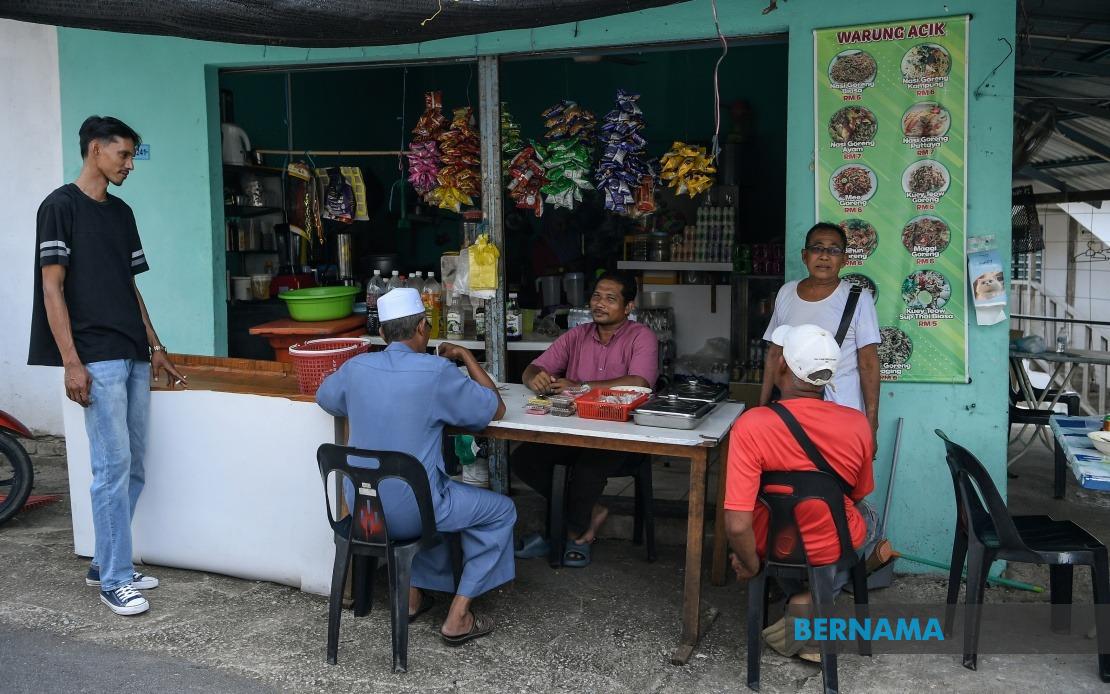
The tight-knit fishing community of Bukit Malut in Langkawi is mounting a determined effort to shed the negative reputation that has dogged the neighbourhood for years, with residents forcefully rejecting claims that their settlement serves as a gateway for Myanmar refugees entering Malaysia. Speaking on behalf of the community, Bukit Malut Neighbourhood Watch chairman Mohamad Fadzli Abdullah articulated the frustration residents feel at being routinely scapegoated whenever irregular maritime arrivals occur anywhere on the island, a pattern he described as both persistent and fundamentally baseless.
The geographical positioning of Bukit Malut works directly against the allegations that plague the area, according to Mohamad Fadzli. The settlement sits in remarkably close proximity to operational bases belonging to three major enforcement agencies—the Malaysian Maritime Enforcement Agency, the Royal Malaysian Customs Department, and the Royal Malaysian Navy. This concentration of official presence would render clandestine refugee operations virtually impossible to execute without immediate detection, a fact that undermines the credibility of rumours suggesting organized landing activities occur there. The chairman emphasized that the intense security scrutiny surrounding these agencies' bases naturally extends to the adjacent residential area, making it among the most monitored neighbourhoods on Langkawi's coastline.
Mohamad Fadzli further addressed a secondary misconception that circulates within public discourse: the notion that outsiders face restrictions when attempting to enter Bukit Malut. He categorically denied this claim, stressing instead that the neighbourhood remains fully accessible to the general public. Rather than being a cordoned-off enclave, the community operates as a transparent, monitored residential area where the authorities maintain regular patrols and oversight. The stigma, he suggested, stems not from any legitimate security concerns but from misinformation that propagates unchecked through social media channels, where sensationalized claims about refugee activity acquire an aura of credibility simply through repetition.
The socioeconomic profile of Bukit Malut reveals a community built primarily around maritime livelihoods rather than anything suggesting irregular migration networks. Approximately eighty-five percent of residents derive their income from fishing, one of Langkawi's traditional occupations. The remaining population comprises shop owners, car rental entrepreneurs, government workers, military and police personnel, and university graduates working across multiple sectors. This occupational diversity demonstrates integration into Malaysia's formal economy and institutional structures, the antithesis of what one might expect in a purported refugee sanctuary operating outside government detection.
Hasanah Zakaria, a resident of more than two decades, offered a personal plea for the public to visit Bukit Malut and witness ordinary community life firsthand rather than accepting unverified allegations circulating online. At forty-two years old, she has raised her family in the neighbourhood and found it indistinguishable from other Malaysian villages in terms of safety and social cohesion. She pointed out that serious crime remains uncommon, contrary to the dangerous reputation the community has acquired through rumour and social media narratives. The impact of these damaging perceptions extends even to her child's experience at a boarding school in Langkawi, where the stigma associated with her home address creates unnecessary anxiety and social friction despite the student's demonstrated capabilities and character.
Abas Salam, now sixty-two, ranks among Bukit Malut's founding residents and has witnessed the neighbourhood's transformation over more than thirty years of residence. His testimony carries particular weight given his position as one of the original settlement builders who helped construct homes, a mosque, and an Islamic school with minimal external support during the early development phase. Throughout this extended period, he has observed no evidence whatsoever of Myanmar refugees establishing themselves in the area. The specific accusation that residents are Rohingya—an ethnic identity sometimes conflated with irregular migrants—provoked particularly strong denial from Abas, who asserted unambiguously that the community comprises ethnic Malay-Muslims from Kedah who possess legitimate Malaysian citizenship documentation and rights. His perspective encompasses the pride of generational improvement, as he reflected on how his descendants now enjoy educational opportunities that the pioneering generation could scarcely have imagined.
The emergence of such persistent rumours about Bukit Malut reflects broader anxieties within Malaysia regarding irregular maritime arrivals and refugee populations, concerns that carry genuine policy significance for the nation. However, the indiscriminate application of these concerns to a specific, identifiable community appears to constitute a form of collective stereotyping that damages innocent residents while potentially diverting attention from actual enforcement priorities. The proximity of major maritime agencies, combined with the community's transparency and the verifiable occupational integration of residents, suggests that legitimate security concerns, if any existed, would already be addressed through normal governmental procedures.
The campaign by Bukit Malut residents to reclaim their community's reputation touches on deeper questions about how Malaysian society processes information regarding vulnerable populations and security matters. Social media's role in amplifying unverified claims about refugee activity demonstrates how digital platforms can crystallize suspicion into apparent consensus without requiring supporting evidence. For residents like those in Bukit Malut, this phenomenon creates a form of reputational harm that proves extraordinarily difficult to counteract through simple denial or factual correction.
Moving forward, the residents' insistence on transparency and public visitation represents a confidence that direct observation will dispel fabricated narratives. This approach implicitly acknowledges that sustained engagement with reality typically defeats rumour more effectively than defensive official pronouncements alone. For Malaysian policymakers and media observers, the Bukit Malut situation offers instructive lessons about the importance of distinguishing between legitimate security concerns and community-based scapegoating, particularly when coastal settlements in strategic locations become convenient repositories for public anxiety about irregular migration.

