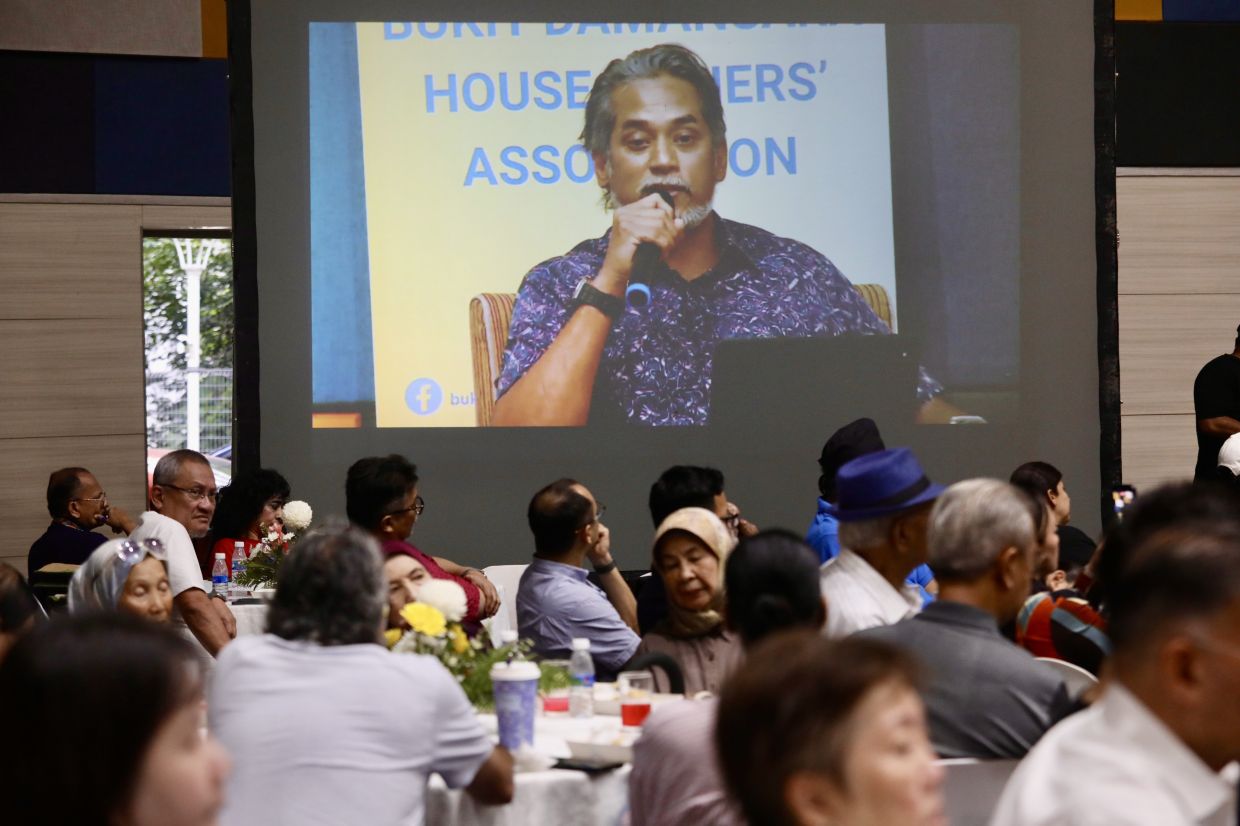
Approximately 400 residents of Bukit Damansara turned out for a community dialogue session on Tuesday evening to voice strong objections to a housing renovation project that has fractured neighbourhood consensus and raised broader questions about consultation procedures in residential planning approvals. The gathering, themed "Your Voice Matters" and held at Pusat Komuniti Bukit Damansara, marked the first major public engagement since Khairy Jamaluddin assumed the presidency of the Bukit Damansara Home Owners' Association in early August, setting an expectant tone for his leadership on local advocacy matters.
At the heart of resident frustration lies a three-storey conversion project that has transformed what was originally a harmonious double-storey semi-detached residence into a substantially taller structure, fundamentally altering the visual and architectural character of the residential row. Resident A. Zakki, speaking at the forum, articulated the core grievance shared by the 19 neighbours who signed a petition against the works: the renovation contradicts the established design language of the neighbourhood and represents an isolated anomaly within an otherwise uniform streetscape. The original approval issued by Kuala Lumpur City Hall in December 2025 permitted the additional floor construction, but mounting resident opposition prompted the issuance of a stop-work order in January 2026, only for the project to resume around June after fresh approval was granted by the municipal authority.
Beyond aesthetic concerns, the renovation has inflicted tangible damage to surrounding properties. Construction activities have already generated visible cracks in neighbouring houses, a physical manifestation of how intensive building works in densely populated residential areas can impose uncompensated costs on adjacent homeowners. With construction now approximately 10 percent complete and structural pillars already erected, residents view the current juncture as critical—any further progression would make permit withdrawal significantly more complex and contentious. The residents' central demand remains unequivocal: DBKL should withdraw the permit immediately to prevent additional disruption and preserve the neighbourhood's established character.
The town hall brought together key decision-makers and service providers who could influence resolution of these concerns. Rosli Nordin, the Planning Department's town planner executive director, acknowledged the issues residents had documented and committed to considering them seriously. However, his response lacked any indication that City Hall would reverse its approval stance, suggesting that residents will need to pursue their objectives through alternative advocacy channels or potentially escalate to higher municipal levels. The presence of Brickfields deputy police chief Supt Ahmad Firdaus Mustafia Kamal underscored how residential construction disputes increasingly intersect with public safety and traffic management concerns, expanding the stakeholder ecosystem beyond traditional planning frameworks.
Traffic congestion emerged as a secondary but significant grievance, with residents reporting persistent gridlock during school drop-off and pick-up hours—from 7:00 am to 7:30 am and again from 2:00 pm to 4:00 pm—near both SK Bukit Damansara and Stella Maris International School Damansara. These congestion windows reflect the broader challenge of managing vehicular access in established residential neighbourhoods that were not originally designed for current traffic volumes. Supt Ahmad Firdaus indicated that authorities are addressing the matter, though specifics on enforcement strategies or timeline improvements remained vague. The SK Bukit Damansara Parent-Teacher Association chairman, Ameirul Azraie Mustadza, acknowledged the school's position as a focal point for traffic pressure, revealing that the association has considered engaging Rela (civilian auxiliary police) but lacks financial resources to sustain such measures independently.
Ameirul's request for daily traffic police presence rather than sporadic monitoring reflects a common complaint in Malaysian residential communities: reactive rather than proactive enforcement. While the school association had previously corresponded with traffic authorities and received positive responses, the inconsistency of implementation suggests bureaucratic coordination gaps between various enforcement bodies. For residents navigating school routines, the distinction between occasional and sustained police presence carries significant operational impact on commute times and safety perceptions, yet systemic resource constraints appear to limit permanent solutions.
Water infrastructure concerns added a third layer to the town hall's agenda, with residents pressing Air Selangor to undertake comprehensive inspections of the pipeline network following multiple pipe burst incidents throughout Bukit Damansara. An Air Selangor representative acknowledged the utility company's awareness of these failures and outlined intentions to replace the ageing pipeline infrastructure in the area. Pipeline deterioration remains a perennial challenge in older established neighbourhoods where original utility installations have reached or exceeded their design lifespan, and burst incidents impose not only immediate inconvenience but also potential property damage and water quality risks. Residents' push for thorough inspections reflects legitimate concern that visible burst points may indicate broader systemic weaknesses requiring preemptive rather than reactive remediation.
Khairy's moderation of the town hall and his framing of the session as bridging the gap between community members and decision-makers established a participatory tone that contrasts with more top-down governance models. His commitment to follow-up engagement and fast-tracking problem resolution carries weight given his political visibility and track record, though the sustainability of such individual-level advocacy depends on whether systemic improvements in municipal consultation procedures actually materialize. The town hall format itself—bringing together residents, municipal officials, police representatives, and utility providers—demonstrates an emerging recognition that neighbourhood-level grievances require coordinated inter-agency responses rather than siloed departmental handling.
The Bukit Damansara controversy embodies broader tensions within Malaysian urban residential governance, particularly regarding the consultation gap between municipal authorities and affected communities in planning decisions. Residents argue they were not adequately consulted when initial approval was granted, raising questions about what consultation standards currently exist and whether public notification requirements are sufficiently robust. For Malaysian homeowners watching the situation unfold, the case suggests that resident associations, despite their grassroots legitimacy, operate at a structural disadvantage relative to property owners with municipal approval in hand, and that reversing approved permits requires sustained organised pressure rather than single administrative decisions. The resolution—whether DBKL ultimately withdraws the permit, imposes additional conditions, or allows construction to proceed—will establish important precedent for how municipal authorities balance neighbourhood concerns against property owner rights in densely populated urban areas across the Klang Valley and beyond.

