The Malaysian government has moved to alleviate financial pressures on the country's journalism workforce by reinstating a higher fuel subsidy allocation under the BUDI MADANI RON95 programme. Beginning September 1, media practitioners will once again benefit from a 300-litre monthly quota at the subsidised rate of RM1.99 per litre, reversing a reduction implemented earlier this year that had compressed their entitlement to 200 litres. Prime Minister Datuk Seri Anwar Ibrahim announced the decision during the National Day 2026 address at the Putrajaya International Convention Centre, framing it as a measure to sustain benefits for approximately 16 million consumers nationwide who rely on subsidised fuel.
The restoration comes as meaningful recognition of the specific challenges facing journalists and broadcast professionals, particularly those stationed outside Kuala Lumpur. Media practitioners operating across Malaysia's states have borne outsized fuel expenses relative to their urban counterparts, with commuting costs forming a significant portion of their monthly expenditure. The Association of Malaysian Media Clubs (GKMM), which had previously advocated for this change, emphasised that the increased allocation would help offset not just regular commutes but also the travel required to cover diverse assignments, events, and breaking news across their respective regions.
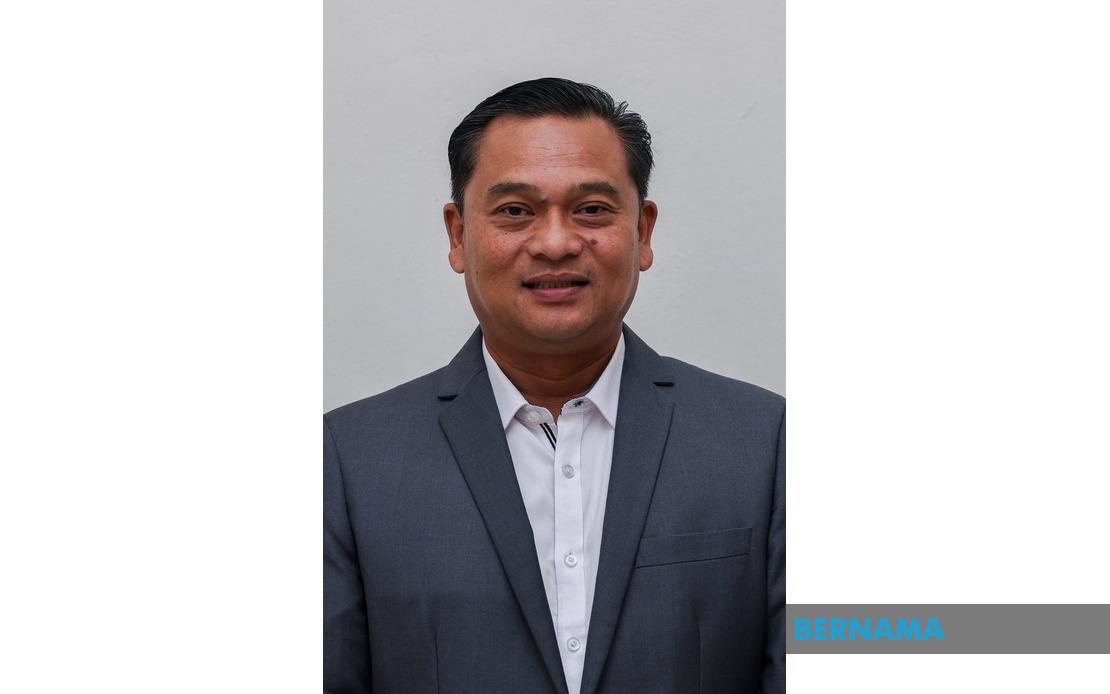
GKMM president Mohd Fauzi Ishak acknowledged in a statement that the decision represents tangible support for the journalism sector at a time when operational expenses continue climbing. He characterised the fuel quota restoration as essential to ensuring that media practitioners can sustain their reportorial activities without bearing disproportionate personal costs. The recurring need to travel to events, conduct interviews, and maintain on-ground presence to deliver timely news coverage makes fuel a critical operational input, distinct from discretionary spending. Without adequate subsidy allocation, individual journalists would be forced to absorb these logistical expenses privately, effectively reducing their take-home income and potentially compromising their ability to perform their duties comprehensively.
The timeline of these policy shifts reveals the volatile nature of fuel subsidy management under external pressures. In March 2026, the government had announced a reduction of the BUDI95 quota from 300 to 200 litres monthly, citing the geopolitical tensions in West Asia as justification for tightening support. That decision had inflicted noticeable hardship on media practitioners who lacked alternative transport arrangements or access to corporate vehicle pools. The compressed three-month period between the March reduction and the September restoration suggests that feedback from affected sectors, combined with broader economic considerations, prompted a recalibration of the subsidy framework.
Beyond the immediate relief to individual journalists, the quota adjustment carries implications for media sector sustainability and operational capacity. News organisations across Malaysia, from established broadcast networks to smaller print and digital publishers, rely on staff members' ability to maintain geographic coverage without incurring prohibitive costs. When fuel subsidies contract, employers face pressure to either provide supplementary allowances or witness declining field coverage quality. GKMM has called upon media companies and agencies to examine whether new incentive structures or enhanced logistical allowances should accompany the fuel quota restoration, recognising that subsidy adjustments should trigger complementary adjustments in organisational support systems.
The restoration also underscores the government's acknowledgement that certain professional sectors depend more heavily on fuel access than typical consumer categories. Journalists, emergency responders, and other mobile workers operate within different economic models than office-based professionals. A uniform fuel subsidy ceiling fails to account for these sectoral variations, potentially creating unintended consequences for critical information-gathering infrastructure. By differentiating BUDI95 allocations for media practitioners, the government signals recognition that journalism's public function warrants consideration in subsidy policy design.
For Malaysian readers and the broader Southeast Asian media landscape, this development carries relevance beyond administrative procedure. Fuel subsidy policies fundamentally affect news gathering capacity and the geographic reach of journalism. When reporters face mounting fuel costs, coverage tends to concentrate in urban centres where stories cluster, and regional voices become marginalised. The quota adjustment therefore represents an incremental step toward sustaining distributed journalism across Malaysia's diverse geography. This becomes particularly significant during election cycles, natural disasters, or other major events where on-ground reporting from multiple locations proves essential for comprehensive news coverage.
The RM1.99 per litre pricing maintained throughout these quota adjustments also deserves scrutiny. This rate, significantly below market value, represents a substantial government commitment to fuel subsidy provision. For a journalist purchasing 300 litres monthly at subsidised rates rather than market rates, the monthly benefit translates to meaningful cost savings that directly support household budgets. However, the political economy of maintaining such subsidies amid global energy price volatility remains contested, explaining the oscillations between 200 and 300 litre allocations as the government balances fiscal sustainability against sectoral support objectives.
Looking forward, the sustainability of BUDI95 at current allocation and pricing levels depends on multiple variables including crude oil market conditions, ringgit exchange rates, and broader government fiscal priorities. Media practitioners should interpret this restoration as welcome but potentially temporary relief rather than a permanent fixture. The three-month reversal cycle demonstrates that external shocks can rapidly alter subsidy frameworks. Prudent journalism organisations may use this period to diversify their logistical support strategies, explore fleet electrification where feasible, and negotiate fuel allowances that provide insulation from future policy oscillations.
The announcement also reflects broader Malaysian governance debates around targeted versus universal subsidy approaches. Rather than providing blanket fuel subsidies to all citizens, the government's approach of maintaining differentiated quotas for specific professional groups suggests a movement toward means and sector-tested welfare. This framework acknowledges that fuel needs vary significantly across occupational categories and that subsidy design should reflect these variations. Whether such targeted approaches ultimately prove more efficient and equitable than universal subsidies remains contested, but the BUDI95 programme demonstrates their increasing prevalence in Malaysian policy.
For journalism organisations and individual media practitioners, the practical implications involve recalibrating operational planning around the restored 300-litre benchmark. Editors responsible for beat assignments and coverage planning can more confidently allocate geographic scope knowing that fuel costs remain contained within subsidised pricing. Freelancers and contract workers in the journalism sector, often more vulnerable to cost volatility than permanent staff, gain greater financial predictability. This modest improvement in operational certainty, while not resolving broader industry challenges around declining revenues and employment precarity, nonetheless contributes to a more stable working environment for Malaysia's journalism workforce during a period of significant sectoral transformation.

