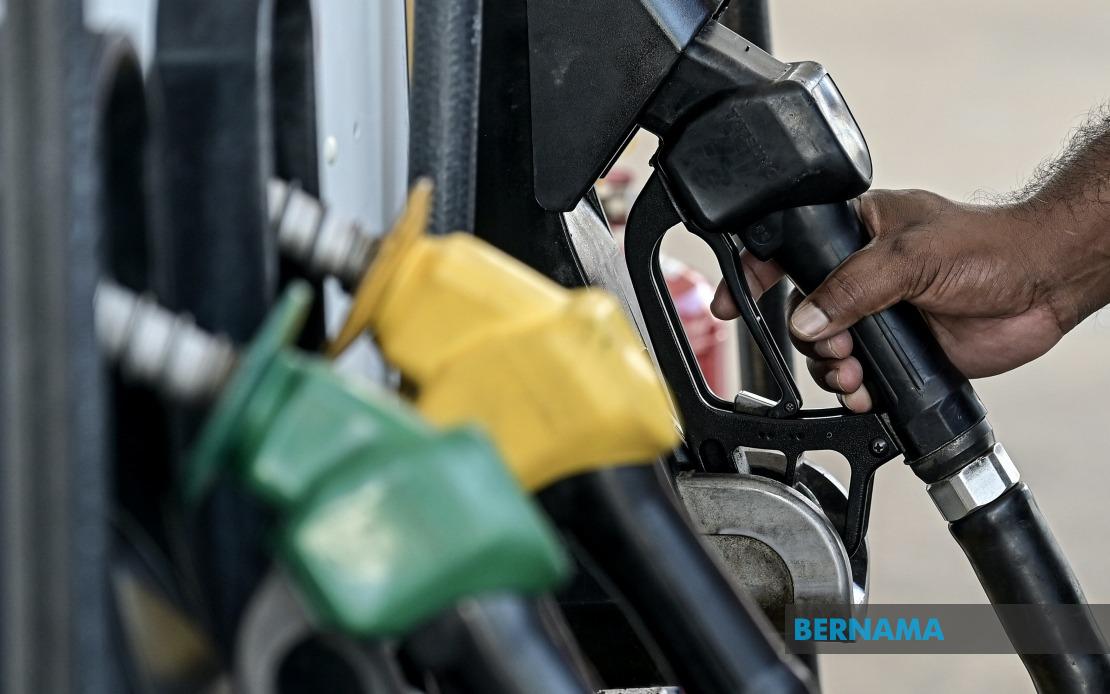
The government's expanded BUDI Diesel initiative formally begins tomorrow, extending heavily subsidised fuel access to around 700,000 private vehicle owners nationwide—a substantial leap from the previous individual assistance scheme that supported only 180,000 recipients in Peninsular Malaysia. The Ministry of Finance announced that qualifying drivers will purchase diesel at RM2.10 per litre, a rate designed to insulate consumers from volatile international energy markets and cushion household transport expenses amid broader cost-of-living pressures.
The geographical scope of this initiative underscores the government's commitment to ensuring equitable fuel pricing across the nation. Peninsular Malaysia will see 400,000 private diesel vehicle owners gain access to the subsidised rate, while Sabah, Sarawak, and the Federal Territory of Labuan together account for 300,000 eligible participants. This distribution reflects both population density and the particular vulnerability of eastern Malaysian states to fuel price fluctuations, given their distance from major refining and distribution hubs. The programme therefore addresses not merely individual hardship but also regional economic disparities that have long complicated Malaysia's internal fiscal policy.
Beyond private motorists, the initiative incorporates a broader commercial dimension through the Subsidised Diesel Control System (SKDS), which brings approximately 70,000 commercial and goods transport vehicles in Sabah, Sarawak, and Labuan into the subsidy framework at RM2.15 per litre. This tier acknowledges that transport operators bear direct exposure to fuel costs, which they typically transmit downstream to consumers through higher logistics charges and product prices. By moderating diesel costs for the commercial sector in these regions, the government aims to stabilise supply chains and protect businesses from sudden margin compression.
A notable expansion concerns company-registered private pickup trucks and jeeps, categories previously excluded from fuel assistance schemes. These vehicles occupy an ambiguous position in Malaysia's transport taxonomy—neither purely commercial nor conventionally domestic. The government's decision to extend eligibility reflects recognition that many rural and semi-urban households depend on such vehicles for both personal mobility and informal economic activity. This recalibration of programme boundaries suggests a more nuanced understanding of how transport infrastructure intersects with livelihoods across diverse communities.
Early adoption metrics from Peninsular Malaysia reveal encouraging uptake since the scheme's preliminary launch on June 27. Within three days, approximately 80,000 transactions had been processed by noon on June 30, translating to roughly 3.2 million litres of diesel dispensed at a nominal cost of nearly RM7 million. These figures suggest both robust consumer awareness and operational readiness among participating fuel retailers. Critically, the Ministry of Finance reported that MyKad verification infrastructure at petrol stations functioned without significant disruption, indicating that the digital authentication systems underpinning programme administration have achieved adequate reliability.
The administration has introduced a monthly quota mechanism for pickup and jeep owners, permitting an additional 100 litres of subsidised diesel per month through the BUDI MADANI digital portal. Within the initial application window, more than 22,000 requests had been submitted by 9 am on June 30, demonstrating keen interest among this vehicle category. The quota system serves a dual purpose: it ensures rationing of the subsidy across the beneficiary population while simultaneously preventing excessive bulk purchases that might distort supply or create informal secondary markets.
To further facilitate vehicle ownership transfers and reduce bureaucratic friction, the government has implemented a three-month waiver on transfer fees up to RM100 for diesel vehicles. This measure responds to practical circumstances in which vehicles are registered under family members' names for various historical or administrative reasons, yet operated by other household members. The concession lowers the transaction cost for regularising such arrangements. Simultaneously, the Road Transport Department (JPJ) has expanded counter availability by operating weekend hours from July 4 through July 26 at all state offices and branches, recognising that many workers cannot access government services during weekday business hours.
A particularly innovative component involves direct transfer of subsidy eligibility among immediate family members. Under this mechanism, original beneficiaries may assign their monthly diesel quota to a spouse, parent, child, or sibling through a one-time, verified transfer via the BUDI MADANI portal. Nearly 1,000 such applications had been received by mid-morning on June 30, indicating that households are actively using this flexibility to optimise access based on actual driving patterns and vehicle usage within extended family networks. Once approved, the recipient accesses subsidised diesel using their own MyKad, effectively decoupling eligibility from vehicle ownership.
The financial architecture of BUDI Diesel reflects a deliberate policy choice to prioritise direct price intervention over cash transfers. Rather than providing monthly allowances as the previous scheme did, this approach fixes the retail price itself, ensuring that all eligible consumers benefit identically regardless of consumption volume. This design mitigates moral hazard concerns associated with cash assistance while maintaining transparency in the cost to the public purse. Each subsidised litre represents a quantifiable fiscal outlay, rendering the programme's budgetary impact readily auditable and reportable.
The timing of this expansion carries political significance. Introduced as a flagship component of the MADANI Government's cost-of-living agenda, the initiative directly addresses consumer anxiety regarding household transport expenses, which constitute a material share of working and middle-class budgets. By extending benefits to nearly three times the previous beneficiary population, the government aims to demonstrate tangible policy responsiveness to electoral constituencies that depend heavily on private vehicle transportation. For Malaysian consumers, particularly those in smaller towns and rural areas where public transport remains limited, the programme promises meaningful monthly savings on one of their largest operational expenses.
Implementation risks remain, however. Fuel retailers must process MyKad authentication at scale across thousands of outlets nationwide, a logistical challenge that previous transactions suggest is largely manageable but not without potential friction points during peak demand periods. The programme's sustainability hinges on petroleum subsidies remaining politically palatable and fiscally accommodable within the broader budget framework. International oil price volatility introduces further uncertainty: should global crude prices spike substantially, the gap between RM2.10 and market rates could widen dramatically, amplifying subsidy costs.
For Southeast Asian observers, Malaysia's approach offers a regional case study in how governments balance fiscal discipline with social safety-net imperatives. Unlike Indonesia, which has historically attempted subsidy reforms with mixed results, or Singapore, which relies on efficiency over subsidisation, Malaysia has chosen targeted price controls affecting a majority of diesel consumers. This strategy reflects both Malaysia's distinct economic structure and its political economy constraints. The BUDI Diesel programme will likely remain under scrutiny as implementation data accumulates, offering insights into whether large-scale fuel subsidies can be administered effectively and sustainably in the digital age.

