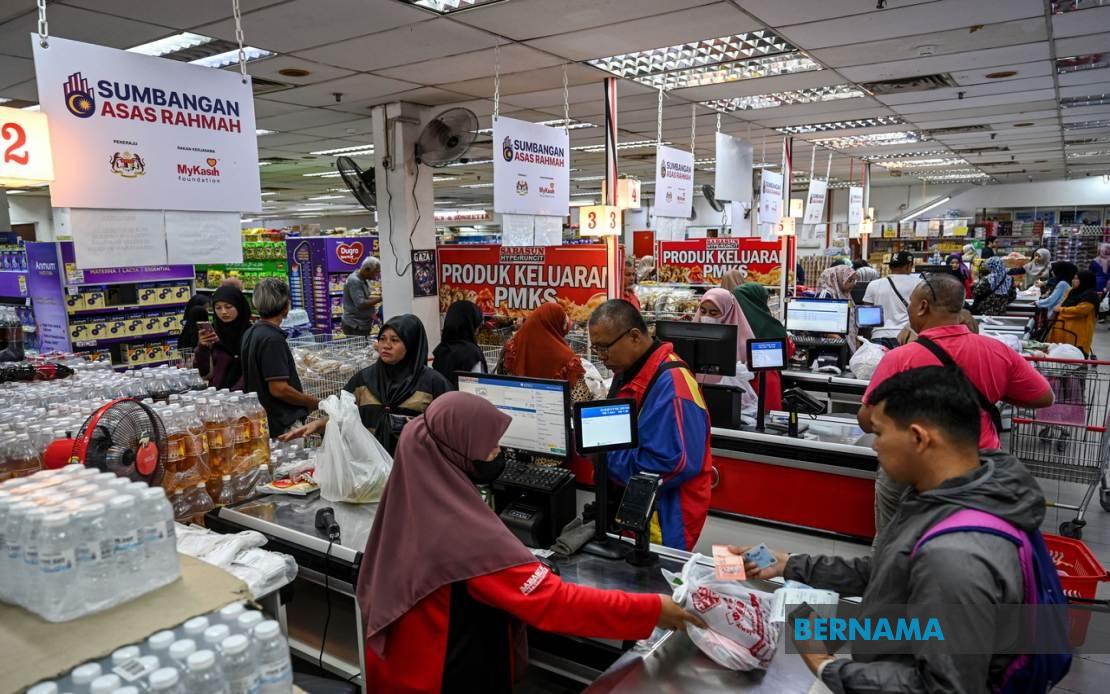
Prime Minister Datuk Seri Anwar Ibrahim has signalled that the government is actively exploring ways to expand financial assistance for Malaysians through its two major cash transfer programmes, with decisions likely to emerge during the next budget cycle. Speaking at an event in Ipoh on July 19, the premier acknowledged the conversation held with Treasury Secretary-General Tan Sri Johan Mahmood Merican regarding potential enhancements to both the Sumbangan Tunai Rahmah (STR) and Sumbangan Asas Rahmah (SARA) schemes, contingent upon the nation's economic performance.
These two schemes represent a cornerstone of the MADANI Government's social safety net, designed to provide direct financial relief to eligible Malaysians facing economic pressures. The STR, which translates to Rahmah Cash Contribution, and SARA, or Rahmah Basic Contribution, have become increasingly important policy instruments as the government seeks to cushion households against inflation and the rising cost of living that has characterised Malaysia's economic environment in recent years. The prospect of higher payouts would represent a meaningful expansion of support, though Anwar's carefully qualified language—emphasising economic conditions as the determining factor—reflects the government's need to balance fiscal responsibility with social spending commitments.
Anwar, who doubles as Finance Minister, was deliberate in framing any expansion as dependent on Malaysia's macroeconomic health improving. This conditional approach underscores the government's awareness that while social spending is politically and socially desirable, it must remain sustainable within the country's fiscal envelope. The discussion with Johan Mahmood Merican demonstrates that Treasury officials are actively engaged in calculating whether additional allocations are feasible, a process that will culminate in detailed proposals for cabinet consideration during budget preparation. The timing of this announcement—coming before the formal budget presentation—appears designed to manage public expectations while simultaneously signalling the government's commitment to welfare enhancement.
For Malaysian households already receiving these payments, any increase would provide immediate practical benefit at a time when purchasing power remains under strain. The STR and SARA programmes have become integral to the income-support architecture available to lower and middle-income Malaysians, with millions of beneficiaries depending on these regular transfers to manage basic expenses. An uplift in payment amounts would directly translate into improved household finances, particularly for vulnerable groups including pensioners, persons with disabilities, and low-wage workers who form the primary recipient base. From a macroeconomic perspective, such transfers also function as automatic stabilisers, injecting demand into the economy during periods of weakness and supporting domestic consumption patterns.
Beyond the cash assistance schemes, Anwar used his appearance at the MADANI KITA Together with the Tambun Community Programme—an initiative organised by the Malaysian Volunteer Corps Department (RELA)—to underscore the government's recognition of security personnel contributions. His announcement that RM3 million had been allocated for RELA member welfare this year, matching the previous year's commitment, reflects growing acknowledgment of the essential role these volunteer security workers play in Malaysia's emergency response infrastructure. RELA members operate across disaster relief, security operations, and community assistance functions, often with minimal compensation relative to the demands placed upon them.
The allocation to RELA welfare, while seemingly modest in budgetary terms, carries significant symbolic weight in demonstrating government commitment to those engaged in frontline security and public service roles. Anwar's explicit acknowledgment that the RM3 million figure was "certainly not enough" hints at potential future expansion of support for these personnel, though no specific commitments for enhancement beyond the current year were announced. The presence of Home Ministry and RELA leadership at the event underscored the government's intention to deepen engagement with these security and community service communities, recognising that morale and welfare standards directly influence retention and operational effectiveness.
The broader context for these announcements involves Malaysia's ongoing economic recovery from pandemic-related disruptions and the need to maintain public confidence in government social policy. While the country has demonstrated resilience, inflation pressures and regional economic uncertainties continue to create headwinds for household finances and consumer sentiment. Policy measures designed to alleviate cost-of-living pressures remain politically salient and economically important, particularly as the government approaches budget deliberations that will set the tone for fiscal priorities in the coming years. Anwar's framing of social assistance expansions as contingent on economic performance represents an attempt to navigate between political expectations and fiscal constraints—a balance that successive Malaysian governments have found perpetually challenging.
The MADANI administration's approach to these cash transfer schemes also reflects lessons learned from previous economic cycles and international experience with targeted social protection. Direct cash transfers have proven effective at reaching intended beneficiaries and stimulating local economic activity, advantages that have led many policymakers across the region to favour these instruments over more bureaucratic alternatives. However, sustainability concerns remain paramount, particularly given Malaysia's medium-term fiscal challenges and the growing proportion of the budget allocated to debt servicing. The government's willingness to revisit benefit levels suggests confidence in economic trajectory, even as it maintains prudent language about conditionality.
For Malaysian households and policymakers alike, the significance of Anwar's statement lies less in any immediate policy change than in the signal it sends about government priorities. The explicit commitment to examine enhancement possibilities, coupled with Treasury involvement in analysis, indicates that cash transfer expansion is actively under consideration rather than remaining merely aspirational. The pace at which such expansions might materialise will depend on quarterly economic data, revenue performance, and competing budget demands—factors that will occupy Treasury and finance ministry officials in the months preceding formal budget submission. Meanwhile, the RM3 million allocation for RELA demonstrates parallel attention to security personnel welfare, reflecting the government's broader philosophy of supporting frontline workers and community volunteers.

