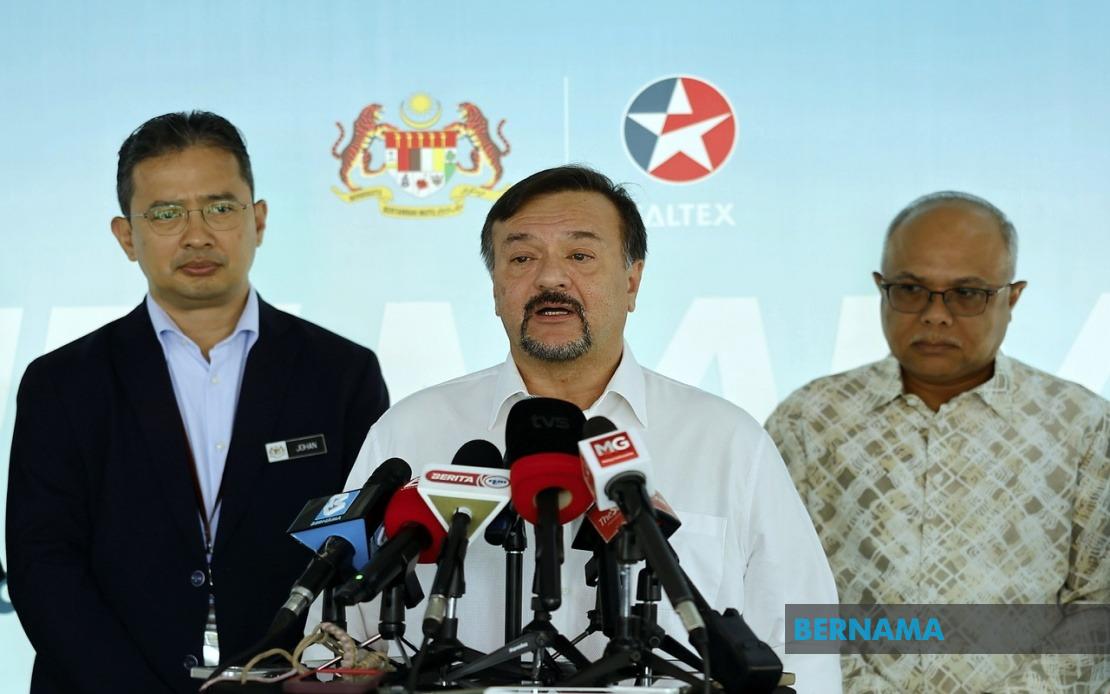
Malaysia's 2027 Budget preparation has entered a critical consultation phase, with Finance Minister II Datuk Seri Amir Hamzah Azizan confirming that nationwide engagement sessions have commenced to shape the upcoming fiscal framework. The Ministry of Finance, working alongside partner agencies, is systematically collecting input from multiple stakeholders and regions to inform the budget document, scheduled for tabling in Parliament this October.
The consultation process reflects the government's determination to ensure the 2027 Budget remains strategically aligned with Malaysia's long-term development vision. Rather than operating in isolation, the budgeting exercise is being positioned as a collaborative effort that incorporates perspectives from various government ministries and administrative centres throughout the country. This distributed approach aims to capture diverse economic realities and sectoral priorities across Malaysia's distinct regions and industries.
At the conceptual heart of the budget lies the MADANI Economy framework, which continues to guide fiscal and economic policy. This overarching strategy emphasises a dual objective: elevating Malaysia's economic ceiling by enhancing competitiveness and innovation capacity, whilst simultaneously raising the economic floor by expanding support systems and economic participation opportunities for lower-income groups. This balancing act seeks to generate growth that benefits society more equitably, addressing both productivity concerns at the upper end of the economic spectrum and inclusion challenges at the base.
Beyond the MADANI framework, several complementary policy initiatives are informing the budget's direction. The 13th Malaysia Plan provides the medium-term development roadmap, while the National Semiconductor Strategy signals the government's prioritisation of high-value manufacturing and technological advancement. Concurrently, the National Energy Transition Roadmap shapes how energy and climate considerations will feature in fiscal allocations, reflecting Malaysia's commitment to sustainable development and its pledges under international climate agreements.
The Minister's remarks suggest the government wishes to project policy consistency and strategic coherence rather than announce dramatic departures from previous budgets. By emphasising continuity within the MADANI framework, officials are signalling to investors, businesses, and citizens that the fiscal environment will remain predictable and aligned with established development priorities. This stability is considered important for long-term planning across both public and private sectors.
Context from the previous fiscal year illustrates the scale of government spending. Budget 2026 commanded RM419.2 billion in total allocation, distributed between RM338.2 billion in operational costs to fund ongoing government services and RM81 billion in development expenditure directed towards infrastructure and capital projects. Additionally, the government mobilised RM50.8 billion from government-linked investment companies, statutory bodies, and public-private partnerships to supplement standard budgetary spending and amplify policy impact.
For Malaysian business and civil society, the consultation process carries practical implications. Firms operating in regulated sectors such as energy, semiconductors, and infrastructure may view this period as an opportunity to communicate needs and constraints to policymakers before the budget's finalisation. Industries benefiting from government support schemes, subsidies, or procurement preferences will be particularly attentive to signals emerging from these engagement sessions regarding continued backing or shifting priorities.
The October tabling timeline provides a compressed window for finalising the budget after the consultation phase concludes. This schedule suggests the Ministry of Finance operates with clearly defined deadlines and expects stakeholder input to be submitted within defined parameters. For Parliament, October tabling enables debate and passage before year-end, allowing budget implementation to commence on schedule in January 2027.
The government's reiterated commitment to steering Malaysia toward developed-nation status by 2030 adds temporal urgency to the 2027 Budget. With less than a decade remaining before this target year, each successive budget takes on heightened significance as a tool for accelerating progress. The 2027 budget will represent roughly one-third of the remaining period, making its allocations particularly consequential for determining whether Malaysia can achieve the productivity, institutional, and income metrics associated with developed-economy status.
Regional observers note that Malaysia's budgeting approach increasingly incorporates forward-looking policy frameworks such as energy transition and semiconductor strategy, reflecting broader Southeast Asian trends toward longer-term strategic planning and climate consciousness. The integration of these considerations into mainstream budget preparation, rather than treating them as peripheral concerns, signals an evolution in how Malaysian policymakers conceptualise fiscal responsibility and national economic positioning.
As the engagement sessions proceed across the coming months, stakeholders including state governments, business associations, labour groups, and civil society organisations will be watching for signals regarding priorities for education, healthcare, rural development, and social programmes. The balance struck between productive investment and welfare spending will shape the lived experience of many Malaysians, whilst the competitive investments directed toward sectors such as semiconductors will influence Malaysia's trajectory in global value chains and technological competition.

