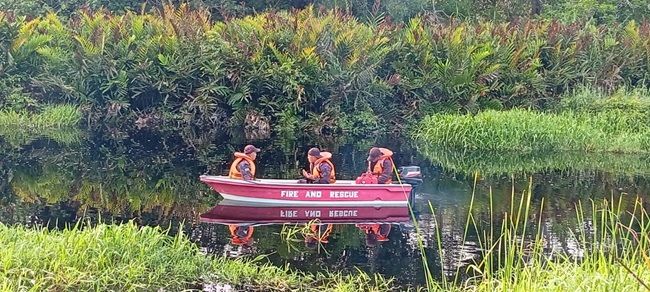
Rescue operations in Brunei have expanded into their third consecutive day following a suspected crocodile attack on a fishing enthusiast at Kampong Baru Sungai Bera. Despite coordinated efforts from multiple agencies deploying advanced search technology and personnel resources, authorities have yet to locate any trace of the missing individual, underscoring the challenges posed by aquatic rescue operations in the region's riverine environments.
The incident unfolded when the Fire and Rescue Department (FRD) received an emergency distress call on Wednesday, June 24, alerting them to a possible crocodile attack. Preliminary interviews with the victim's family at the scene indicated that the missing man had been engaged in fishing activities along the river when the alleged encounter with the reptile occurred. Acting Station Officer Mohd Zulkifli Md Tahir immediately mobilized two fire engines carrying nine personnel to respond to the urgent situation.
What began as an initial response rapidly transformed into a comprehensive search-and-rescue initiative coordinated across several government agencies. The FRD established a Tactical Command Post at the location, from which it has orchestrated continuous river patrols utilising departmental vessels, systematic sweeps of the riverbanks, and overhead reconnaissance missions. The deployment of the FRD's drone fleet has provided critical aerial surveillance capabilities, allowing rescuers to scan vast stretches of river that would be difficult to cover from ground level alone.
The operation reflects the sophisticated coordination that Brunei's emergency response framework can mobilize when faced with complex rescue scenarios. The Royal Brunei Police Force (RBPF) has committed substantial resources, including deployment of specialist personnel from Seria Police Station and the Royal Brunei Police Force Marine Police Unit (POLMAR), which brings crucial maritime expertise to the effort. The Wildlife Division's participation indicates a recognition that understanding the behaviour and movement patterns of crocodiles in local waterways could prove essential to locating the missing person.
Senior Superintendent Amirul Hadi Junaidi, commanding the Operations Branch, has assumed leadership of the search coordination, ensuring that inter-agency communications remain streamlined and that resource allocation remains optimized across the various search methodologies being employed. This command structure underscores the seriousness with which Brunei's authorities are treating the incident and their commitment to exhausting all available avenues of investigation and rescue.
The incident highlights persistent risks that residents and visitors to Brunei face when engaging in recreational fishing activities along natural waterways. Sungai Bera, like many rivers in Southeast Asia, maintains a natural crocodile population, and encounters between humans and these apex predators, though rare, carry potentially fatal consequences. The location of the incident in Kampong Baru Sungai Bera, a residential area adjacent to the river, underscores how populated zones can intersect with wildlife habitats, creating scenarios where traditional activities like subsistence and recreational fishing occur in environments where large predators operate.
For Malaysian readers and those familiar with Southeast Asian geography, the incident serves as a sobering reminder of the environmental realities that characterize the region. Brunei, with its substantial forest cover and extensive river systems, shares many ecological characteristics with Malaysian states such as Sarawak and Sabah, where crocodile attacks, though infrequent, periodically generate public safety concerns. The systematic response mounted by Brunei's agencies offers insights into regional best practices for managing human-wildlife conflict in riverine settings.
The search operation's duration into its third day reflects both the determination of rescue personnel and the inherent difficulties of locating individuals in river environments where visibility is limited, currents are unpredictable, and the landscape offers numerous potential locations where a missing person might be found. The combination of boat-based patrols and drone surveillance represents a contemporary approach to water rescue, leveraging technological advantages while maintaining the human element essential to coordinated emergency response.
The absence of any confirmed sighting or physical evidence after seventy-two hours of intensive searching suggests either that the individual may have been carried substantial distances downriver by currents, or that the scale and depth of the waterway presents formidable barriers to recovery efforts. Authorities have not released updated information regarding specific search parameters or whether the geographic scope of the operation has been expanded in response to the passage of time without discoveries.
Communities in Brunei and across the Borneo region will be closely monitoring developments in this case, as outcomes from such incidents often inform public awareness campaigns and policy discussions regarding safety protocols for river activities. The incident may prompt renewed discussions about appropriate precautions for individuals engaging in fishing or water-based recreation near known crocodile habitats, and whether enhanced warning systems or access restrictions warrant implementation in high-risk zones.

