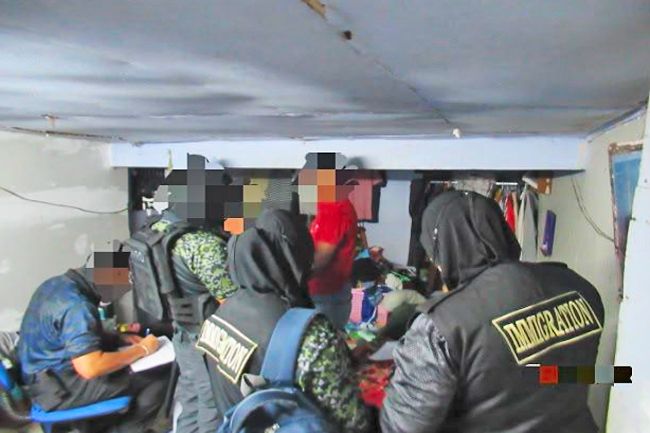
Brunei's immigration authorities are intensifying their grip on immigration violations across the sultanate, with the Immigration and National Registration Department (INRD) under the Ministry of Home Affairs executing a sustained campaign to root out non-compliance with the nation's immigration regulations. The enforcement push, operating under the umbrella framework of 'Operasi Kakas 2026', reflects Brunei's determination to maintain strict control over its foreign workforce and prevent irregular migration patterns that could strain public services or labour market integrity.
The scope of these operations reveals systemic challenges in monitoring foreign workers throughout Brunei's urban and semi-urban areas. In 'Operasi Kakas 86/2026', immigration officers descended on a market district in Mukim Sengkurong, a commercial hub where foreign workers typically congregate. Out of thirteen foreign nationals examined, seven faced detention and transfer to the Law Enforcement Division for further investigation. The suspected breach involved individuals employed while holding only visit passes—temporary travel documents that explicitly prohibit employment activities. This violation of Regulation 9(4) under the Immigration Regulations, Chapter 17, represents one of the most common infractions detected across Southeast Asia, where the gap between available work and legal employment pathways often incentivises irregular labour arrangements.
A parallel operation unfolded in residential areas of Mukim Berakas 'A', where enforcement teams targeted rented accommodation in 'Operasi Kakas 87/2026'. Immigration inspectors located three foreign nationals in these premises, detaining two on suspicion of the same working-while-on-visit-pass violation. The focus on residential rental properties indicates authorities recognise that informal housing arrangements often facilitate irregular employment networks. Landlords renting to foreign workers frequently operate with minimal scrutiny, creating environments where multiple immigration breaches can fester unchecked.
The third significant operation, 'Operasi Kakas 88/2026', targeted another rented house in Mukim Berakas 'A' and yielded the most serious findings to date. Of eight foreign nationals inspected, six were detained after failing to present original immigration documents—itself a serious offence suggesting attempted evasion of accountability. Preliminary investigations established that five of these detainees had likely breached Section 15(1) of the Immigration Act, Chapter 17, by remaining in Brunei after their immigration passes expired. Additionally, five individuals apparently violated Regulation 15(2) by ceasing to work for their original sponsoring employer without proper authorisation. This compound violation suggests a pattern of workers remaining in-country illicitly after legitimate employment relationships ended, a phenomenon that creates vulnerability to exploitation and underground economic activity.
The employment sponsorship requirement, which ties migrant workers to specific employers in Brunei as in much of Southeast Asia, creates both regulatory clarity and practical complications. When workers' contracts terminate or employers release them, individuals must either secure new sponsorship, arrange repatriation, or fall into irregular status. The detention of workers no longer employed by their original sponsors indicates that some foreign nationals attempt to remain employed informally rather than navigate legitimate replacement sponsorship procedures or return home.
In contrast, 'Operasi Kakas 89/2026' at a rented house in Mukim Berakas 'B' demonstrated that compliance is achievable and verifiable. All four foreign nationals encountered during this operation possessed valid documents and current immigration passes, suggesting that some households and employers maintain proper registration and compliance standards. These individuals faced no detention, underscoring that the enforcement regime distinguishes between compliant and non-compliant populations.
Brunei's intensified immigration enforcement reflects regional patterns across Southeast Asia, where rapidly evolving labour markets often outpace regulatory capacity. The sultanate's relatively small population—approximately 450,000—means that migrant workers comprise a visible and measurable portion of the labour force, making enforcement both politically symbolically important and administratively manageable compared to larger neighbours like Malaysia or Thailand. Immigration compliance in Brunei carries additional weight given the nation's small tax base and carefully calibrated welfare system, where any unmonitored population could strain public resources disproportionately.
The INRD's emphasis on documentation—particularly original documents—highlights a persistent challenge in immigration administration. Forged papers, incomplete records, and document loss complicate enforcement efforts. By detaining individuals unable to produce originals, authorities apply pressure that encourages cooperation and accurate record-keeping, though it also risks entangling genuinely confused or vulnerable workers in legal processes they may struggle to navigate.
These operations carry implications for how Brunei manages its reputation as a business-friendly jurisdiction seeking to attract foreign investment while maintaining tight immigration controls. Foreign employers operating in Brunei must now expect enhanced scrutiny of their workforce documentation and employment practices. The enforcement intensity may prompt legitimate employers to strengthen internal compliance systems, potentially improving overall standards, though it could also discourage some foreign investors unfamiliar with stringent labour administration.
For migrant workers themselves, the operations serve as a visible reminder that Brunei enforces its immigration laws consistently. Workers considering working outside formal sponsorship arrangements face documented risks. This deterrent effect may help preserve the integrity of Brunei's labour market, though it also creates incentives for workers to remain silent about workplace violations rather than report them to authorities.
The INRD has framed these operations as routine components of its ongoing compliance mandate, suggesting this enforcement tempo represents the new normal rather than a temporary surge. As Brunei continues to manage its economy and labour market in the post-pandemic period, immigration enforcement appears positioned as a permanent institutional priority, with implications extending to employers, workers, and landlords throughout the nation.

