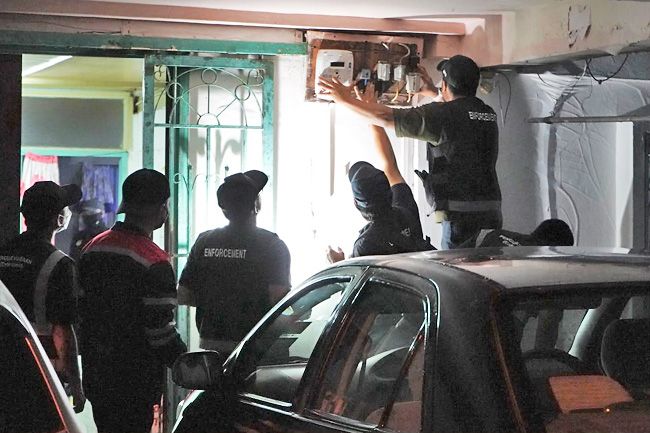
Brunei's law enforcement apparatus mobilised extensively across Bandar Seri Begawan this week, with a major joint operation yielding detentions and citations across multiple regulatory domains. Acting Commanding Officer Superintendent Mohamad Noor Abd Rahman oversaw the sweep, which saw the Immigration and National Registration Department (INRD) take one foreign man and one foreign woman into custody pending investigations under the Immigration Act. The operation underscores the region's ongoing focus on immigration compliance and border management—concerns that ripple across Southeast Asia as nations grapple with irregular migration patterns and unauthorised entry.
The scale of the deployment reflected serious governmental intent. More than 200 personnel from the Brunei-Muara Police District, alongside representatives from a dozen other agencies including the Narcotics Control Bureau, Royal Customs and Excise Department, Internal Security Department, and Religious Enforcement Division, descended on two separate locations within the capital. This inter-agency coordination model demonstrates how modern enforcement increasingly requires synchronised action across traditionally siloed domains, a lesson relevant to Malaysia and other ASEAN members as they refine their own integrated operations protocols.
Labour violations constituted a significant portion of the findings, with the Labour Department documenting three breaches under Section 81 of Brunei's labour legislation. These infractions centred on employers' failure to furnish workers with appropriate accommodation standards and their neglect of environmental hygiene obligations mandated by law. Such violations commonly affect migrant workforces and domestic labourers—populations often vulnerable to substandard conditions. The discovery of two additional offences under Section 86, relating to the non-declaration of worker accommodation within Foreign Worker Licence applications, suggests systemic gaps in compliance rather than isolated lapses. For Malaysian readers, these findings parallel longstanding concerns about worker accommodation standards highlighted in Malaysian labour reports and foreign investment reviews.
The Department of Electrical Services similarly documented two violations under the Electricity Act (Chapter 71), indicating that safety infrastructure and building compliance featured prominently in the operation's scope. Electrical hazards in commercial or residential settings pose immediate danger to occupants and exemplify the interplay between labour protection and public safety—areas where enforcement agencies across the region have historically struggled to maintain consistent vigilance. The concurrent identification of electrical breaches alongside labour violations suggests possible shared venues where multiple regulatory failures converge, a pattern worth monitoring for similar operations elsewhere in Southeast Asia.
A dedicated unit within Brunei's police force focusing specifically on human trafficking interviewed 19 individuals across both enforcement sites. Notably, no human trafficking offences emerged from the interrogations, a finding that either reflects effective prior deterrence or suggests that the particular locations targeted did not harbour such activities. The presence of the Human Trafficking Investigation Unit alongside routine immigration and labour inspectors reflects heightened regional awareness of modern slavery risks—concerns similarly prioritised by Malaysian enforcement bodies and international development organisations operating across ASEAN.
Brunei's approach exemplifies a comprehensive enforcement philosophy where border security, workplace protection, utilities safety, and criminal investigation converge under unified command. The involvement of the Bandar Seri Begawan Municipal Department and Religious Enforcement Division further broadens the scope, suggesting that the operation assessed compliance across municipal bylaws and religious regulations as well. This multi-layered oversight model contrasts with fragmented enforcement seen in some jurisdictions and offers a template worthy of examination by Malaysian state authorities managing similar metropolitan challenges.
The Royal Brunei Police Force framed the operation as emblematic of sustained institutional commitment to legal compliance and public safety throughout Brunei-Muara District. Such public communications typically serve dual purposes: reassuring residents of active protection while signalling to potential offenders the vigilance of enforcement bodies. For regional observers, the operation signals that smaller ASEAN nations continue investing in coordinated enforcement capacity despite resource constraints that plague larger neighbours.
The immigration detentions, while yielding minimal detail in the official statement, represent the operation's most legally consequential outcomes. Immigration enforcement remains highly sensitive across Southeast Asia, where labour mobility and tourism intersect with national security concerns. Brunei's detention protocol and subsequent investigative procedures will likely follow established protocols under its Immigration Act, though the broader questions of worker rights protections and deportation safeguards remain pertinent across the region.
The violation categories identified—inadequate worker housing, environmental breaches, licensing failures, and electrical safety lapses—cluster around the intersection of labour exploitation and public safety risk. This pattern suggests that unscrupulous operators often concentrate multiple violations at single sites, exploiting regulatory gaps and relying on the improbability of simultaneous multi-agency inspections. By coordinating across agencies, Brunei's authorities compressed the window during which violators could conceal or remedy breaches, thereby maximising detection efficacy. Malaysian enforcement bodies undertaking similar operations would likely encounter comparable violation patterns, particularly in sectors employing significant migrant labour.
The operation's mention of the Narcotics Control Bureau and Customs Department indicates that the sweep encompassed drug and contraband screening alongside labour and immigration checks. This integrated approach reflects contemporary enforcement wisdom that criminal activity often clusters with immigration and labour violations—networks engaged in one type of breach frequently engage in others. The simultaneous screening for narcotics, human trafficking, immigration offences, and labour violations thus represents a rational deployment of investigative resources.
For Malaysia and other ASEAN economies, Brunei's demonstration of coordinated enforcement capacity offers both inspiration and cautionary lessons. While resource-constrained neighbours may struggle to field 200 personnel simultaneously, the fundamental principle—that effective modern enforcement requires breaking down agency silos and establishing unified command structures—remains universally applicable. The operation also illustrates how even small nations committed to regulatory compliance can establish credible deterrence through concentrated, publicised enforcement sweeps.
Looking forward, the real test of such operations lies in follow-through. Detentions and citations carry value only if investigations proceed rigorously and penalties prove sufficient to deter future violations. The ongoing investigations of the detained foreign nationals, coupled with the processing of labour and electrical violations, will determine whether this enforcement action produces meaningful compliance improvements or merely temporary disruption. Malaysian authorities and other regional peers monitoring Brunei's operational model should particularly note how outcomes are subsequently communicated and whether enforcement intensity persists or fluctuates seasonally.

