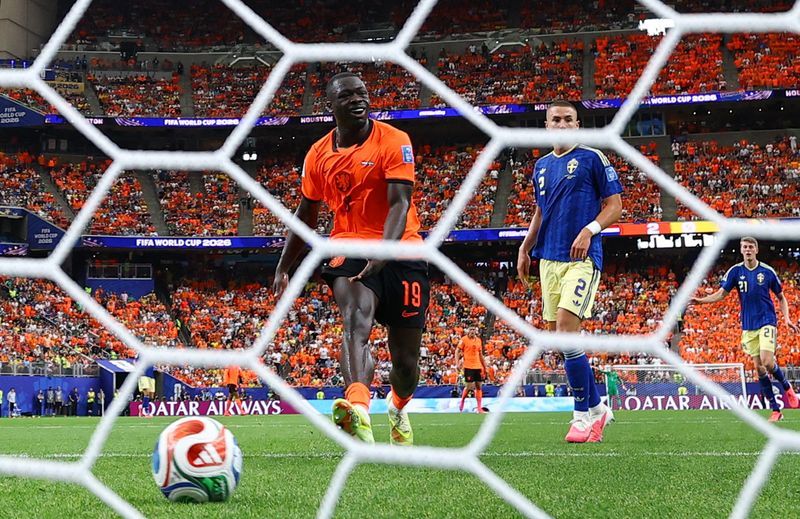
Ronald Koeman's tactical acumen came under heavy fire following the Netherlands' laboured opening performance at the World Cup, with his substitution changes in the 2-2 draw against Japan drawing widespread criticism from observers. Yet the Dutch manager's selection decisions proved decidedly shrewd in the subsequent fixture, as his team dismantled Sweden 5-1 in emphatic fashion on Saturday, vindicating his approach and shifting the narrative entirely in his favour. The swift reversal of fortunes underscores how football's relentless cycle can transform a coach from scapegoat to sage within the span of a single 90-minute encounter, a reality that Koeman experienced acutely when his choice to deploy Brian Brobbey as the primary attacking threat produced instantaneous and dramatic results.
Koeman had previously acknowledged that his tactical adjustments during the Japan encounter failed to generate the outcomes he envisioned, offering a candid assessment of decisions that proved largely ineffectual in that scoreless second half period. The Dutch helmsman's willingness to admit shortcomings, however, stood in sharp contrast to his subsequent moves against the Swedes, where his team selection proved prescient. Brobbey's deployment as the focal point of the Dutch attacking approach demonstrated the coach's confidence in a player who had experienced something of a peripheral existence within the national team setup, having been overlooked during qualifying matches and absent from the squad for an extended period before his March recall.
The 24-year-old's contribution at the Exploria Stadium was nothing short of transformative, as he struck twice within the opening 17 minutes to immediately establish Dutch dominance and effectively settle the contest before halftime. Those two goals represented far more than statistical achievements; they symbolised a potential generational shift in how the Netherlands approaches its attacking play moving forward. Brobbey's clinical finishing in quick succession provided the platform upon which the Dutch constructed their commanding five-goal victory, establishing psychological momentum that carried through to the final whistle and propelling his nation to the summit of Group F.
The striker's trajectory offers a fascinating case study in professional redemption and international reintegration. Having languished in relative obscurity within Koeman's plans, Brobbey underwent a personal renaissance that coincided with his Premier League campaign at Sunderland, where consistent competitive action at the English top flight's exacting standards visibly elevated his all-round performance. The demanding nature of Premier League football—with its intense physicality, tactical sophistication, and relentless pace—has a well-documented effect in sharpening players' technical and mental acuity, and Brobbey appears to have absorbed these lessons comprehensively.
When addressing the media at the Netherlands' training facility earlier in the month, Brobbey articulated the specific ways in which his English sojourn had expanded his striker's toolkit. He consciously rejected the notion that he merely represented a physical battering ram against opposing defences, instead highlighting his improved capacity to execute penetrating runs from deeper positions, identify and exploit spaces with greater precision, and adopt the flexible positioning that characterises modern centre-forward play. This multidimensional skill development distinguishes him from more limited attacking archetypes and positions him as a credible long-term option for the Dutch national programme.
The supporting cast surrounding whoever occupies the spearhead role for the Netherlands possesses considerable quality that should facilitate goal-scoring opportunities throughout the tournament. Cody Gakpo's incisive play along the left flank, coupled with the adventurous runs initiated by fullback Denzel Dumfries on the right, creates a dynamic attacking framework. The emergence of Crysencio Summerville as a creative force in the team's midfield and wide areas further enriches the attacking possibilities available to the front line, ensuring that an in-form striker will find himself presented with a consistent diet of presentable scoring chances as the tournament progresses.
Brobbey's clinical finishing prowess and the sharpness evident in his Saturday performance present an intriguing contrast to the current state of Memphis Depay, the Netherlands' all-time leading goalscorer. Depay's recent injury absence has conspicuously affected his physical conditioning and match sharpness, leaving the Dutch without a figure of comparable international pedigree in the number nine position. The ageing of football's playing population means that identifying and nurturing a credible successor to legendary performers becomes an increasingly urgent priority for national associations, and the Netherlands recognised that the window for finding Depay's replacement was narrowing considerably.
Brobbey's assertive Saturday display constituted a powerful statement of intent regarding his candidacy for this vacant leadership position. His clinical execution, allied to his technically refined approach and the evident confidence radiating from his movement and positioning, suggests a player who has made a tangible leap in professional maturity. For Koeman and the Dutch coaching staff, Saturday's emphatic victory provides not merely three valuable points but also compelling evidence that the succession question at centre-forward may finally have found a satisfactory answer within their current squad.
The implications of Brobbey's emergence extend beyond mere squad rotation or tactical flexibility. Should he maintain this trajectory through the tournament's knockout phases, he could become the focal point around whom the Netherlands builds its attacking strategy for years to come. His combination of physical attributes, technical refinement, and demonstrated composure under competitive pressure suggests he possesses the foundations to develop into a genuinely world-class performer. Koeman's faith in promoting him from the periphery to the central attacking role has been vindicated emphatically, and the manager's next challenge will involve maintaining the player's form and confidence during the inevitable periods of tournament football when opportunities for individual goalscorers become more contested and precious.
%22%2F%3E%3C%2Fpattern%3E%3C%2Fdefs%3E%3Crect%20width%3D%22100%25%22%20height%3D%22100%25%22%20fill%3D%22url(%23ph2fg4zg)%22%2F%3E%3Crect%20width%3D%22100%25%22%20height%3D%22100%25%22%20fill%3D%22url(%23ph2fg4zp)%22%2F%3E%3Ctext%20x%3D%2250%25%22%20y%3D%2250%25%22%20text-anchor%3D%22middle%22%20dominant-baseline%3D%22central%22%20fill%3D%22rgba(255%2C255%2C255%2C0.95)%22%20font-family%3D%22Georgia%2C%20'Times%20New%20Roman'%2C%20serif%22%20font-weight%3D%22700%22%20font-size%3D%22272%22%20letter-spacing%3D%22-0.02em%22%3EPerak%3C%2Ftext%3E%3C%2Fsvg%3E)
%22%2F%3E%3C%2Fpattern%3E%3C%2Fdefs%3E%3Crect%20width%3D%22100%25%22%20height%3D%22100%25%22%20fill%3D%22url(%23ph2ptykg)%22%2F%3E%3Crect%20width%3D%22100%25%22%20height%3D%22100%25%22%20fill%3D%22url(%23ph2ptykp)%22%2F%3E%3Ctext%20x%3D%2250%25%22%20y%3D%2250%25%22%20text-anchor%3D%22middle%22%20dominant-baseline%3D%22central%22%20fill%3D%22rgba(255%2C255%2C255%2C0.95)%22%20font-family%3D%22Georgia%2C%20'Times%20New%20Roman'%2C%20serif%22%20font-weight%3D%22700%22%20font-size%3D%22136%22%20letter-spacing%3D%22-0.02em%22%3EPAS-Bersa%E2%80%A6%3C%2Ftext%3E%3C%2Fsvg%3E)