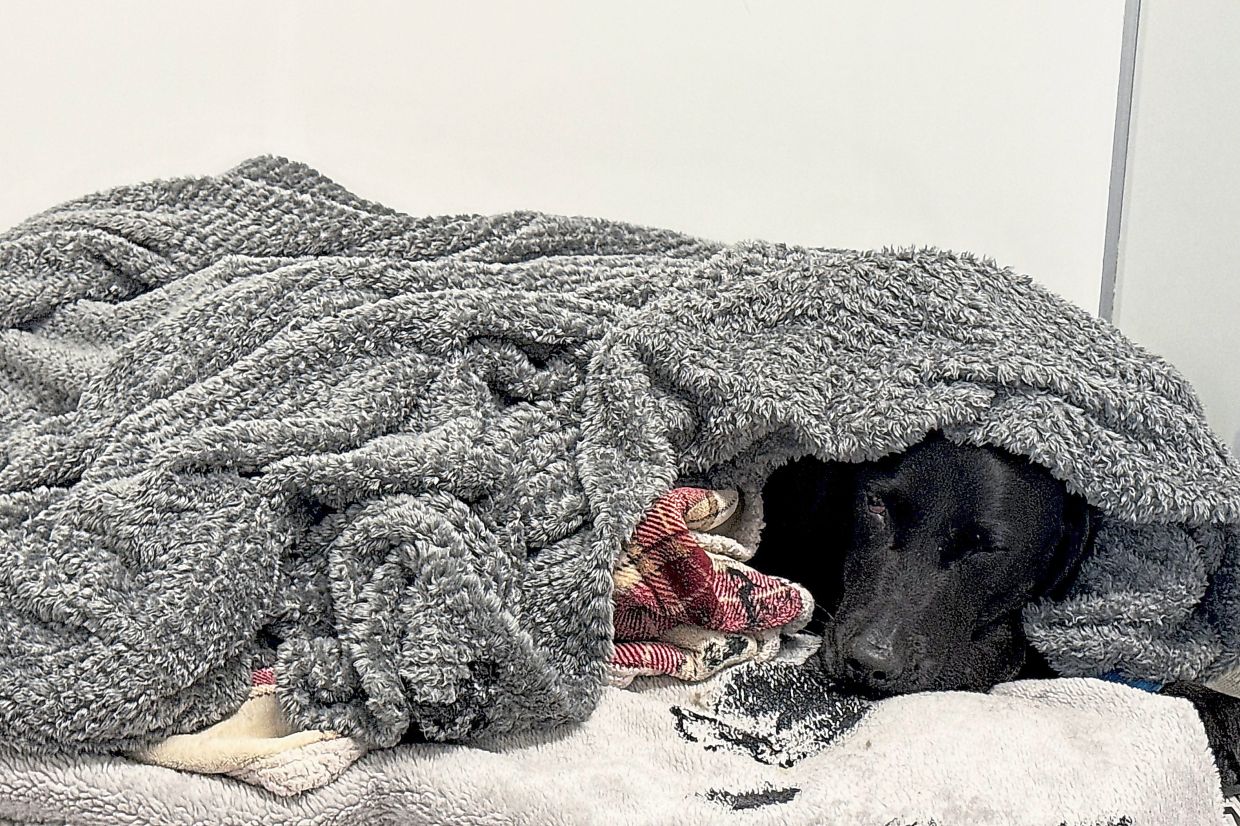
Christina Bluhme faced an unexpected crisis while mountaineering in Scotland's highlands when her beloved dog Tokyo, a five-year-old black Labrador retriever, suddenly became incapacitated partway up Ben Nevis, Britain's tallest peak. What initially appeared to be a medical emergency of unknown origin proved to be cannabis toxicity, a condition that caught the experienced canine trainer by surprise and ultimately required a dramatic high-altitude rescue operation. The incident reflects a troubling trend affecting pet owners across the United Kingdom and North America, where unintended animal ingestion of cannabis is climbing at an alarming rate.
On July 5, Bluhme and her party—which included her son Magnus and two dogs—had progressed more than three hours along the trail up the 1,345-meter Ben Nevis mountain when Tokyo's condition deteriorated sharply. The dog began to display severe neurological symptoms, swaying unsteadily as though intoxicated before becoming completely immobilised. "She had a very bad trip," Bluhme recounted, describing the bewildering experience. "It was a very terrifying experience." Despite her quarter-century of professional experience in dog training and behaviour, Bluhme initially had no inkling that her pet had encountered discarded or abandoned cannabis along the hiking route, a phenomenon that has become increasingly documented in popular outdoor destinations across Britain.
The timing and location created additional complications for the rescue effort. By the time Tokyo's condition became critical, the hiking party was positioned near the summit of Ben Nevis, with weather conditions having deteriorated significantly from the clear morning conditions. Rain had begun to fall and temperatures had plummeted to 5 degrees Celsius, transforming the already challenging terrain into a hazardous environment for emergency response. Bluhme made the difficult decision to abandon their summit attempt and begin an urgent descent, instructing her son to contact emergency services for assistance with the incapacitated dog.
Initial contact with police authorities proved uncertain, with responders questioning whether they could dispatch a mountain rescue team to their location. However, fortune intervened through a remarkable stroke of timing: members of the all-volunteer Lochaber Mountain Rescue Team were already descending from the peak, having just concluded an operation assisting with the helicopter evacuation of an injured hiker. The rescue crew rapidly assessed Tokyo's condition and determined that immediate transport down the mountain was essential. They secured the 25-kilogram dog in a rescue stretcher and commenced a rapid descent along the steep, rain-slicked, and rocky trail—a journey that would normally take considerably longer but was completed in approximately one hour owing to the team's considerable expertise and physical conditioning.
"They were almost running," Bluhme recalled, describing the rescuers' urgent pace. "I was clinging on to the stretcher. They were so agile and so fast. It was incredible." The swift action proved critical to Tokyo's survival, as the dog remained in a compromised neurological state throughout the descent. The rescue team had been alerted by police that Crown Vets in nearby Fort William would have a veterinarian standing by upon their arrival, allowing for seamless transition from field rescue to professional medical care.
At Crown Vets, initial diagnostic assessments proved inconclusive, with veterinarians first suspecting a spinal injury given Tokyo's paralysis and loss of coordination. However, a senior veterinarian recognised the constellation of symptoms as consistent with neurotoxin exposure. When the veterinary team consulted with poison control specialists, the clinical picture aligned precisely with cannabis intoxication: altered consciousness, loss of motor control, and profound neurological disruption. The diagnosis prompted immediate treatment with activated charcoal, a standard intervention designed to prevent further toxin absorption in the gastrointestinal tract. By the following morning, Tokyo had achieved a complete recovery with no lingering effects.
The incident highlights a troubling epidemiological trend affecting companion animals across multiple jurisdictions. Cannabis toxicity cases among pets have risen substantially in Britain, while the problem has intensified even further in the United States, where cannabis use remains more widespread and legal in multiple states. The American Society for the Prevention of Cruelty to Animals officially added cannabis to its top ten list of toxins affecting domestic animals for the first time in 2023, reflecting the growing prevalence of poisoning incidents. Pet owners and veterinarians attribute the increases to multiple factors: greater availability of cannabis products in recreational markets, increased use of concentrated cannabis forms such as edibles and oils that pose particular risks to animals, and the phenomenon of hikers and outdoor enthusiasts inadvertently or deliberately discarding cannabis in natural areas.
The financial implications of Tokyo's rescue and medical treatment extended beyond the immediate veterinary costs. Bluhme received a veterinary bill totalling £1,000 (approximately RM5,445), a substantial sum that she nonetheless considered entirely justified given the alternative outcome. The expense encompassed the emergency diagnostic procedures, poison control consultation, activated charcoal administration, overnight hospitalisation, and monitoring care that proved essential to her dog's survival and recovery. For many pet owners facing similar circumstances, however, such costs might prove prohibitive, potentially leading to tragic outcomes.
Bluhme's experience offers important cautionary lessons for outdoor enthusiasts who bring dogs to popular hiking destinations and wilderness areas. The incident demonstrates that cannabis ingestion can occur rapidly and unexpectedly along well-established trails, particularly in regions where recreational use is common. Pet owners should remain vigilant for signs of acute neurological change in their animals during outdoor activities, including unusual gait abnormalities, loss of coordination, altered consciousness, or behavioural changes. Recognition of these symptoms and immediate professional veterinary consultation can prove lifesaving, as was the case with Tokyo's rapid diagnosis and treatment.
The broader context for this incident encompasses ongoing debates surrounding cannabis regulation, public health messaging about accidental animal exposure, and the responsibilities of recreational users regarding waste disposal in natural areas. Veterinary organisations across Britain and internationally have begun developing educational campaigns to raise awareness among pet owners about cannabis toxicity risks. Simultaneously, the incident has prompted discussion among hiking communities about proper disposal of cannabis products and the need for greater awareness about the hazards posed to animals in shared outdoor spaces.
For Bluhme and Tokyo, the recovery was as complete as it was swift. "The next day it was like nothing ever happened," Bluhme reflected. "She recovered so quickly, and I'm the one still hanging a bit." The statement captures both the physical resilience of the young dog and the psychological toll that such acute emergencies exact on responsible pet owners. The dramatic rescue operation coordinated by the Lochaber Mountain Rescue Team, the swift veterinary intervention, and Tokyo's ultimate recovery transformed what could have been a tragedy into a survivable incident—but one that has raised awareness about an emerging threat to pet safety in Britain's outdoor recreational spaces.

