A catastrophic wildfire consuming British Columbia shows no signs of being contained, though authorities reported a slight moderation in its expansion rate as of Sunday. The conflagration has already ravaged more than 100 square kilometres of territory, setting the stage for what promises to be one of Canada's most severe fire seasons in recent memory. The scale of displacement is unprecedented for the region, with more than 20,000 people forced to abandon their homes and possessions as flames advance relentlessly through populated areas.
The fire's progression towards Okanagan Lake represents a critical juncture in the disaster's trajectory. Officials characterised this milestone as potentially limiting the fire's forward momentum, since the lake acts as a natural barrier that will prevent further rapid expansion in that direction. However, this modest slowdown provides little comfort to residents still in the fire's path, as the blaze continues to threaten densely populated zones around the town of Summerland, home to approximately 12,000 people. Emergency personnel have concentrated their efforts on defending the town's outlying residential areas, establishing defensive perimeters and implementing strategic fire suppression measures.
The human cost remains dire. More than 50 individuals were extracted from the encroaching flames by helicopter after becoming trapped in rapidly deteriorating conditions. These dramatic rescue operations, while successful, underscore the chaotic nature of the evacuation effort and the narrow margins between survival and tragedy. Police are simultaneously investigating reports of at least one death linked to the fire, though confirmation remains pending. The uncertainty surrounding casualties reflects the ongoing confusion and difficulty in accounting for all residents across the expansive evacuation zones.
Evacuation orders affecting approximately 10,000 properties continue to remain in effect across the broader region, transforming entire communities into ghost towns as residents seek safety. This represents not merely a temporary displacement but a potentially prolonged upheaval affecting tens of thousands of people who face uncertainty about when they might return home, if their homes remain standing. The psychological and economic toll on evacuees extends far beyond the immediate danger, encompassing lost employment, disrupted education, separation of families, and the compounding anxiety of waiting for news about property and livelihoods.
Canada's federal government has mobilised substantial resources to address the humanitarian crisis. Minister Eleanor Olszewski announced approval of British Columbia's emergency assistance request, confirming that federal support will encompass temporary housing and accommodation for displaced residents. This federal intervention reflects recognition that provincial resources alone cannot adequately manage a disaster of this magnitude, requiring coordination across multiple governmental levels to provide essential services to the suddenly homeless population. The commitment of federal resources also signals that authorities expect the evacuation and recovery process to extend well beyond the immediate crisis phase.
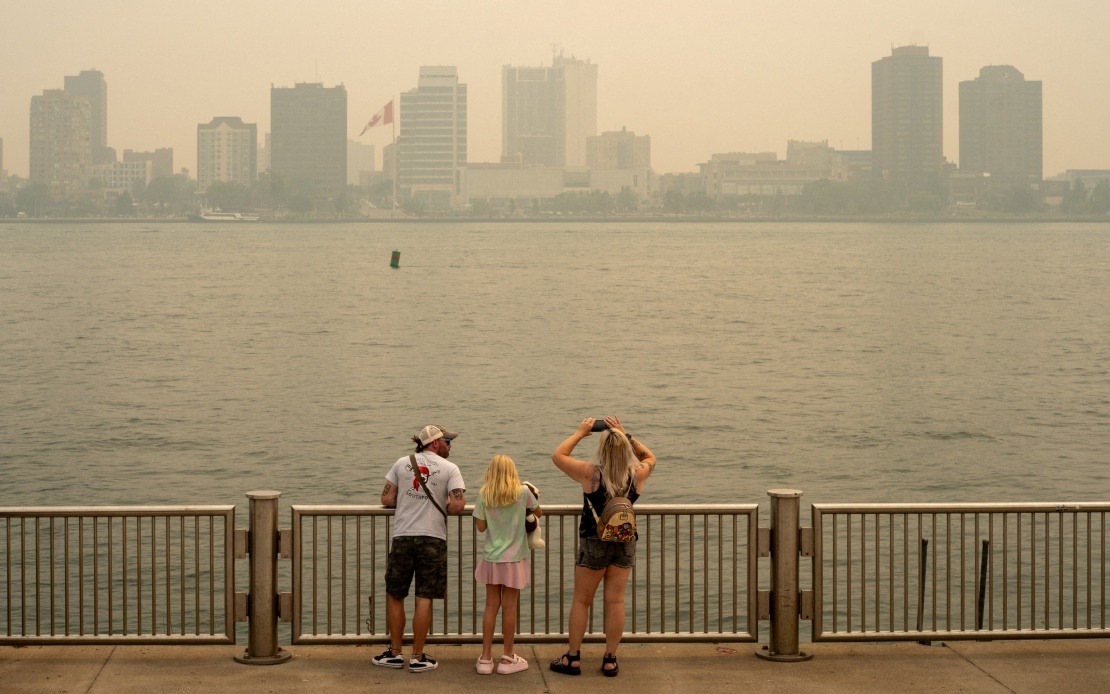
Environmental conditions continue to conspire against firefighting efforts. Persistent hot, dry weather and dense smoke have created ideal conditions for the fire to spread and extremely hazardous circumstances for personnel attempting to combat it. The smoke itself poses serious public health risks across the region and beyond, degrading air quality to dangerous levels and forcing residents in unaffected areas to remain indoors. These meteorological challenges mean that even with maximum deployment of firefighting assets, containment remains extraordinarily difficult.
The disaster has attracted international attention and support. Firefighting personnel and resources from Mexico, Australia, and New Zealand have been mobilised to assist British Columbia's overwhelmed emergency services. This international dimension underscores both the severity of the crisis and the reality that Canada's resources require supplementation from allied nations with expertise in large-scale wildfire management. Such cooperation reflects established disaster relief protocols but also speaks to the unprecedented scale of the current emergency.
British Columbia's declaration of a state of emergency on Saturday formalised what was already evident from the ground reality. This designation activates additional emergency powers and streamlines resource allocation, allowing authorities to respond more flexibly than normal bureaucratic procedures would permit. The declaration also reflects official acknowledgment that standard fire management protocols are insufficient for the current situation.
The province is currently grappling with more than 100 active wildfires, with nearly half remaining uncontained. This means the Summerland fire, while the most visible and destructive, represents merely the most dramatic manifestation of a broader environmental catastrophe unfolding across British Columbia. Multiple simultaneous fire fronts strain emergency services, force difficult triage decisions about resource allocation, and prevent concentration of assets on any single fire. The psychological impact of living in a province where more than 50 individual fire emergencies are simultaneously active creates pervasive anxiety and sense of siege.
Canada's wildfire crisis extends beyond British Columbia. Ontario and Quebec have also contended with major conflagrations this year, suggesting that climate patterns and environmental conditions favouring extreme fire activity may be operating at a continental scale. For Malaysian and Southeast Asian observers, the British Columbia disaster offers sobering evidence of how climate change manifests in developed nations with significant firefighting capacity. If wealthy, technologically advanced Canada struggles to contain such fires despite international assistance, the implications for tropical regions with fewer resources and denser populations warrant serious consideration. The fire season patterns emerging in Canada may prefigure similar challenges ahead for the Asia-Pacific region as global temperatures continue rising.

