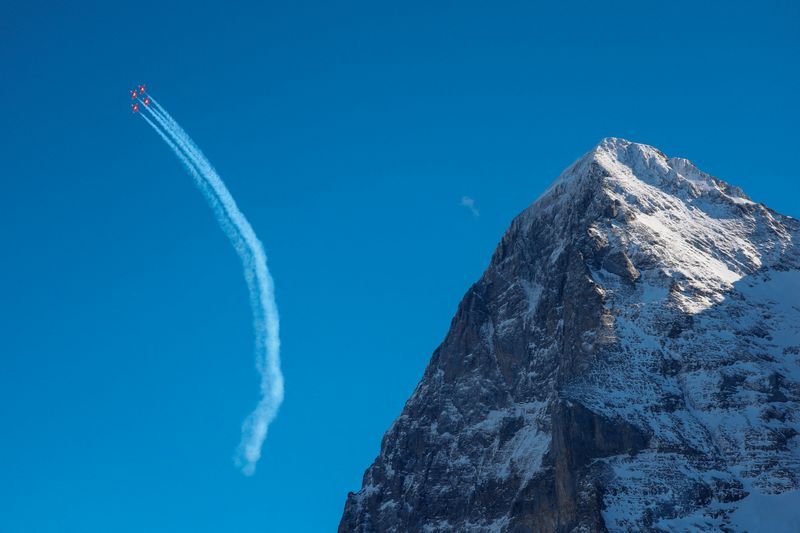
British alpinist Fay Manners achieved a milestone in mountaineering history this summer when she became the first British woman to establish a new route on the Eiger North Face. Working alongside Swiss climbing partner Roger Schaeli, Manners spent 13 days constructing what they named the "Solar Eclipse" route—a formidable 900-metre, 33-pitch line through previously unclimbed terrain on one of Europe's most dangerous and respected alpine faces.
The Eiger North Face, located in the Swiss Alps, commands respect through both its sheer scale and its deadly reputation. Rising 1,800 metres of exposed rock and ice, the wall presents climbers with unpredictable weather, cascading rockfall, and conditions that have claimed numerous lives throughout mountaineering history. The first successful ascent came only in 1938 when a German-Austrian team finally conquered the face after earlier expeditions ended in tragedy, establishing the mountain's fearsome standing in the climbing community.
Manners was no stranger to this particular Alpine giant when she returned this summer. She had previously tackled the Heckmair Route, one of the established pathways up the North Face, four years earlier. Yet that experience did not satisfy her curiosity about the mountain. Instead, it sparked an obsessive fascination with the wall's geology and possibilities, ultimately driving her decision to return not as a follower of existing routes but as an explorer charting entirely new terrain.
The distinction between repeating an established route and pioneering a new one represents a fundamental divide in mountaineering that carries profound implications for climbers' preparation and mindset. When following a known path, climbers can consult guidebooks, learn from others' experiences, and understand what technical difficulties await them. Establishing a new route eliminates all such advantages. Climbers face complete uncertainty about what physical challenges they will encounter, what protective equipment they might need to install, or whether they will successfully reach the summit at all. This uncertainty transforms the endeavour from a calculated expedition into genuine exploration.
For Manners, the significance of opening a new route transcends the personal accomplishment of reaching the summit. Her achievement carries particular weight within climbing's historical context, where male names dominate the record books of route-setters. Looking through guidebooks and seeing exclusively male names attached to new routes creates a subtle but persistent message about who belongs in elite mountaineering and who drives innovation in the sport. This gendered representation carries real psychological implications, suggesting to aspiring female climbers that pioneering is a male domain.
Women have indeed participated in Eiger climbing for decades, yet their contributions remain underrepresented in the sport's narrative. Daisy Voog claimed the distinction of being the first woman to successfully climb the North Face in 1964, but her achievement came only after she had been rejected from a mountaineering club devoted to extreme climbing simply because the membership was restricted to men. Five years later, Japanese climber Michiko Imai became the sole female member of a six-person team that established the "Japanese Summer Direttissima" route, breaking through another barrier in the sport's male-dominated history.
Manners articulates how gender-based assumptions become internalized from childhood, shaping what people believe they can accomplish. She reflects on how subtle messages—comments that women cannot carry as much weight, that they lack the physical capacity for certain pursuits—accumulate over time, creating doubts that persist even when evidence contradicts them. These stereotypes operate largely below conscious awareness, woven so thoroughly into social interactions that people rarely recognize them until they pause to examine their own thinking. Breaking free from such conditioning requires deliberate effort and often external validation of capability.
Her own career trajectory illustrates how these systemic assumptions influenced her choices. Growing up in England with a genuine passion for sport, Manners imagined pursuing athletics professionally. Yet conversations with people around her consistently conveyed that women had no realistic future in sports careers, that the financial prospects were too limited. Accepting this narrative, she pivoted toward data science instead, pursuing a conventional professional path that offered stability and societal approval. Only later, after relocating to Chamonix in France and continuing to climb while working as a data consultant, did doors begin opening when the outdoor brand The North Face offered sponsorship.
The path from sponsored athlete juggling two careers to full-time mountaineer unfolded gradually for Manners. What now appears natural—a woman building a professional climbing career—felt almost impossible to imagine when she was younger. She describes the disbelief that persisted even as the opportunity materialized, a psychological lag between external circumstances changing and internal convictions catching up to that new reality. This gap between what is possible and what people believe is possible represents a crucial barrier that extends far beyond climbing, affecting women's career choices and ambitions across numerous fields.
Manners views her achievement on the Eiger not merely as a personal triumph but as a contribution to shifting perceptions about women's roles in mountaineering. Her aspiration extends beyond having opened "Solar Eclipse" to seeing other women attempt the route, particularly all-female teams climbing together. This vision reflects an understanding that representation matters not just symbolically but practically—that seeing women succeed in challenging endeavours inspires others to push their own boundaries and imagine possibilities previously considered unrealistic.
The implications of Manners' achievement resonate beyond elite alpine climbing circles. Her journey from a talented athlete discouraged from professional sports into a world-class mountaineer speaks to how societal assumptions about gender capability persist even in contemporary society. For readers across Southeast Asia, where mountaineering culture is growing and where women increasingly participate in outdoor sports, Manners' breakthrough offers both inspiration and a cautionary lesson about the subtle ways that gender expectations shape career and life choices.
As Manners plans future returns to her "Solar Eclipse" route, she embodies a shifting paradigm in mountaineering where women not only participate but innovate and lead. Her willingness to spend 13 days in extreme conditions pioneering new terrain demonstrates that the barriers holding women back in climbing and other fields remain primarily social rather than physical. By opening this new route and advocating loudly for women's representation in route-setting, Manners contributes to a climbing culture where the next generation of female mountaineers might grow up without ever internalizing the doubts that shaped her own path.

