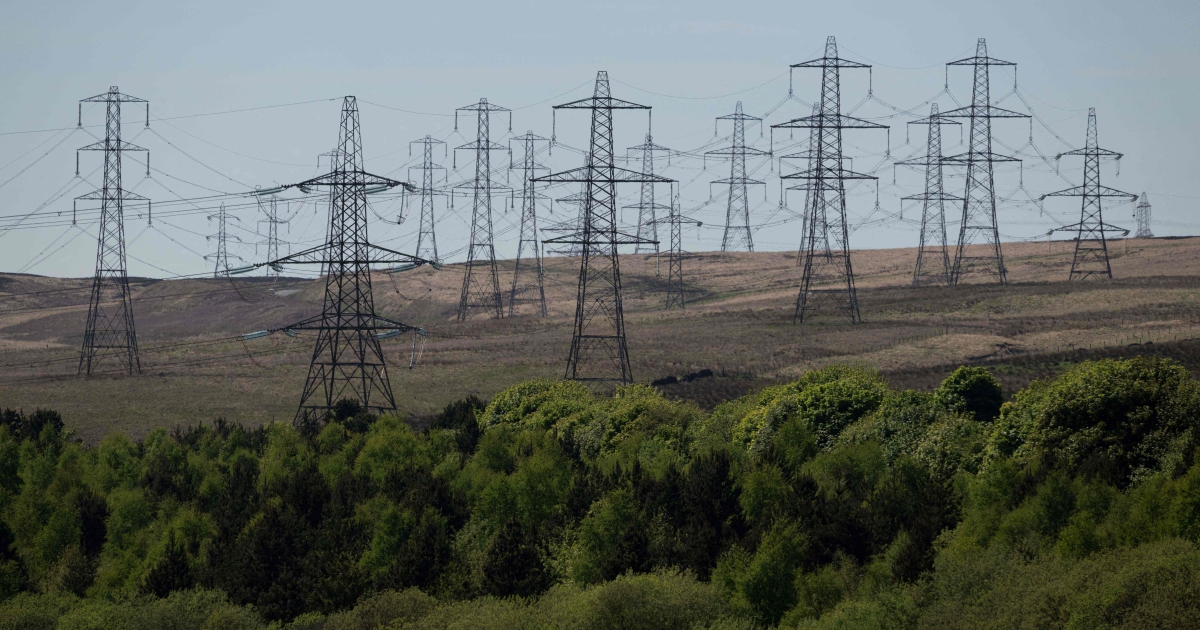
Britain's newly appointed Prime Minister Andy Burnham has announced plans to reduce taxes levied on electricity bills, marking a significant policy shift aimed at alleviating household financial strain. The move, confirmed through an official Downing Street statement on Tuesday, represents a cornerstone initiative as the government seeks to fulfill its broader campaign commitment to address the deepening cost-of-living emergency affecting millions across the United Kingdom.
The electricity tax reduction carries particular weight given the sustained pressure households have faced since late 2021, when energy costs began their dramatic ascent across Europe. For Malaysian observers watching global economic trends, the British situation underscores how developed nations with substantial social safety nets nonetheless struggle when energy prices spike unexpectedly. Unlike Malaysia, which benefits from significant domestic oil and gas reserves, the UK remains heavily dependent on imported energy, making its citizens particularly vulnerable to international commodity price fluctuations.
Prime Minister Burnham's government framed the tax cut as a direct response to voter mandates expressed during recent elections. The commitment reflects widespread public demand for immediate relief rather than longer-term structural reforms. This approach differs markedly from previous governments' strategies, which often emphasised energy market restructuring and renewable energy investment as the primary path to affordability. The new administration's decision suggests a recognition that emergency measures are required before systemic solutions can take effect.
The fiscal implications of this policy shift deserve careful consideration. Reducing electricity taxation creates a shortfall in government revenue that must either be compensated through spending cuts elsewhere, increased borrowing, or alternative revenue sources. British policymakers face the familiar challenge of balancing immediate public relief against medium-term fiscal sustainability—a tension particularly acute following several years of elevated public spending and borrowing during pandemic recovery. For regional observers, this illustrates how even wealthy nations confront difficult trade-offs when attempting to shield citizens from economic shocks.
Electricity affordability touches upon a broader energy security debate permeating British politics and policy. The government must simultaneously manage the transition toward renewable energy infrastructure, maintain grid reliability, support investment in generation capacity, and shield household budgets from volatility. These objectives sometimes conflict; tax reductions can suppress investment signals needed for infrastructure development, while simultaneously delivering the tangible relief voters demand. The Burnham administration's willingness to prioritise immediate household assistance signals a particular political calculus about voter expectations and electoral prospects.
Regional implications extend beyond Britain's borders. The UK's energy policies influence European supply chains and investment patterns. European governments, particularly those in countries bordering the continent's eastern regions where geopolitical tensions have disrupted energy flows, watch British policy decisions with keen interest. Similarly, energy-dependent Asian economies including Malaysia track how developed nations manage the balancing act between affordability and sustainability, as these decisions influence global investment patterns and technology development trajectories.
The tax reduction mechanism itself warrants examination. Electricity taxation in Britain comprises multiple layers—value-added tax and fuel duty—alongside various levies designed to fund environmental programmes and support disadvantaged consumers. The government's statement did not initially specify which particular taxes would face reduction, leaving open questions about targeted versus broad-based relief. This ambiguity matters significantly; reductions in environmental levies, for instance, might slow renewable energy infrastructure development, while VAT reductions would provide broader household relief regardless of income.
Comparative policy analysis proves instructive here. Several Southeast Asian nations, including Malaysia, employ energy subsidies rather than tax reductions as their primary affordability tool. The British approach—cutting taxes rather than maintaining price controls—reflects different institutional frameworks and political economies. While subsidy regimes can suppress investment and create fiscal distortions, tax-based measures can fail to protect the most vulnerable citizens if relief is not targeted strategically. The choice between mechanisms reflects deeper national priorities and institutional capacities.
Timing considerations matter considerably for policy effectiveness. Electricity taxation changes implemented during autumn, as temperatures drop and heating demands surge, can deliver maximum immediate relief. However, delayed implementation risks disappointing voters who expected rapid action following electoral promises. The government's public announcement itself signals commitment while providing opportunity for legislative preparation, allowing civil servants and energy suppliers time to adjust administrative systems accordingly.
International observers should monitor whether this policy proves merely symbolic or fundamentally reshapes British household energy economics. If the tax reduction translates into material cost savings for typical households—potentially reducing annual bills by meaningful percentages—the initiative could reshape voter perceptions of government competence and responsiveness. Conversely, if savings prove marginal relative to underlying commodity prices, political disappointment may accelerate, complicating efforts to implement complementary long-term energy policies requiring sustained public support.
Looking forward, this announcement likely represents the opening gambit in broader energy affordability debates. The Burnham government will face persistent pressure to expand relief measures, constrain energy prices through regulation, or accelerate domestic renewable production to reduce import dependence. Each pathway carries distinct fiscal, environmental, and social consequences. For Malaysian policymakers observing these dynamics, the British experience reinforces that energy affordability, while superficially straightforward, ultimately demands sophisticated navigation between competing objectives and constituencies.

