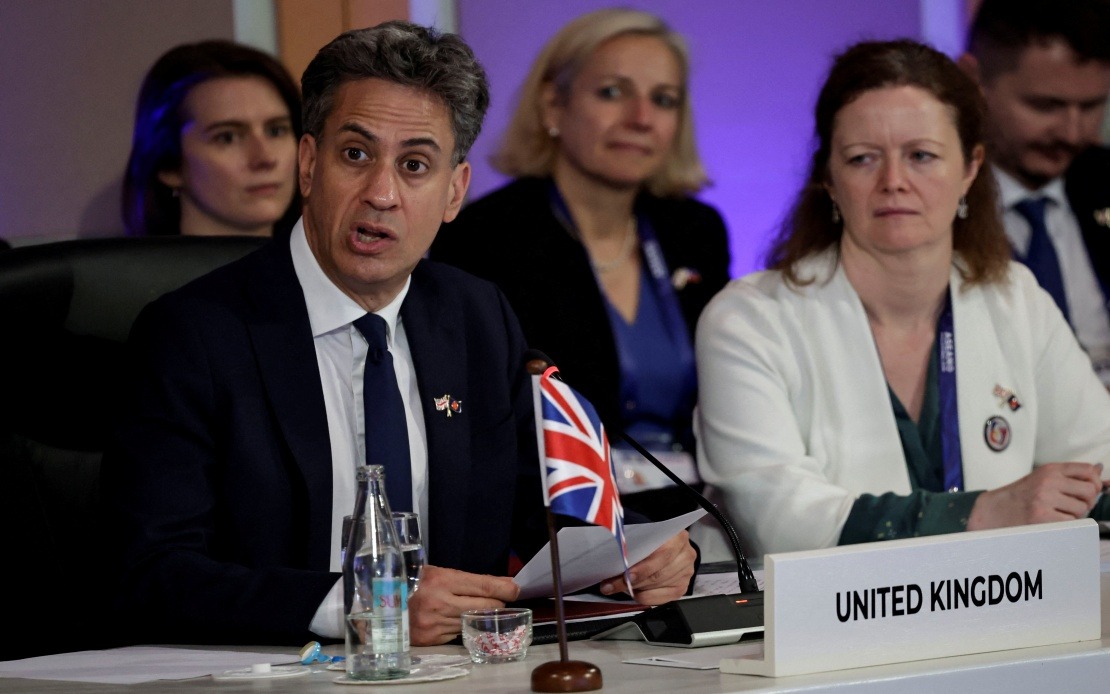
Britain's newly appointed Foreign Secretary Ed Miliband is embarking on his maiden continental journey this week, signalling a strategic pivot towards rebuilt relationships with key European partners. His visits to France and Spain represent a significant diplomatic move for the Labour government, underscoring London's intent to restore trust and deepen cooperation with EU nations following years of Brexit-related friction. The timing of these visits reflects both an immediate political window and a longer-term commitment to repositioning Britain as an active participant in European affairs, rather than a reluctant outsider.
The simultaneous crises unfolding across southwestern Europe have shaped the contours of Miliband's inaugural trip. France and Spain are currently grappling with catastrophic wildfire seasons that have displaced approximately 330,000 residents from their homes, creating humanitarian emergencies that demand coordinated international response. By weaving his diplomatic agenda into this context of shared crisis, Miliband demonstrates that Britain views European challenges as interconnected with its own security and prosperity concerns. This symbolic alignment—coupling relationship-building with expressions of solidarity during disasters—establishes a foundation of common purpose rather than transactional negotiation.
In Paris, Miliband will sit down with French Foreign Minister Jean-Noel Barrot to explore the architecture of European defence cooperation and Britain's ongoing military and intelligence support for Ukraine. The conversation reflects ongoing anxiety across Europe regarding Russia's continued aggression and the unpredictable trajectory of the conflict. For Britain, engagement on Ukrainian matters carries particular weight given its military assistance programmes and intelligence-sharing relationships; these discussions will likely seek to harmonise British and French positions on escalation risks and long-term security guarantees for Kyiv. The bilateral encounter also provides an opportunity to discuss the Middle East, where both nations seek de-escalation in West Asia and coordinated diplomatic strategies.
Migration policy, a perennial source of tension between Britain and continental Europe, will inevitably surface during the French discussions. London has pursued increasingly restrictive asylum policies and small-boat interception operations in the Channel, creating friction with French authorities who argue that burden-sharing should be more equitably distributed. Miliband's presence in Paris signals that the new government may be seeking less adversarial terms of engagement on these issues—a notable shift from the previous administration's combative rhetoric. Whether substantive policy shifts will follow remains uncertain, but the willingness to engage suggests evolving thinking within Whitehall.
The subsequent meeting in Madrid with Spanish Foreign Minister José Manuel Albares will pivot towards territorial and regional cooperation frameworks. The UK-EU Gibraltar treaty negotiations have long represented a particularly fraught dossier, with Spain claiming sovereignty over the Rock while Britain maintains its position as administrator of the strategic Mediterranean territory. Recent agreements have eased tensions by establishing a customs arrangement that avoids a hard border, but deeper questions about long-term governance remain contested. Miliband's engagement on this file indicates that London is prepared to continue patient diplomacy rather than adopt hardline stances that could derail fragile agreements.
Beyond Gibraltar, the Madrid leg will explore security collaboration in a region increasingly concerned about Mediterranean stability, North African instability, and migration pressures emanating from across the Strait. Spain has positioned itself as a crucial partner in European strategic affairs, and cultivating this relationship serves Britain's interests in maintaining influence in European security architectures even from outside the EU proper. The conversation will likely touch on intelligence-sharing arrangements, defence industry cooperation, and coordination on terrorism and organised crime networks that operate across borders.
Climate change forms an overarching thread running through both visits, lending urgency to discussions that might otherwise focus narrowly on traditional security matters. The devastating wildfires consuming swathes of France and Spain provide visceral evidence of climate-related extreme weather that Britain itself faces increasingly severe versions of. Miliband's commitment to highlighting climate imperatives reflects the Labour government's domestic emphasis on green energy transition and its international positioning as a climate leader. By framing climate crisis management as an essential collective endeavour demanding unified European action, he positions Britain as a constructive partner committed to shared prosperity rather than parochial self-interest.
For Malaysia and Southeast Asia, Miliband's European tour carries indirect but meaningful implications. Britain's relationship with Europe influences its geopolitical orientation and available bandwidth for Indo-Pacific engagement, where Malaysia sits as a significant regional player. A Britain that successfully rebuilds European relationships and commits meaningful resources to collective defence and climate action may find itself better positioned to sustain its AUKUS commitments, maintain naval deployments through Suez and into regional waters, and engage substantively on regional security architecture. Conversely, a Britain locked in perpetual European tensions would likely retreat further into regional concerns.
The broader strategic picture reveals a Britain attempting to establish itself as a bridge between European and Indo-Pacific security architecture, avoiding the false choice between its historical European identity and its contemporary Indo-Pacific interests. Miliband's diplomatic efforts to strengthen French and Spanish ties serve this broader objective, creating stable partnerships that can support Britain's various regional commitments. For observers in Southeast Asia, the success of these early visits will offer clues about whether Britain can sustain a genuinely global role or whether it will gradually retrench to focus on nearer neighbourhood.
These inaugural visits also carry domestic political significance for the Miliband-led Foreign Office. The new Foreign Secretary must establish credibility both internationally and with Parliament, demonstrating that Britain remains a serious actor in European affairs. Early engagement with major continental powers, coupled with demonstrable concern for humanitarian crises, establishes the narrative of competent stewardship that will shape perceptions of the Labour government's foreign policy trajectory. Whether these initial diplomatic overtures translate into substantive institutional change and policy realignment will become apparent in coming months as specific agreements are negotiated and implemented across migration, defence, climate action, and regional disputes.

