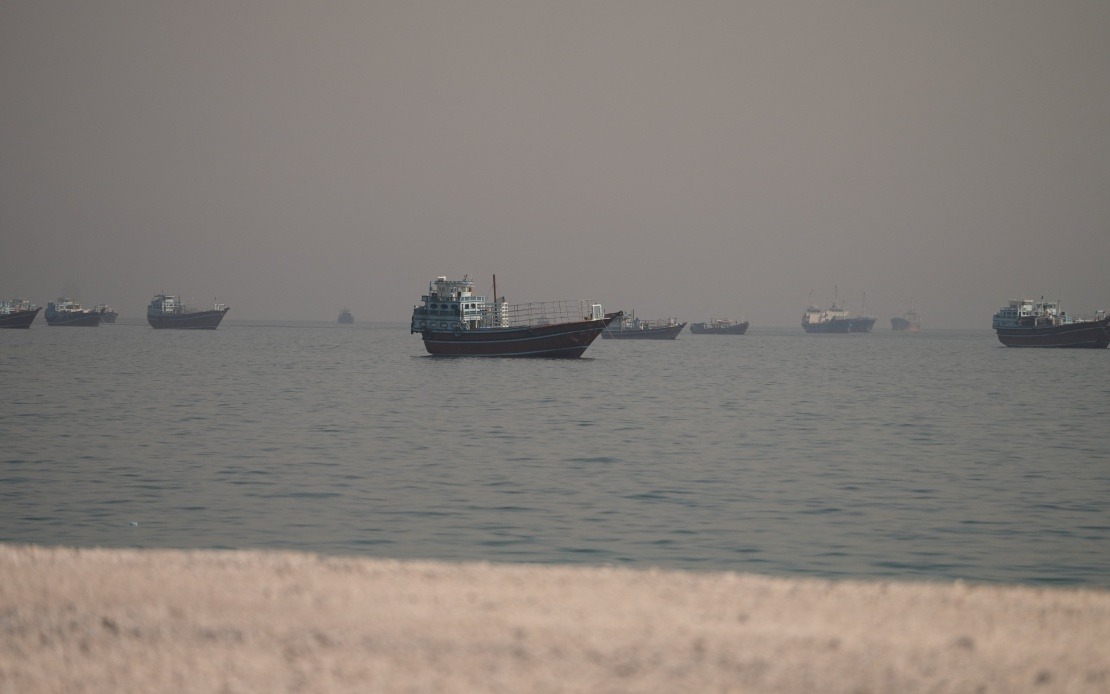
Britain and France have signalled their willingness to lead a multinational military deployment designed to safeguard shipping traffic through the Strait of Hormuz, one of the world's most strategically vital maritime corridors. The announcement, made through a joint statement by British Prime Minister Keir Starmer and French President Emmanuel Macron, represents a significant escalation in Western efforts to maintain free navigation in the contested waterway at a time of rising geopolitical tensions centred on Iran.
The Strait of Hormuz represents an indispensable conduit for global energy supplies and international commerce, with estimates suggesting that roughly one-fifth of the world's petroleum passes through its narrow passage each day. For Malaysia and other Southeast Asian economies heavily dependent on stable energy markets and uninterrupted seaborne trade, any disruption to shipping in this corridor carries immediate economic consequences. The commitment by London and Paris to ensure safe passage therefore carries implications extending far beyond the Middle East, touching supply chains and energy security across the region.
Central to the European initiative is Oman's agreement to cooperate with Britain and France in facilitating secure transit through Omani territorial waters. This diplomatic foundation proves crucial, as it provides the multinational force with a legitimate regional anchor and demonstrates that at least one Gulf state recognises the value of international maritime security cooperation. Oman's positioning along the Strait of Hormuz and its relatively moderate foreign policy approach have historically made it a bridge-builder in the fractious Gulf region.
The joint British-French statement underscores that both nations remain committed to upholding international law and respecting the sovereignty of all states in the region. This language appears designed to distinguish their initiative from unilateral military action, presenting the proposed force as a rules-based framework rather than an imposition of foreign will. Nevertheless, such diplomatic framing is unlikely to mollify Iranian concerns about external military presence in waters it regards as falling within its sphere of influence.
Iran has persistently and forcefully rejected external military involvement in Strait of Hormuz operations, insisting that security arrangements remain the exclusive domain of littoral states. Iranian officials contend that the waterway's geographical and strategic character obligates only bordering nations—primarily Iran and Oman—to manage security concerns. From Tehran's perspective, the introduction of Western naval assets represents an intrusion on its sovereignty and a challenge to its regional authority that it cannot tolerate.
The escalating rhetoric surrounding the Strait of Hormuz reflects deeper tensions between Iran and Western powers, particularly the United States, stemming from disagreements over Iran's nuclear programme, regional military activities, and sanctions regimes. Britain and France, as signatories to the Joint Comprehensive Plan of Action (JCPOA) and as permanent members of the UN Security Council, occupy a complex position in these negotiations, attempting to balance engagement with Iran against security concerns raised by Gulf allies.
For Southeast Asian nations including Malaysia, this intensifying strategic competition around the Strait of Hormuz carries several implications. First, it underscores the vulnerability of global maritime routes to geopolitical disruption, reinforcing the importance of regional maritime security cooperation and initiatives like enhanced naval patrols. Second, it highlights the risks that extraregional powers' military deployments pose to freedom of navigation—a principle Malaysia has consistently championed through its involvement in the Association of Southeast Asian Nations (ASEAN) and its advocacy for rules-based international order.
The proposed multinational force, should it materialise, would add another layer to an already complex maritime security picture. The United States maintains a significant naval presence throughout the Gulf, and various other nations conduct independent transit operations through the Strait. A formal European-led mission could either complement these efforts or create coordination challenges, depending on how it integrates with existing arrangements.
Iran's response to this Anglo-French initiative will prove telling for regional stability. Previous Iranian warnings against foreign military presence suggest that Tehran may view the deployment as a provocative step requiring a forceful counter-response, whether through military posturing, sanctions threats, or escalatory actions against shipping. The risk calculus for all parties has consequently shifted, with potential consequences extending across global energy markets and maritime commerce.
The broader context reveals a strategic landscape where Western nations increasingly view regional stability through the lens of maintaining access to vital resources and sea lanes, whilst regional powers like Iran assert their right to determine security arrangements within their neighbourhood. For Malaysia, this dynamic underscores the imperative of maintaining neutrality in great power competition whilst simultaneously advocating for maritime law and freedom of navigation—principles that serve Malaysian interests in an interconnected global economy.
The coming weeks will determine whether the British and French proposal gains traction with other regional and international actors, or whether Iranian resistance and logistical complexities limit its practical implementation. What remains clear is that the Strait of Hormuz continues to represent one of the world's most strategically contested and economically consequential maritime chokepoints, with security arrangements there reverberating across supply chains, energy markets, and geopolitical alignments far beyond the Middle East.

