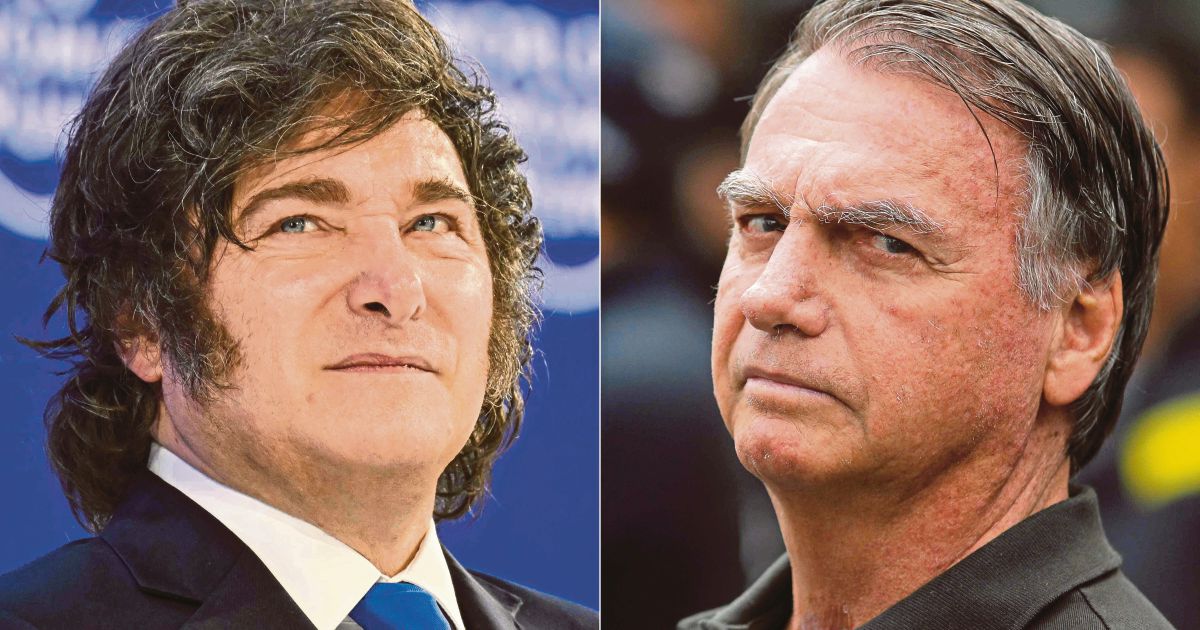
Brazil's highest judicial authority has moved to prevent Argentine President Javier Milei from meeting with Jair Bolsonaro, the former Brazilian leader now confined to his residence as he faces criminal investigations. The Supreme Court's decision, disclosed through official records on Saturday, represents a significant diplomatic constraint on the two right-wing leaders at a moment when their nations are navigating complex regional relations.
Bolsonaro has been subject to house arrest while authorities pursue multiple legal cases against him, ranging from allegations of mishandling classified documents to accusations connected with an alleged coup plot. The severity of these proceedings has meant that his interactions with visitors remain heavily circumscribed by judicial conditions. The restrictions effectively limit his ability to receive foreign dignitaries, as any visit from an international figure could potentially complicate or influence the legal processes underway.
Milei's request for access reveals the diplomatic complications that arise when leaders with aligned ideologies find their personal relationships constrained by domestic legal systems. The Argentine president, known for his libertarian economic policies and alignment with conservative global movements, has maintained friendly relations with Bolsonaro despite the former Brazilian president's current predicament. However, Brazil's judicial system has prioritised legal protocol and the integrity of ongoing investigations over diplomatic courtesy.
The Supreme Court's denial signals that Brazilian magistrates are unwilling to make exceptions for high-ranking international visitors when doing so might interfere with justice proceedings. This stance underscores the independence of Brazil's judiciary, which has demonstrated willingness to act decisively against former and current political figures regardless of their stature. The decision reflects institutional mechanisms designed to prevent the appearance of bias or preferential treatment that could undermine public confidence in the legal process.
For Malaysian observers, this development carries implications regarding the balance between diplomatic relations and judicial independence—a tension increasingly relevant in Southeast Asian governance. The case illustrates how strong rule-of-law institutions can sometimes create friction in bilateral relations, yet ultimately protect democratic institutions from political manipulation. It provides a counterpoint to contexts where judicial systems might be more pliable to political pressure or international diplomatic considerations.
Bolsonaro's deteriorating political circumstances have substantially reshaped Brazil's diplomatic landscape. Where he once wielded considerable international influence as an active head of state, his current status as a restricted individual facing legal jeopardy has fundamentally altered his capacity to engage internationally. The house arrest conditions mean he cannot easily leave his residence for extended periods, effectively sidelining him from formal diplomatic functions and international meetings.
Milei's presidency has positioned Argentina as a potential ally for Brazil's right-wing opposition forces, creating ideological alignments that cut across traditional Brazilian political lines. The two leaders share comparable policy orientations toward economic liberalisation, reduced government spending, and scepticism toward international multilateral institutions. However, the Argentine president's inability to meet with Bolsonaro demonstrates that personal political alignment cannot override individual state legal systems when fundamental justice proceedings are at stake.
The timing of this incident acquires additional significance within broader South American political dynamics. Brazil and Argentina, as the regional economic powerhouses, have historically maintained complex relationships blending competition and cooperation. Any diplomatic friction, even one rooted in judicial proceedings rather than executive policy, sends signals through regional networks and international observers about the robustness of institutional constraints within Brazil's political system.
Milei's visit request, while formally rejected, nonetheless highlights the persistent interest in sustaining connections between Bolsonaro and ideologically sympathetic international figures. Had the Supreme Court approved the visit, it would have suggested that exceptional circumstances and diplomatic status could override legal restrictions—a precedent potentially troublesome for the integrity of the criminal investigations. The court's firm response protects the legal process from external pressures and maintains the principle that no individual, regardless of prior office or international connections, receives preferential judicial treatment.
Brazil's approach contrasts with some historical instances where governments have accommodated diplomatic requests that technically conflicted with legal proceedings. The Supreme Court's decision reflects contemporary standards of judicial independence that resist political pressure, whether domestic or international. This institutional firmness, while creating short-term diplomatic friction, ultimately strengthens confidence in the impartiality of the justice system—a crucial foundation for democratic legitimacy.
The implications extend beyond the bilateral Argentine-Brazilian relationship. The ruling establishes precedent within Brazil's judicial hierarchy regarding the limits of diplomatic exception-making during active criminal proceedings. Future requests from foreign leaders for access to individuals under judicial constraints will likely encounter similar resistance, positioning Brazil as a jurisdiction where legal processes maintain priority over international political courtesy.
For Bolsonaro himself, the Supreme Court's decision further demonstrates his transition from political power to legal vulnerability. Once capable of hosting international delegations and conducting foreign relations from the presidential palace, he now finds himself unable to receive even private visits from sympathetic foreign leaders. This isolation reinforces his marginalised position within contemporary Brazilian politics and international affairs.

