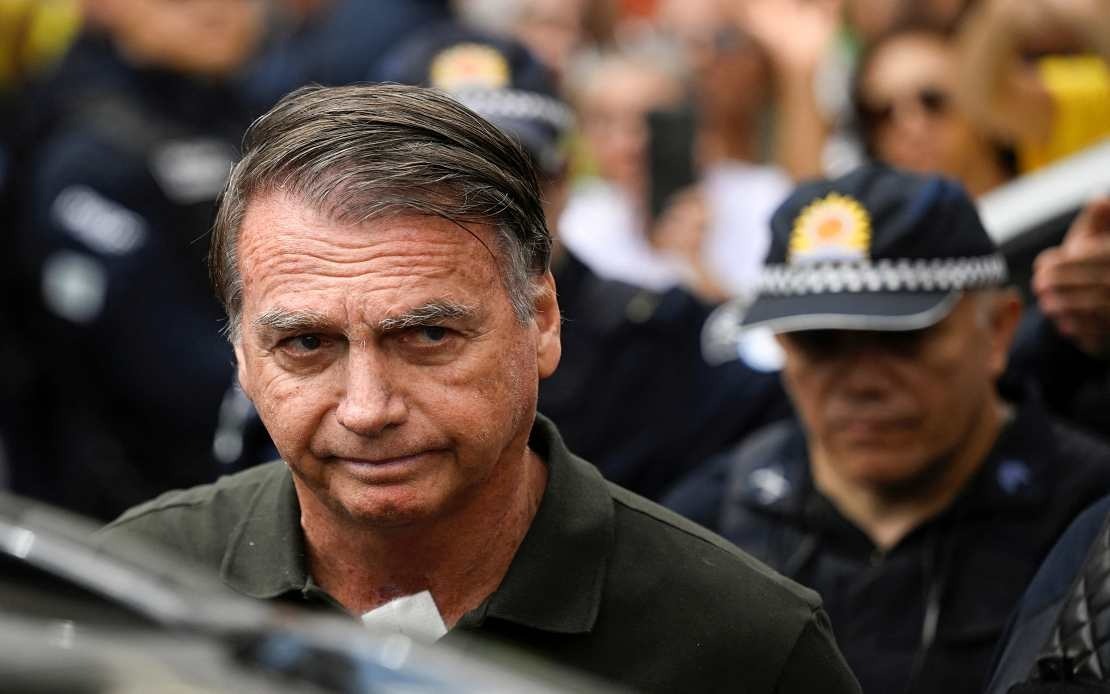
Argentina's President Javier Milei has been barred by Brazil's judiciary from visiting former Brazilian leader Jair Bolsonaro at his residence in Brasília, marking a significant political setback for the Argentine leader's regional diplomatic agenda. Judge Alexandre de Moraes rejected the request on grounds that Bolsonaro's house arrest conditions had been substantially modified the previous day, specifically prohibiting visits of a political or electoral character. The decision underscores the deepening legal pressures facing Bolsonaro and the complex political dynamics shaping South America's right-wing landscape as Brazil approaches critical elections.
Milei had announced plans to travel to Brazil on July 25 with the explicit intention of meeting Bolsonaro and publicly demonstrating solidarity with Flávio Bolsonaro, the former president's son, who is pursuing his own presidential candidacy. The visit represented more than a personal courtesy between two ideologically aligned leaders; it was designed as a symbolic gesture of continental conservative unity, with Milei using the platform to bolster Flávio's electoral prospects in the coming October presidential election. The blocked meeting reflects how Brazil's judicial system is actively constraining the former president's ability to influence domestic politics despite his continued influence over significant segments of the electorate.
The immediate catalyst for the restrictive measures imposed by Judge Moraes was a handwritten letter authored by Bolsonaro that his son Flávio subsequently shared across social media platforms. In the correspondence, the detained former leader explicitly endorsed his son's presidential ambitions, a move the court determined constituted a direct violation of his existing house arrest conditions. This interpretation reveals the stringency with which Brazil's Supreme Court has approached Bolsonaro's political activities, treating even private family correspondence as potentially unlawful political messaging that breaches the terms of his detention.
The tightened restrictions announced by Judge Moraes on Friday encompass more than the denial of foreign political visitors. Bolsonaro now faces an outright prohibition against transmitting political communications through intermediaries, effectively silencing his ability to shape the electoral narrative through family members or associates. These conditions will remain in effect through October, ensuring that the former president cannot orchestrate a coordinated political campaign supporting his son's candidacy during the campaign's most critical phase. The judge dismissed the defence team's appeal for permission to host Milei as legally irrelevant given the broader regulatory framework now governing Bolsonaro's conduct.
Bolsonaro's current legal predicament stems from convictions related to an alleged coup conspiracy, for which he received a sentence exceeding 27 years imprisonment. However, health considerations led to his release to house arrest rather than incarceration in a conventional penal facility, a decision that has proven contentious given his continued ability to influence political discourse from his residence. The former leader maintains substantial popularity among conservative voters and retains significant capacity to mobilize his political base, even under restrictive conditions. This reality has prompted the judiciary to impose progressively tighter constraints on his communications and interactions.
The presidential election landscape reflects a polarized contest between incumbent Luiz Inácio Lula da Silva, who is expected to campaign for re-election, and Flávio Bolsonaro representing the right-wing opposition. Lula's return to power in 2022 was itself contested by Bolsonaro, who refused to concede defeat and whose supporters breached government buildings. The current electoral cycle represents a rematch between Brazil's two most prominent political factions, with Bolsonaro remaining a central figure despite his legal entanglements. Flávio Bolsonaro's candidacy essentially allows the former president to maintain political influence through his son while circumventing restrictions on his own electoral participation.
For Malaysian and Southeast Asian observers, this situation illuminates the tension between judicial independence and executive political power that resonates across democratic societies in the region. Brazil's Supreme Court, particularly under Judge Moraes's leadership, has demonstrated willingness to use house arrest conditions as a mechanism for political regulation, raising questions about the boundaries between legitimate criminal justice administration and potential judicial overreach. The case illustrates how courts can become arenas of political contestation, where legal instruments serve broader political objectives. This dynamic carries relevance for nations throughout Asia where similar tensions exist between judicial institutions and political figures.
Milei's failed diplomatic initiative reveals the constraints imposed on regional right-wing solidarity by Brazil's institutional structures. While Argentina's president has positioned himself as a champion of libertarian economic policies and conservative politics, his influence remains largely confined to Argentina's borders and his ability to attract ideological allies through conventional diplomatic channels. The Brazilian court's decision effectively isolated Bolsonaro from external political support at a crucial moment, preventing the symbolic alliance between two South American conservative leaders that might have energized the right-wing electorate across borders.
The broader implications for Brazil's political trajectory suggest that the judiciary intends to systematically constrain Bolsonaro's political activity through the October election. By prohibiting visits of political significance and blocking third-party transmission of his messages, Judge Moraes has created a framework where the former president's political voice is substantially muted despite his freedom of physical movement. This judicial strategy appears designed to prevent Bolsonaro from leveraging his continued popularity into meaningful electoral influence on behalf of his son's candidacy.
For international observers evaluating Brazil's democratic health, the court's decision presents a complex case study. On one hand, judicial systems must sometimes impose constraints on individuals convicted of serious crimes; on the other, the timing and scope of these restrictions raise legitimate questions about whether legal mechanisms are being deployed for political purposes. The intersection of criminal justice, electoral rules, and political power remains contested territory in Brazil's ongoing constitutional democracy, with implications extending beyond Brazil's borders as other democracies grapple with analogous challenges regarding the treatment of politically consequential defendants.
The blocked meeting between Milei and Bolsonaro ultimately demonstrates how Brazil's courts are attempting to engineer electoral outcomes through the regulation of political association and expression, even for individuals technically freed from conventional imprisonment. Whether this approach strengthens democratic institutions or undermines them remains subject to ongoing debate among legal scholars, political analysts, and observers of Brazilian constitutional law. The case will likely influence how other nations address similar questions regarding the proper scope of judicial power in regulating former leaders' political activities during sensitive electoral periods.

