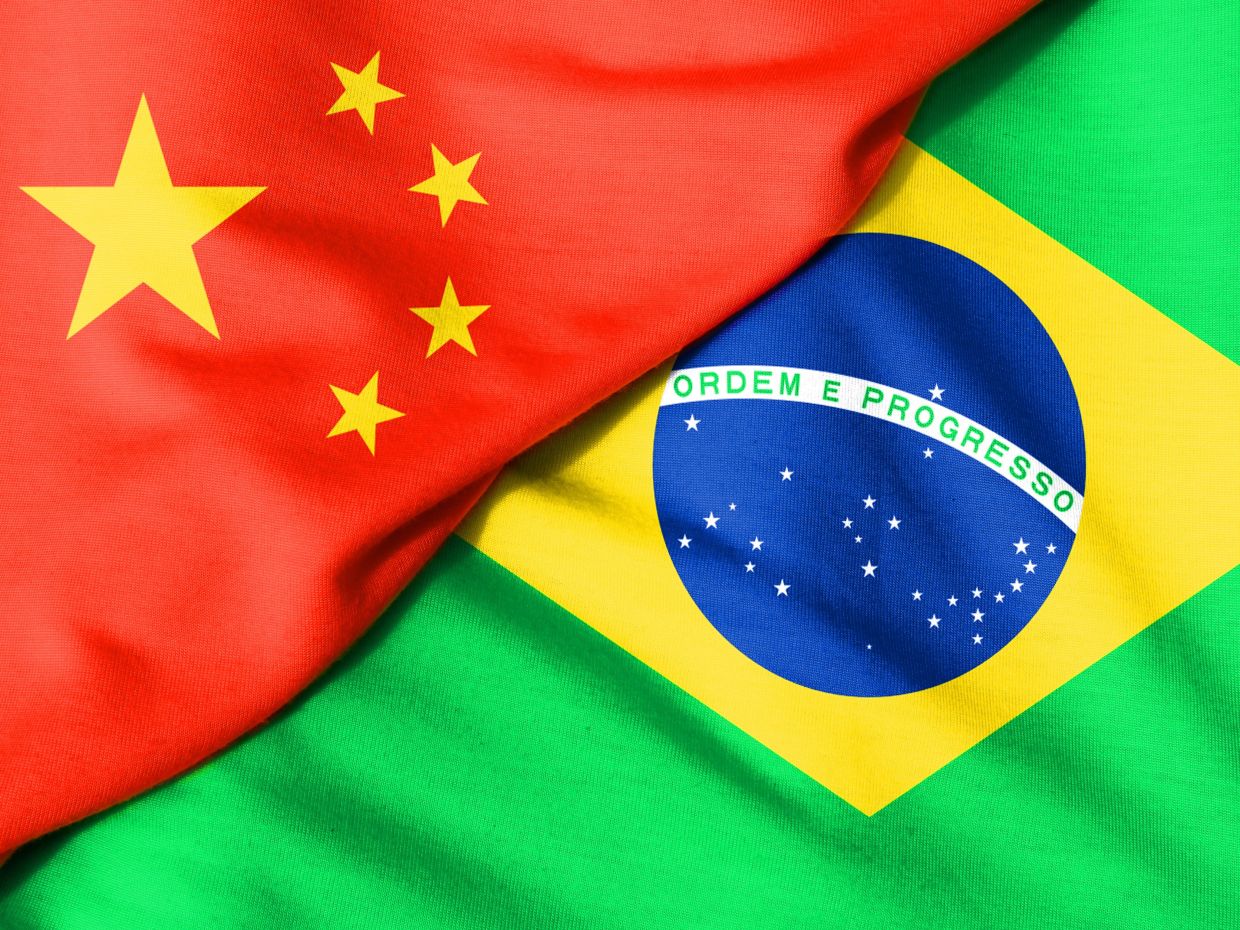
Brazil is preparing to make its debut appearance as a borrower in China's onshore bond market, potentially reshaping how the country's major companies access international capital. The Treasury plans to complete the issuance before the year closes, though officials have cautioned that procedural hurdles remain. The transaction represents a strategic pivot toward diversifying funding sources and, more importantly, establishing the regulatory and pricing infrastructure that Brazilian corporations desperately need to compete for Chinese investment.
Francisco Segundo, deputy secretary for public debt at the National Treasury, framed the coming issuance during a recent webinar as primarily a qualitative milestone rather than a major funding requirement. Brazil's external debt represents only four per cent of the federal government's total debt stock, so the proceeds themselves are not essential to state finances. Instead, the Treasury sees the bond sale as unlocking a gateway to investors who currently view Brazilian assets with caution. Segundo acknowledged that yuan borrowing typically carries lower coupons than dollar alternatives, but pricing advantages are secondary to the deeper objective of market establishment and legitimacy.
The mathematics of bond issuance costs illustrate why Brazil is eager to enter the yuan market. Foreign issuers pricing in the Chinese onshore bond market this year have averaged coupons of 1.97 per cent, a stark contrast to the 4.5 to 5.5 per cent range that borrowers typically face when tapping dollar markets. These deals are characteristically modest in size and duration, often reaching only one-fifth of what the same borrower would attempt to raise in US currency and typically maturing within three to five years. For Brazilian corporations, this pricing differential represents a substantial competitive advantage if they can access the market consistently.
The Treasury's application entered formal review in June, when Finance Minister Dario Durigan delivered a letter of intent to Pan Gongsheng, governor of the People's Bank of China, who signalled institutional readiness to facilitate the transaction. However, uncertainty persists regarding the issuance size. Durigan initially indicated the debut would reach up to five billion yuan, equivalent to approximately US$735 million, while Treasury Secretary Daniel Leal subsequently suggested a target of about 10 billion yuan, roughly US$1.48 billion. The discrepancy carries weight because Indonesia set the regional benchmark on July 23 by raising seven billion yuan in what remains the largest sovereign yuan debut on record. A Brazilian offering at the higher target would eclipse Indonesia's achievement, yet Treasury officials have declined to clarify the variance in public statements.
Segundo confirmed that the application has cleared substantive review and that remaining steps are largely procedural, including the engagement of a Chinese rating agency without prior experience analysing Brazil's creditworthiness. The Treasury has not disclosed either the maturity structure of the offering or the intended use of proceeds, both conventional disclosures that would normally accompany an announcement of this significance. His cautious assessment—that the Treasury aims to complete the issuance this year but cannot guarantee timing—reflects awareness that market conditions and regulatory approval remain beyond complete government control.
The Treasury's strategy reflects a carefully considered lesson from Brazil's experience in European debt markets. Segundo pointed to distortions in Brazil's euro curve caused by prolonged absence from that market, underscore the importance of consistent, recurring participation. The government concluded from European patterns that retreating from a market after initial entry creates scarcity premiums and investor uncertainty that ultimately undermine the establishment of reliable pricing benchmarks. This understanding directly informs the Treasury's commitment to annual yuan issuances, establishing Brazil as a regular counterparty rather than a one-off participant. The consistency matters because it signals reliability and builds the transaction history that investors require when evaluating unfamiliar markets.
The establishment of a sovereign yuan curve carries implications that extend well beyond government finance. Brazilian corporations have explicitly requested that their government borrow in Chinese currency, recognising that a functioning sovereign curve would provide the reference pricing and institutional validation necessary to justify their own corporate bond issuances in yuan. When companies issue debt, investors typically anchor their pricing to the sovereign curve of the issuer's home country, applying spreads that reflect perceived risk differentials. Without a Brazilian sovereign yuan benchmark, institutional investors in Shanghai express caution and demand compensatory premiums. Suzano, a pulp producer and Brazil's only company to date to issue panda bonds, has raised 2.6 billion yuan across three transactions since 2024, with its inaugural green bond priced at 2.8 per cent. Emilio Yeh, the company's chief financial officer for Asian operations, noted that the pricing delivered more than 50 basis points of advantage compared to Suzano's dollar-denominated debt curve after currency swaps, yet investors consistently raised questions about the absence of a sovereign precedent.
Alexandre Lowenkron, who directs Bocom BBM, a Brazilian bank controlled by China's Bank of Communications, described the relationship between sovereign issuance and subsequent corporate access as empirically consistent. Data show that the majority of corporate bond issuances, often exceeding 50 to 60 per cent within a given time window, cluster immediately following government market entries. This timing correlation suggests that sovereign participation acts as a confidence signal and a pricing anchor that facilitates corporate transactions. Yeh's accounts from investor meetings in Shanghai repeatedly mentioned the anticipated sovereign issuance, with market participants viewing it as essential validation that would permit their institutions to establish Brazil credit frameworks and allocate capital accordingly.
One complicating factor for Brazilian corporate borrowing remains the country's credit rating status. All three major international rating agencies classify Brazil below investment grade, a threshold that constrains which institutional investors legally or internally permit themselves to purchase Brazilian debt. Suzano and Vale, Brazil's mining giant, have secured ratings one to two notches above the sovereign, providing them corridors to investment-grade classification. Petrobras, the national oil company, sits at the sovereign ceiling despite possessing investment-grade fundamentals when evaluated independently. A higher sovereign rating would expand the potential investor base for Brazilian corporates, yet such rating improvements typically require sustained policy discipline and economic performance demonstration, processes that unfold over years rather than quarters.
Chinese institutional investors screen potential borrowers using criteria that extend beyond traditional credit metrics. Lowenkron identified scale, rating classification, and what he termed "China flavour"—meaningful operational ties or joint ventures linking the borrower to Chinese economic activity—as critical filters. Brazilian companies that operate mining ventures, manufacturing facilities, or trade partnerships within China substantially improve their attractiveness to domestic Chinese investors seeking both financial returns and strategic asset exposure. This preference structure explains why resource companies including Vale and Suzano have pursued panda bond issuances more aggressively than other sectors; their operational presence in China provides the governance comfort and strategic alignment that Shanghai-based fund managers require.
Durigan's June statements disclosed that Brazilian corporations had proactively requested sovereign yuan borrowing as a solution to dual pressures: making their own international issuances viable within Chinese institutional constraints and reducing currency volatility exposure within Brazil itself. Corporate treasurers managing multicurrency operations benefit when the home sovereign can borrow in foreign currency, because it reduces the premium attached to corporate issuances and stabilises the domestic financial system's foreign exchange dynamics. Finance Minister Dario Durigan framed the yuan issuance initiative within this broader context of corporate competitiveness and domestic financial stability, suggesting that Treasury officials view the transaction as serving objectives that transcend government debt management alone.
The timing and execution of Brazil's yuan debut will signal to regional policymakers and corporate leaders whether Southeast Asian and Latin American countries can effectively tap Chinese capital markets through sovereign bond channels. Indonesia's recent issuance demonstrated regional appetite and established transaction mechanics, yet Brazil's considerably larger economy and diversified corporate sector offer a more comprehensive test of whether Chinese investors will scale yuan lending to Latin American sovereigns and corporations. Success would validate the Treasury's strategic framework and potentially open comparable pathways for other emerging market governments seeking to diversify funding sources and provide their corporations with alternative borrowing channels less vulnerable to US dollar interest rate shocks or currency depreciation cycles.
Segundo's insistence that Brazil must return to the yuan market repeatedly, year after year, reflects institutional memory of how sovereign debt curves function. Markets thrive through liquidity and participation consistency; sporadic borrowing episodes generate scarcity, distortion, and investor caution. The Treasury's multi-year commitment to regular yuan issuance signals to Chinese institutional capital that Brazil intends to become a fixture within their investment universe rather than a peripheral participant. For Malaysian and Southeast Asian observers, Brazil's experience illuminates broader questions about how middle-income emerging markets can access non-dollar financing and construct the institutional frameworks that enable corporations to compete globally without excessive dependence on fluctuating currency regimes or concentrated Western capital markets.

