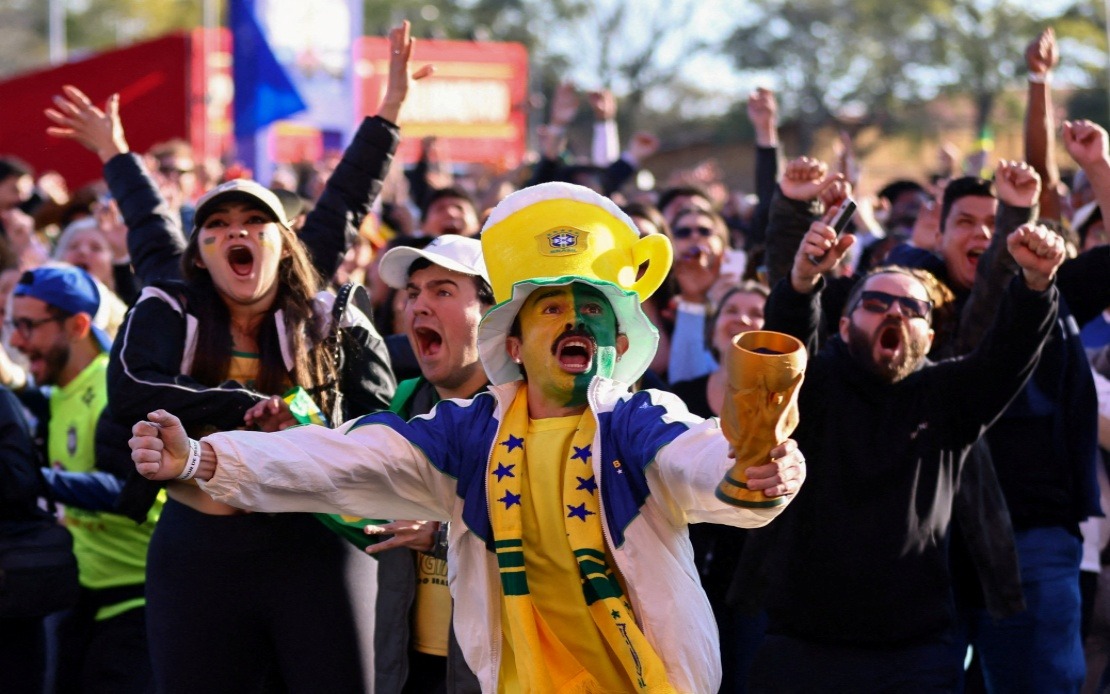
Brazil's progress to the Round of 16 of the 2026 FIFA World Cup came at Houston Stadium through a tense and ultimately heartbreaking encounter with Japan, sealed by a dramatic injury-time strike that sent the Samurai Blue's hopeful campaign to an end. The South American giants overcame a first-half deficit against resolute Japanese opposition to claim a 2-1 victory, demonstrating both the resilience and attacking prowess that have long defined the nation's footballing tradition.
Japan's tactical discipline throughout the opening period presented Carlo Ancelotti's Brazilian side with a formidable challenge, as the East Asian team set up in a compact 5-4-1 formation designed specifically to neutralise the Selecao's considerable creative talents. The approach proved effective in limiting Brazil's usual attacking fluidity, with the Japanese defence offering minimal openings along the flanks where Brazil typically inflicts damage. Despite enjoying substantial possession during the first half, the Brazilian midfield and forwards found themselves unable to generate the quick ball movement necessary to unpick a well-organised defensive structure that remained disciplined and compact throughout.
The match's decisive opening moment came when Japan capitalised on a careless turnover in the 29th minute. Kaishu Sano intercepted a wayward pass from Brazil's Danilo, immediately recognising the opportunity to drive forward into dangerous territory. His decision-making proved clinical as he struck a purposeful low shot from the edge of the penalty area, the ball finding its way past goalkeeper Alisson into the bottom corner. It was an exceptionally composed finish from Sano on his first international goal, reflecting a maturity beyond his years and offering Japan a genuine platform to achieve their long-standing ambition of securing a World Cup knockout victory.
Japan's half-time lead represented far more than a numerical advantage; it symbolised a genuine opportunity for the nation to rewrite its World Cup narrative. Walking into the interval, the Samurai Blue were just 45 minutes away from conquering a hurdle that had persistently challenged Japanese football across five previous World Cup campaigns. The significance of that position was not lost on the home supporters in Houston or the watching nation, as Japan demonstrated that elite European opposition could be outmaneuvered through tactical discipline and clinical execution.
The second half unfolded entirely differently, as Brazil emerged with markedly elevated intensity and repositioned their attacking approach to capitalise on their personnel advantages. The Selecao shifted focus to delivering a relentless barrage of crosses from wide positions, targeting the Brazilian centre-backs' ability in the air and creating successive dangerous moments within Japan's penalty box. The sustained pressure gradually wore down the Japanese resistance, and Brazil's equaliser arrived in the 56th minute when midfielder Casemiro rose decisively at the back post to meet a delivery from Gabriel Magalhaes, heading the ball beyond goalkeeper Zion Suzuki. The moment brought palpable relief to the Brazilian contingent within Houston Stadium and fundamentally altered the contest's momentum.
As the match progressed towards conclusion, the likelihood of extra time appeared increasingly probable, with both teams locked in an increasingly frantic contest. However, Brazil's superior depth of attacking talent and fitness reserves ultimately told in the final moments. In the 90th minute plus five, midfielder Bruno Guimaraes demonstrated decisive footballing intelligence by driving toward the edge of Japan's penalty area before identifying Gabriel Martinelli's movement. The pass he delivered was perfectly weighted and paced, allowing Martinelli to direct his shot past Suzuki despite the goalkeeper managing to get a hand to the attempt. That goal, arriving when Japanese concentration was at its most fragile, ended the narrative that Japan had constructed and delivered Brazil passage to the next phase.
The nature of Brazil's comeback carries particular significance for Southeast Asian football observers, as it underscores the technical and tactical sophistication now required to compete at elite World Cup level. Japan's performance demonstrated that disciplined organisation and tactical acuity can genuinely trouble superior opponents, yet the ultimate outcome revealed the continuing gap between elite South American traditions and other global powers. For Malaysian and regional football development, the lesson extends beyond simple tactical templates; it emphasises that sustained excellence demands not only defensive organisation but also the depth of attacking alternatives that facilitate recovery from setbacks.
Brazil's advancement places them against either Norway or Ivory Coast in the Round of 16, encounters that should present progressively greater challenges. The Selecao's ability to recover from falling behind against resolute opposition suggests they possess the mental resilience and attacking versatility to progress further in the tournament. Their demonstration of converting late opportunities and maintaining composure under pressure represents the hallmark of championship-calibre teams.
For Japan, the elimination represents continued frustration in their quest to overcome the knockout stage barrier that has persistently limited their World Cup ambitions. Despite fielding a well-coached, tactically intelligent team that momentarily had the world's fourth-ranked nation under control, they ultimately could not sustain that advantage against superior individual talent and greater experience in high-pressure situations. The Samurai Blue's campaign, while concluded, has provided valuable insights into the specific areas requiring development for future tournaments.

