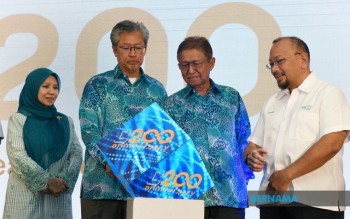
Boustead Holdings Bhd, one of Malaysia's largest conglomerates with a two-century heritage, is pursuing an ambitious expansion strategy that would nearly triple its current revenue base to RM30 billion over the next five years. The transformation marks a significant departure from the company's historical roots in agriculture and warehousing, redirecting focus toward three core pillars: defence manufacturing, property development, and commercial services. The initiative reflects both shareholder expectations and strategic directives from Malaysia's Defence Ministry, positioning Boustead as a cornerstone of the nation's emerging defence industrial ecosystem.
The scale of Boustead's ambition becomes apparent when examining the defence sector component of this growth plan. Group managing director Datuk Dr Ahmad Sabirin Arshad outlined that the company intends to establish a robust local defence industry network comprising at least 400 vendors within the next few years. This vendor development approach mirrors strategies used by advanced defence manufacturing nations, creating interconnected supply chains that distribute economic benefits across multiple businesses and regions. By nurturing a substantial domestic industrial base rather than relying on imports, Malaysia can develop strategic autonomy in defence procurement while building indigenous technological capabilities that generate sustained employment and wealth creation across the economy.
A critical metric underlying Boustead's defence strategy is the commitment to achieve minimum 30 per cent local content in defence industry products by 2030. This threshold represents not merely a procurement preference but a structural requirement that forces technology transfer and capability building at the local level. International defence partners selected by Boustead must meaningfully integrate Malaysian firms, engineers, and manufacturers into their production ecosystems. Such arrangements differ fundamentally from simple equipment purchasing arrangements, instead embedding technical knowledge and manufacturing expertise within the domestic economy that persists even after initial partnerships conclude.
The government has entrusted Boustead with leadership responsibility for four significant defence initiatives that will anchor the broader industry transformation. Satellite development capacity represents a strategic capability enabling intelligence gathering and communications independence. The rolling chassis project for armoured vehicles addresses fundamental vehicle platform requirements across multiple military applications. Light weapons production ensures domestic capacity for small arms and ammunition without external dependency. Finally, the Combat Management System development creates the sophisticated command and control infrastructure essential for modern military operations. These four pillars collectively address critical gaps in Malaysia's defence industrial base, each supporting broader self-sufficiency objectives.
Beyond manufacturing, Boustead's expansion incorporates a major property development component centred on the Batu Cantonment strategic development project. This initiative involves consolidating nine existing military camps within Kuala Lumpur's central location into a modern commercial hub, a complex undertaking requiring coordinated relocation of armed forces facilities while maintaining operational continuity. The project demonstrates how defence transformation can generate real estate value while modernising military infrastructure. For Malaysian readers, this represents the type of urban regeneration that simultaneously serves national security needs and creates premium commercial space in the capital, a dual outcome increasingly difficult to achieve in mature urban markets.
The transformation narrative resonates particularly strongly given Boustead's historical trajectory. Originally established as an agricultural enterprise dealing in coconut sales and warehouse operations, the company's evolution reflects Malaysia's own economic maturation. Where earlier decades prioritised commodity production and trade, contemporary strategy emphasises advanced manufacturing, technology integration, and strategic industrial positioning. This mirrors the broader Malaysian economy's attempt to escape commodity dependence through higher-value activities and sophisticated manufacturing ecosystems. Boustead's journey from agricultural roots to defence manufacturing encapsulates this national economic transition.
Chairman General (Retired) Tan Sri Abdul Aziz Zainal emphasised that this transformation must deliver optimal returns to stakeholders, particularly contributors and members of the Malaysian Armed Forces who have financial interests in Boustead. This framing acknowledges that defence industry development cannot be treated purely as a strategic policy objective divorced from commercial viability. Companies must generate returns sufficient to justify capital deployment and attract continued investment. The integration of defence objectives with commercial discipline represents a mature approach to industrial policy, avoiding the trap of subsidising inefficient national champions while still achieving strategic self-sufficiency goals.
Boustead's strategy for acquiring international defence partnerships emphasises technology transfer and capability enhancement rather than simple equipment procurement. The company will deliberately select international partners whose engagement mechanisms ensure effective knowledge transfer aligned with the 30 per cent local content target. This partnership approach differs markedly from traditional defence acquisition where foreign contractors provide finished systems with minimal local industrial engagement. By structuring partnerships around learning outcomes and local capability development, Malaysia builds enduring competitive advantages extending beyond any individual contract cycle.
The property and commercial services components of Boustead's diversified expansion strategy provide important counterbalance to defence sector concentration. Tourism and insurance sector subsidiaries will receive continued investment and strengthening, recognising that a healthy conglomerate requires diversified revenue streams across economic cycles. Defence spending may fluctuate with geopolitical circumstances and budgetary pressures, making complementary commercial activities essential for financial stability. This balanced approach reduces single-sector dependency while maintaining focus on core strategic objectives.
For regional context, Boustead's expansion strategy positions Malaysia alongside regional peers increasingly emphasising indigenous defence manufacturing. Nations across Southeast Asia recognise that reliance on external suppliers creates vulnerabilities during conflicts or geopolitical tensions. By developing domestic capacity, Malaysia joins Thailand, Indonesia, and Singapore in building self-sufficient defence industrial capabilities appropriate to regional strategic uncertainties. This regional trend reflects broader recognition that security cannot be outsourced, particularly regarding sophisticated systems affecting operational effectiveness and strategic autonomy.
The revenue target of RM30 billion requires execution across multiple complex domains simultaneously. Defence manufacturing demands technical excellence and international competitiveness. Property development necessitates skilled project management and market sensitivity. Commercial services require operational excellence and customer focus. Success requires management bandwidth and organisational capability that must be deliberately developed. Boustead's century-long operational history provides foundation experience, yet the ambitious transformation timeline demands accelerated learning and capability upgrading across all business lines.
Investors and analysts will scrutinise whether Boustead's internal management capabilities and capital resources prove sufficient for this expansion. The company must simultaneously develop defence manufacturing expertise while executing complex property projects and maintaining commercial services profitability. External partnerships and potential strategic investments may become necessary to bridge capability gaps. Market confidence will ultimately depend on demonstrated progress against defined milestones, transparent governance, and consistent delivery against announced objectives during the critical early transformation years.

