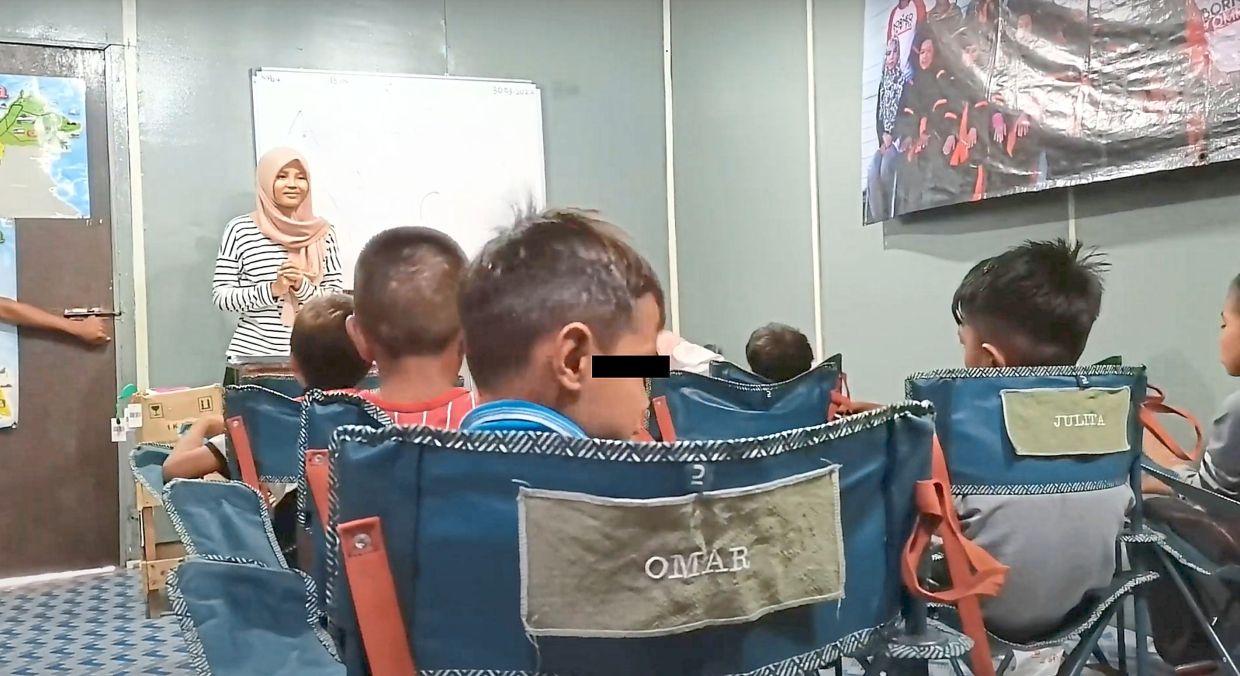
A troubling pattern has emerged from recent Court of Appeal rulings on citizenship: children born and raised entirely in Malaysia, with confirmed biological links to Malaysian fathers, are being denied the right to call this country home simply because their parents were not married when they were conceived. The cases underscore a constitutional framework that prioritises marital status over the lived reality of children who have never known anywhere but Malaysia as home, whose schools, friendships, and identities are rooted here, yet who face legal exclusion based on circumstances beyond their control.
The constitutional logic appears straightforward on its face. Malaysia's founding document stipulates that citizenship depends on both birthplace and parentage. For children born outside marriage to foreign mothers, the law dictates that nationality follows the maternal line, regardless of paternal connection. The recent Court of Appeal decisions faithfully applied this principle, even though DNA testing had conclusively established the biological fatherhood of Malaysian citizens. Legally, the court's reasoning was sound; practically and ethically, the outcomes raise profound questions about whether law serves justice or merely perpetuates outdated conventions.
These cases are not anomalies but symptoms of a deeper constitutional misalignment with contemporary realities. The provisions were drafted in an era when paternity could only be presumed within the bounds of lawful matrimony, when marital legitimacy carried social and legal significance across most societies. Yet today's biotechnology renders such presumptions obsolete. A DNA test can answer the question of biological fatherhood with near-absolute certainty, making the exclusion of confirmed fathers seem arbitrary rather than principled. The constitutional framework now appears frozen in time, unable to accommodate both scientific reality and human circumstances.
Child rights advocates and civil society organisations, including the Development of Human Resources for Rural Areas (DHRRA), have highlighted the severity of this gap. DHRRA points out that Malaysia stands among only two countries worldwide where fathers cannot transmit citizenship in such circumstances—a distinction that places Malaysia among the world's strictest jurisdictions on this matter. Beyond Malaysia's borders, most nations have reformed their laws to recognise that biological paternity, once established, carries legal weight independent of marital ceremony. These jurisdictions have concluded that children should not inherit the consequences of their parents' relationship choices.
The discrimination operates subtly but powerfully. The law addresses the choices of adults—the father and mother who were not married—but visits lifelong consequences upon the child who made no choice whatsoever. An adult who breaks traffic laws faces a fine; an adult who evades taxes incurs penalties; an adult who commits fraud receives punishment. These are consequences for adult choices. But in these citizenship cases, the child bears the burden. The child did not decide to be born, did not choose their mother's nationality, did not determine whether their parents would marry. Yet the child alone suffers the permanent legal consequence: statelessness or forced distant citizenship.
The gap between law and human reality has always been present, but modern Malaysia's increasingly diverse society makes it more acute. People fall in love across borders and cultures; relationships form and dissolve; children are born within marriage and outside it. Some parents marry deliberately; some marry despite never intending to; some separate amicably; some disappear entirely. Some children are planned; many are not. This is not new—human history spans millennia of such variation—yet the law treats only one scenario (marriage) as conferring legitimacy on a child's birthright. The constitutional framework assumes a stability and predictability in human relationships that reality rarely provides.
The philosophical problem runs deeper still. Marriage and citizenship serve fundamentally different purposes and should not be conflated. Marriage is a contract between consenting adults that provides legal recognition to their relationship and any children born within it. It is, essentially, a choice. Citizenship, by contrast, determines a child's legal identity, their relationship to the state, their rights and obligations. It should not be a choice but a birthright for children born within a nation's borders, particularly when biological paternity is confirmed. Citizenship answers the question: Does this child belong here? Marital status answers a different question about adult relationships. The two should not be intertwined.
The implications of statelessness extend far beyond abstract legal standing. Children without recognised citizenship face concrete, daily barriers. They struggle to access formal education, healthcare, and legal employment. They cannot open bank accounts, obtain driving licenses, or access stable housing. They remain perpetually on the margins of society, unable to fully participate in the systems that structure modern life. These are not theoretical harms but lived deprivations that force individuals into poverty, exploitation, and exclusion. For Malaysia, a nation aspiring to regional leadership, allowing children born on its soil to slip into statelessness represents not merely a legal inconsistency but a failure of basic governance.
Parliament has already demonstrated willingness to modernise citizenship law in response to changing realities. In 2024, constitutional amendments were passed allowing Malaysian mothers to automatically transmit citizenship to their children born overseas—a reform that recognised both contemporary realities and principles of gender equality. That precedent shows that the Constitution is not immutable, that citizenship frameworks can be reformed when their injustices become evident, and that Parliament recognises the principle that children should not be penalised for circumstances beyond their control. The amendment acknowledged that the law must evolve to protect children's interests.
The argument for reform in this context is equally compelling. If a Malaysian mother can now confer citizenship on her overseas-born child, why should a Malaysian father—whose biological paternity is scientifically confirmed—be prevented from doing the same for his locally-born child? The logic of the 2024 amendment applies with even greater force here, since these children are not only born to Malaysian fathers but born on Malaysian soil, grow up speaking Malaysian languages, attending Malaysian schools, and developing their identities within Malaysian society. They have stakes in this country that an overseas-born child might not possess.
Legal scholars and advocates have proposed various solutions. Some argue for judicial discretion, allowing courts to consider the best interests of the child and the child's actual connection to Malaysia rather than applying bright-line rules based solely on parental marital status. Others suggest constitutional amendment to permit Malaysian fathers to confer citizenship regardless of marital status, bringing Malaysian law into alignment with most other nations and with evolving international norms on children's rights. Still others propose legislative intervention that would grant citizenship to children in demonstrable hardship—those raised entirely in Malaysia, with confirmed paternity, and facing statelessness or forced distant citizenship.
At its core, this is a question about what kind of nation Malaysia wishes to be. Does a country exclude from full belonging children born within its borders, raised by its citizens, schooled in its systems, and speaking its languages—simply because their parents did not marry? Or does it recognise that citizenship should serve the welfare of children rather than enforce a particular moral ordering of adult relationships? The former approach imposes a lifetime penalty on children for their parents' choices; the latter places the child's interests first and foremost.
Children deserve to begin life with a clean slate, unburdened by their parents' circumstances. They did not choose their nationality or their parents' marital status. The law can accommodate both principled borders and compassionate governance. If the 2024 amendment reflects Malaysia's commitment to modernising citizenship law for children's sake, then extending similar protection to children born to Malaysian fathers—especially those with scientific proof of paternity—represents not a lowering of standards but a maturation of them. Every child born in Malaysia should have the opportunity to answer confidently: yes, this is my country, and my country belongs to me.

